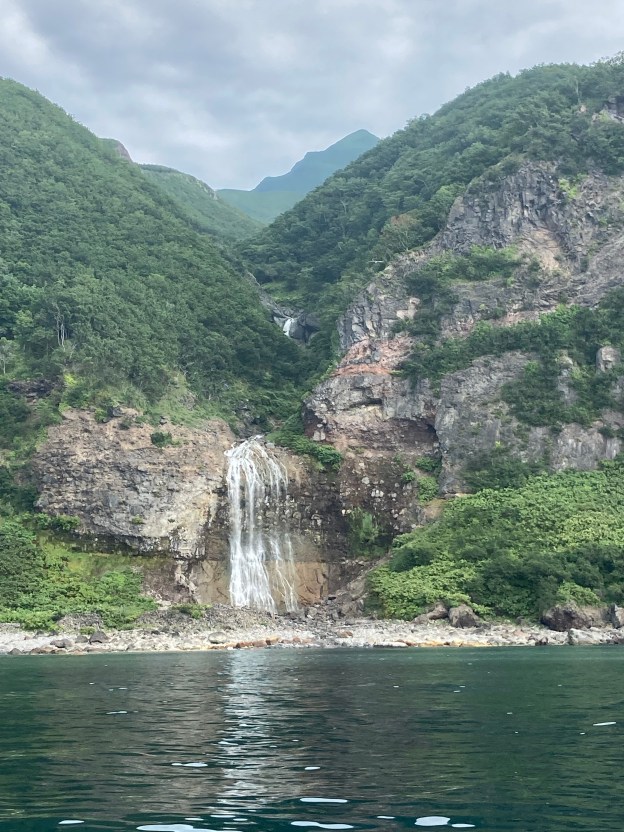
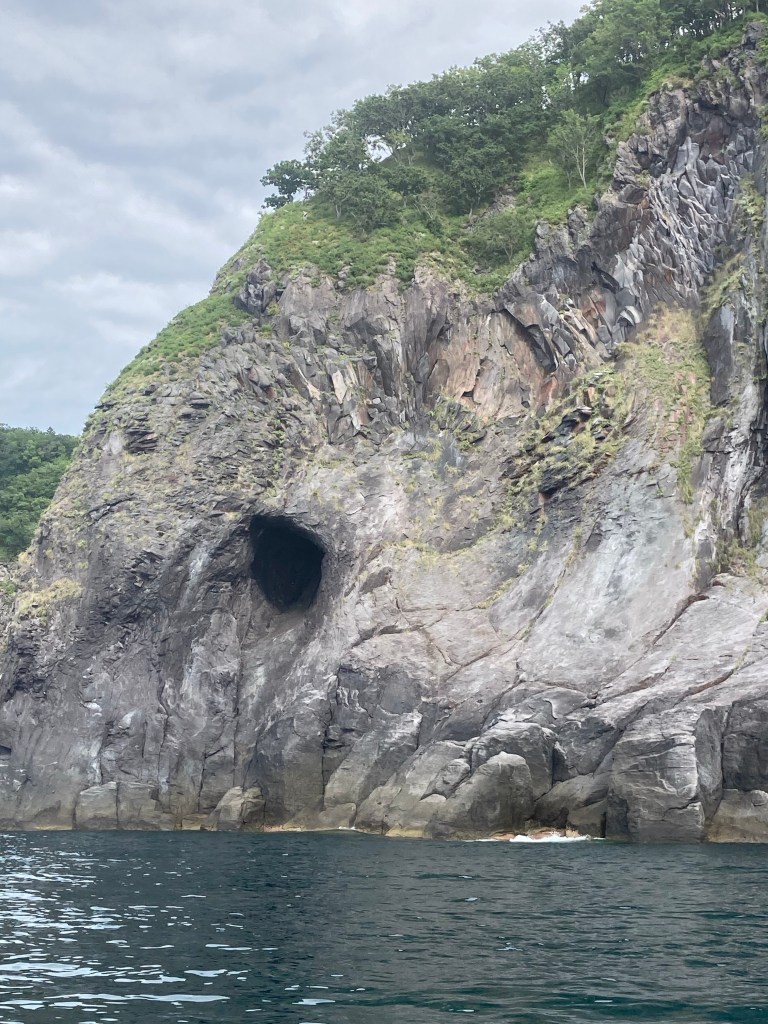
There are three large National parks on the island and we aimed for Akan- Mashu National park in the hope of seeing bears, white tailed eagles, red foxes and deer. We were not disappointed as we saw all but the bears as we drove through the area. Having booked a boat trip which took in the unusual rock formations and passed along the shoreline where there was a high expectation of spotting a bear or two we got lucky and saw one albeit from a distance.


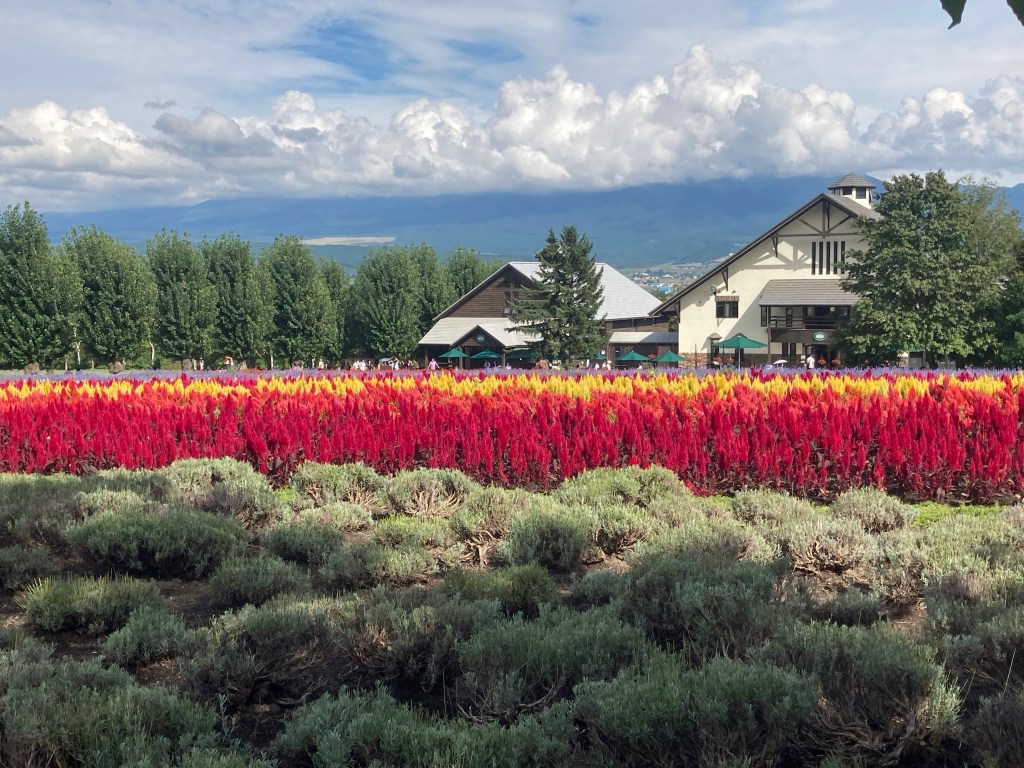
We had on our itinerary a visit to a lavender farm and “the village of sunflowers” sadly we were too late in the season to see either in their full splendour. However the lavender farm was a well developed commercial business with laid out walks amongst the flower beds, restaurants, shops selling everything lavender including lavender ice cream which was very yummy.


Two of Hokkaido’s gems are a gin distillery which boasts international awards and the first whisky distillery in Japan based upon traditional Scottish methods of production .
The gin distillery was our first stop. Set in a small but beautifully landscaped gardens, the distillery itself was based in an old outshed and after climbing some rickety wooden stairs we found ourselves in the tasting area 🤡 After sampling seven gins all of which had very distinct flavours I clanked out with four bottles which still kept me within my duty free limit.
The country loves its scotch whisky and so it shouldn’t be a surprise that somebody was sooner or later going to try and produce a whisky true to Scottish traditions. Masataka Taketsuru was the young man to do this. In 1918 he travelled to Scotland and took a chemistry course at Glasgow university and then apprenticed at three different Scottish distilleries making copious notes in two journals that became Japans first guide to whisky production.
In 1920 Masataka returned to Japan with his Scottish wife Jessie Roberta (Rita). She was the daughter of Masataka’s landlady in Glasgow and in spite of objections to an international marriage from both family’s the two had married earlier that year and Rita decided to emigrate to Japan to support her husband’s dream. She never returned to Scotland but made herself a part of the local community and established a school for young children
When Rita passed at the age of 64, Masataka was too depressed to attend her funeral. Suggested by his son Takeshi, he decided to make a special whisky to express his love to Rita for her commitment to his dreams
It symbolised the ultimate fruit of his love for Rita, both in taste and design.
 Truman travels
Interesting blog. Not surprised th
LikeLike