After a number of years here we are “on the road again” aiming for Greece via Croatia, with no predetermined route to guide our journey allowing ourselves the freedom to explore.
Our first stop after disembarking the ferry at Calais was a small town named St Omer with a population of 15000. We drove into the main square in the early afternoon just as everywhere closed for lunch, so we had a quick wander around intending to come back and explore the following day. Unfortunately we woke up to torrential rain which was forecast to continue throughout the day so decided to decamp and move on.
Our intention had been to head towards an area of National forest at Le Quesnoy but had noted on the maps the existence of a Matisse museum at Le Cateau.
Le Cateau- Cambresis
The journey to Le Cateau was through vast areas of farmland very similar to that of Lincolnshire but on a much grander scale. It was a very poignant journey due to the numerous war graves and monuments relating to both world wars which were in evidence along the route and were a sobering reminder of what had taken place and the lives that had been lost.
The Matisse museum was a disappointment to us, having gone with little knowledge of his work we found his art did not capture our imagination. However the work of Genevieve Claisse we found dramatic, bold and interesting.
Our curiosity satisfied we completed our journey to Le Quesnoy
Le Quesnoy
This location being on the edge of a large National forest had seemed an ideal spot to begin a walking and cycling holiday in an area of natural beauty. However we found the available information lacked detail and when combined with the poor location signing as we drove through the forest points of interest became impossible to find.
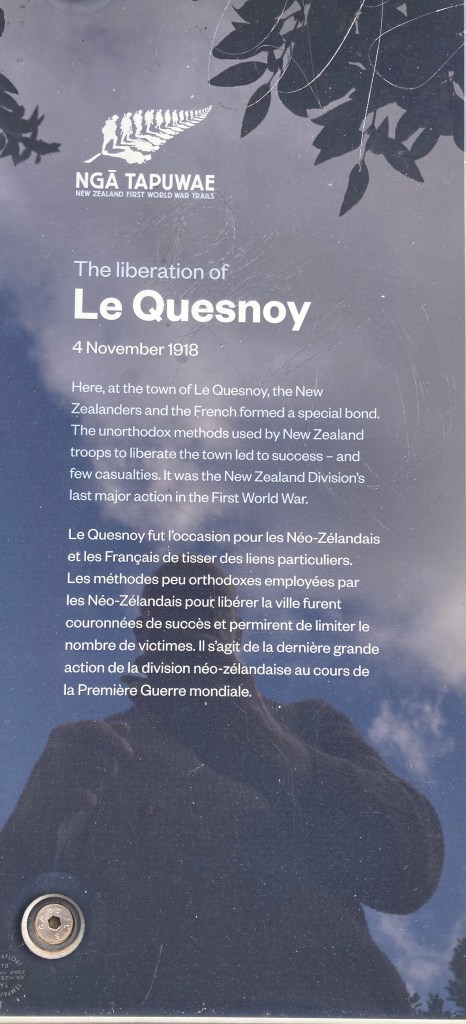
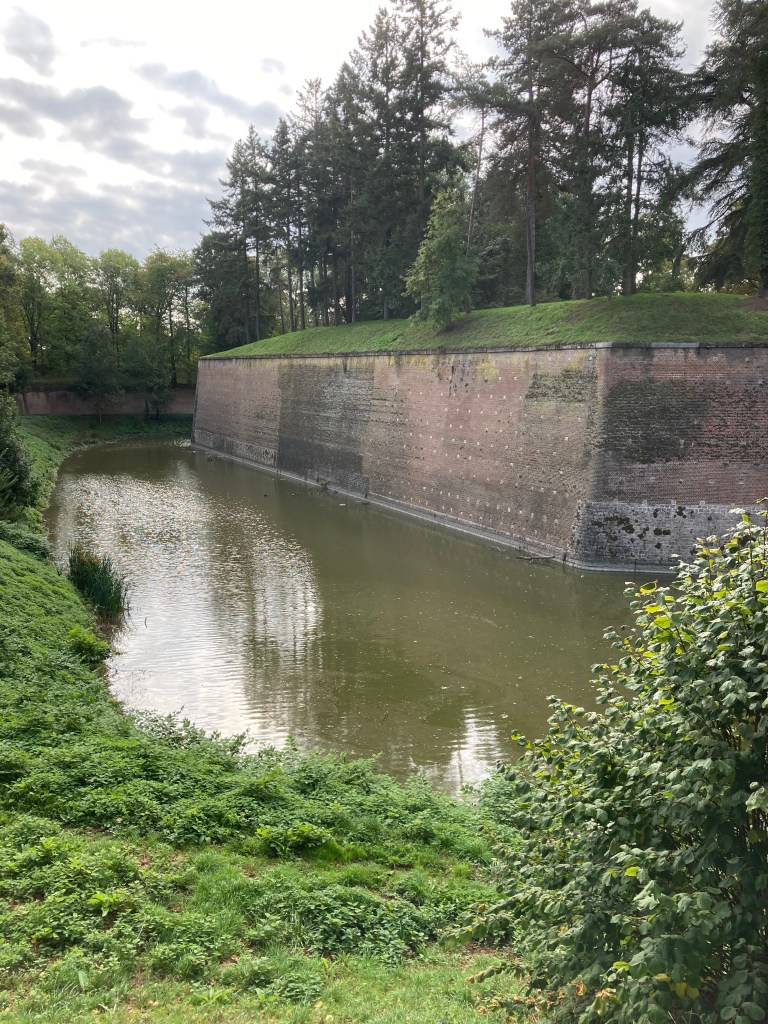
The city itself turned out to be very interesting with the history behind its fortifications ( dating back to the 12th century ) and its part as an occupied city in WW1 and its amazing liberation by New Zealand forces a week before the Armistice.
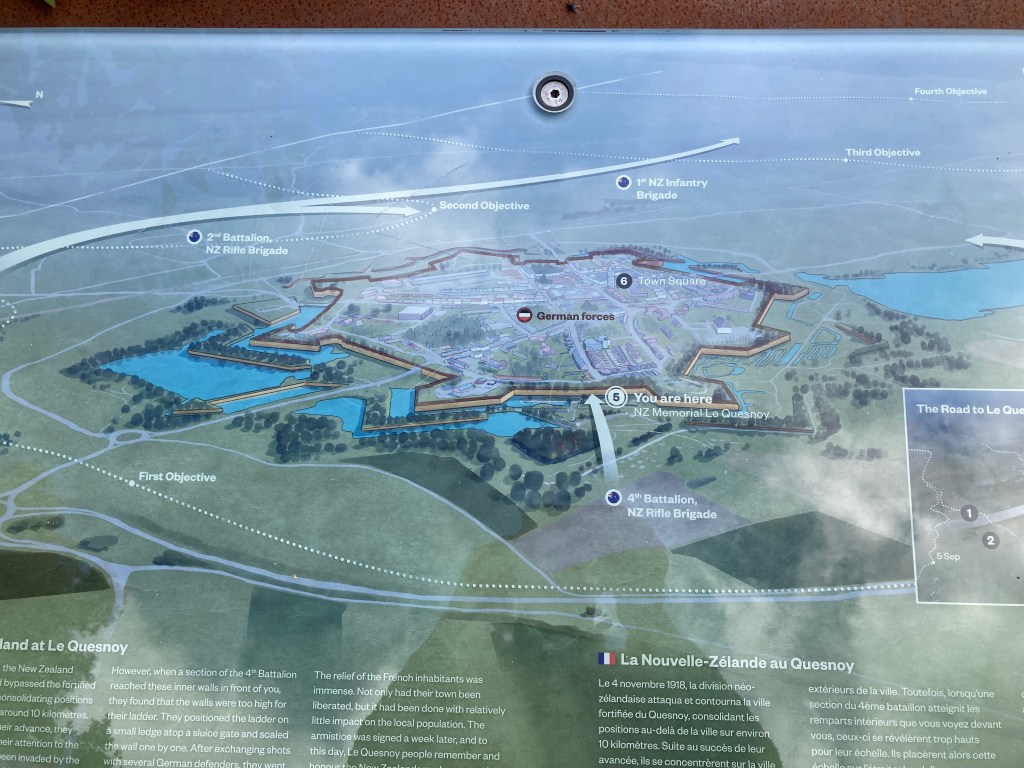
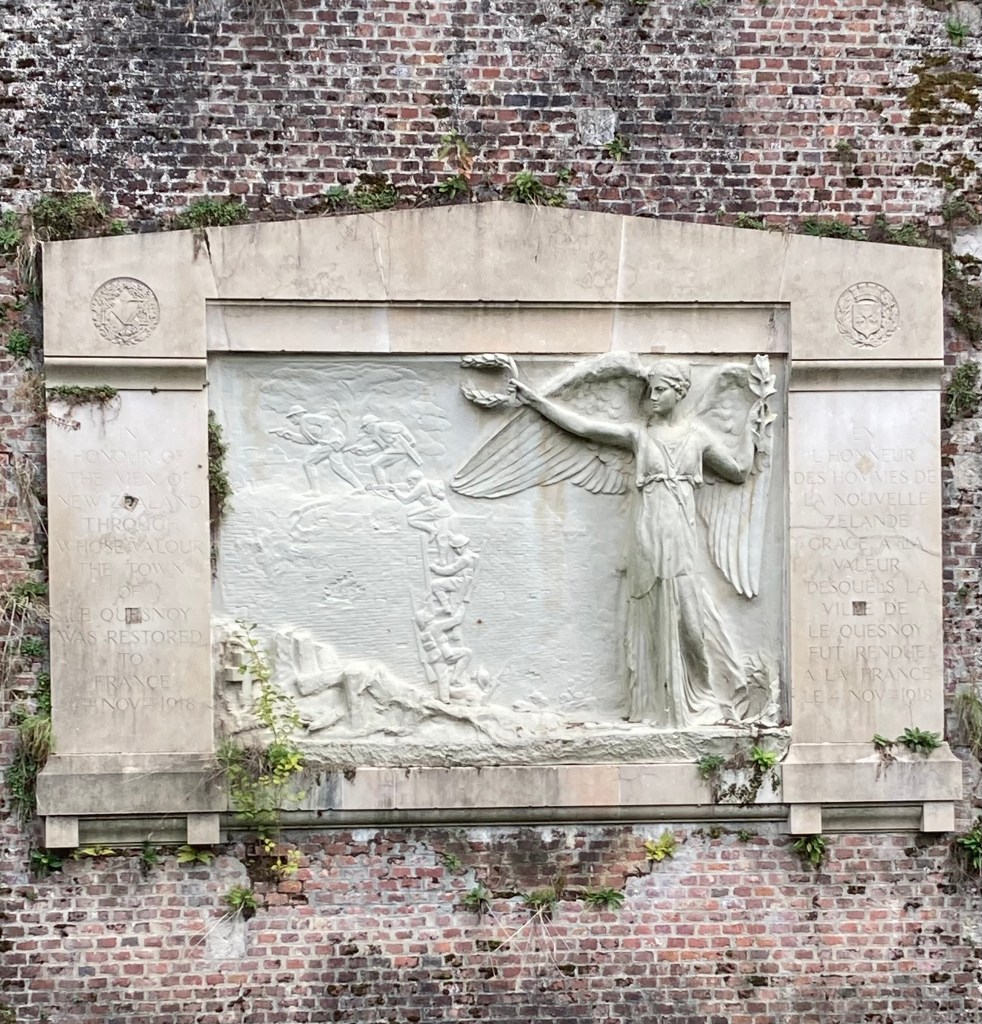
To understand why a special bond has formed between the city and New Zealand the act of liberation needs to be explained. For four years 1500 German soldiers had controlled the city and being a fortified city with stone and brick embankments some 10metres high in places defence had seemed relevantly easy. What the New Zealanders did was find the point of weakness that allowed a small detachment using ladders to scale the wall and create a secure access point for the rest of the regiment to follow.
This heroic act came at the cost to the New Zealand division of 114 deaths and 464 casualties. The city in thanks have created a series of tributes including a memorial, a gate of honour and a garden of remembrance and continue to hold ceremonies on Anzac Day.



 Truman travels
Thanks for the blog Steph. Nice to have the background of the places you visit. Carry on the good work! Xx
Sent from my iPad
>
LikeLike
Hey you two. So pleased to see your post and how you’re doing. All lovely here. I’m moving in with Jem at the beginning of December. Hope to see you when you return. Have a fabulous time. Looking forward to seeing further updates … Lots of love ??
Sent from Outlook for iOShttps://aka.ms/o0ukef ________________________________
LikeLike