We all have dreams or aspirations and this particular dream came out of Charles childhood, as a child like now he would read anything that captured his imagination and amongst the many childhood classics he can remember reading at the age of eleven a magazine story about Thor Heyerdahl who had visited Easter Island to investigate the famous Easter island statues. The reason for Heyerdahl’s visit was to re assemble a fallen statue back upon its base proving techniques that the local oral history believed were first used around 700AD. The photos that accompanied this article showed oversized human like figures with dramatic facial features towering over Thor and his fellow workers. Charles childhood dream at that time was to one day visit and see these statues for himself. Fifty years later his dream has come true and here We are on the island learning a lot more about these enigmatic figures.
Interestingly although he was 11 when He read the article, the visit of Heyerdahl had taken place in 1956 the year of his birth, that surely was destiny in action.
In the seventeen hundreds European explorers came across this uncharted but populated island and decided as their arrival coincided with easter it should be called Easter Island choosing to overlook that the island already had a name – Rapa Nui.
After a 6 hour flight across the Pacific Ocean from mainland Chile and a warm welcome from our hosts at the airport
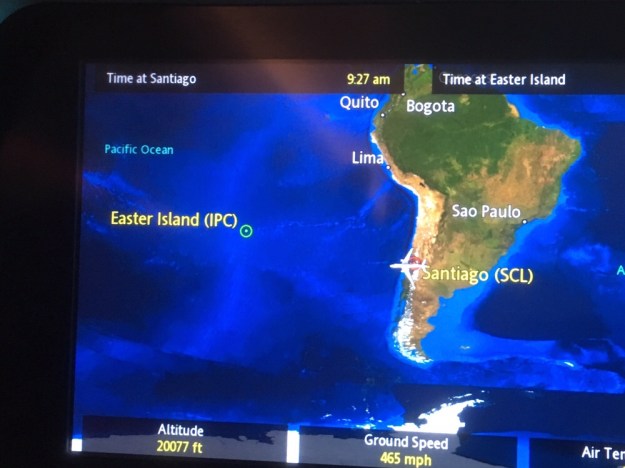
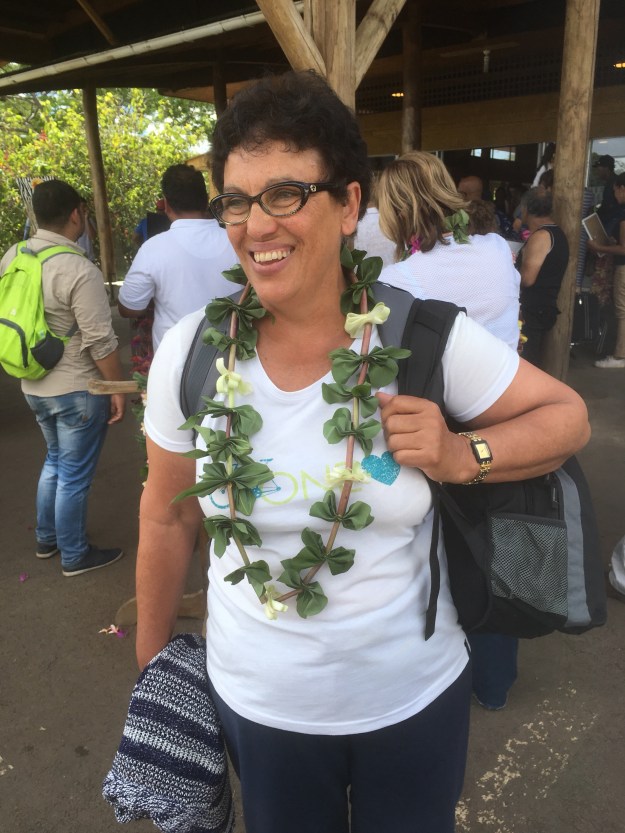
We had arrived and our arrival coincided with the annual festival known as Tapati. During the Tapati celebration, the town is divided in two, each part constituting an “alliance” or clan representing the ancient races of the island. Each clan chooses a queen to represent and “lead” them during the competitions and the winner will have the right to the title of “Queen of the Island” for that year. It’s not a beauty contest, but rather a peaceful confrontation between the two clans that will compete through the days and night; where each participant will be able to express their physical and artistic skills to earn points for each candidate. The queen of the clan with the most points will win the crown. skills to earn points for each candidate. The queen of the clan with the most points will win the crown.
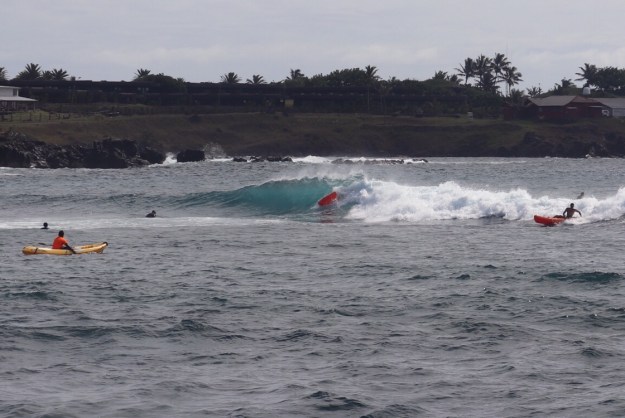
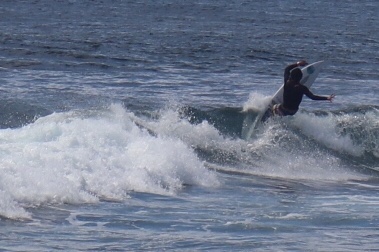
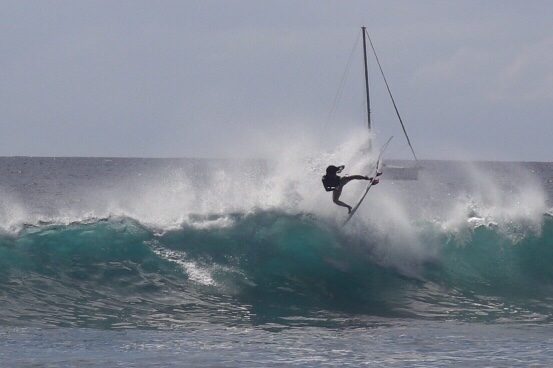
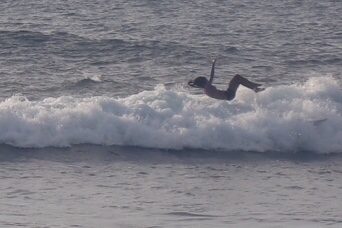
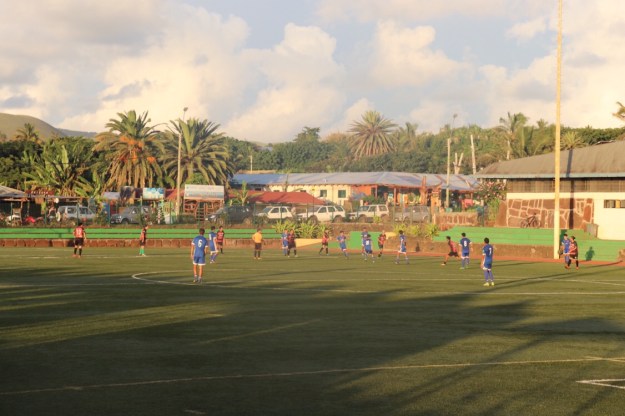
We enjoyed an early evening drink overlooking the local main bay full of surfers, body boarders and surf canoeists whilst behind us a football match on the small stadium pitch was in progress.


Afterwards we followed the crowds to a park area with stage and stalls and we found ourselves at the front of a standing area behind the main seating and took up position centre stage. We could see a darkened stage full of people and the sound of musicians, it soon became clear the entertainment was warming up and we awaited the beginning of the show
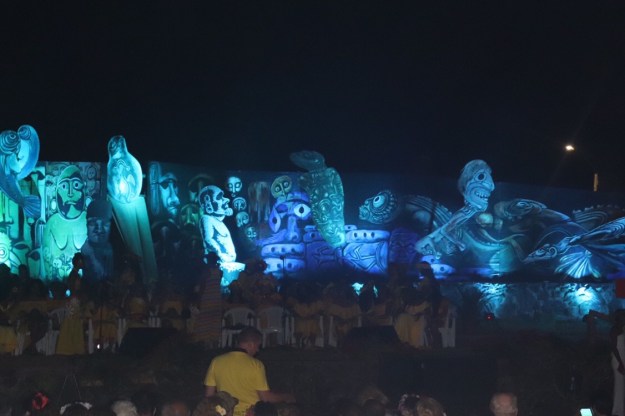
About 10.00pm the stage lights came on and a brief introduction began. The only part in English was hello welcome and enjoy the show. The rest in local dialect was lost upon us but we soon realised that the event was a competition of 2 groups and was one of the Tapati events
The 2 groups of about 150 people in total were spread across the stage with the left side all dressed in a purple costume and the right side in yellow. They took it in turns to sing and dance to songs with each group having their own musicians sat amongst them.
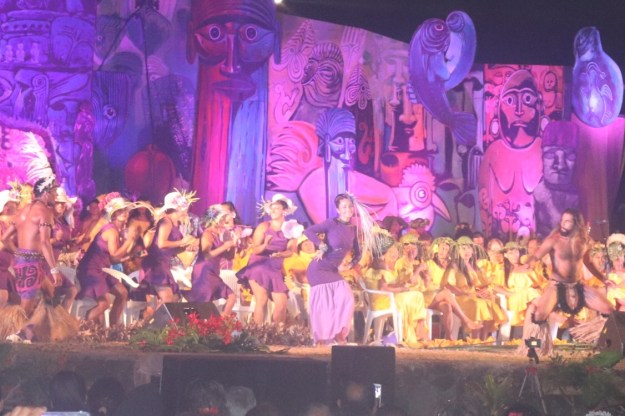
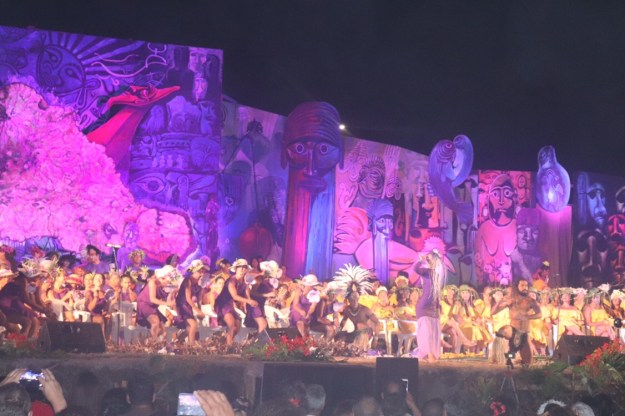
The stage was a riot of colour from costumes and outfits including headdresses with waves of sound leading the different troupes into their songs. Mostly the dancers only came forward to front of stage for their own troupe but occasionally a dancer would get up to dance with the other troupe and sometimes the opposition would invite a dancer to join them.
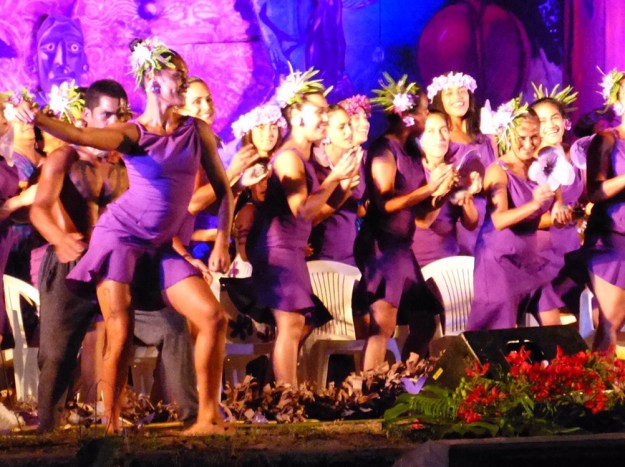


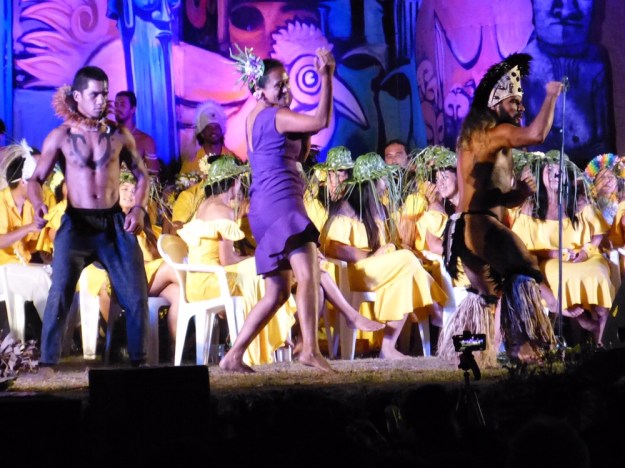

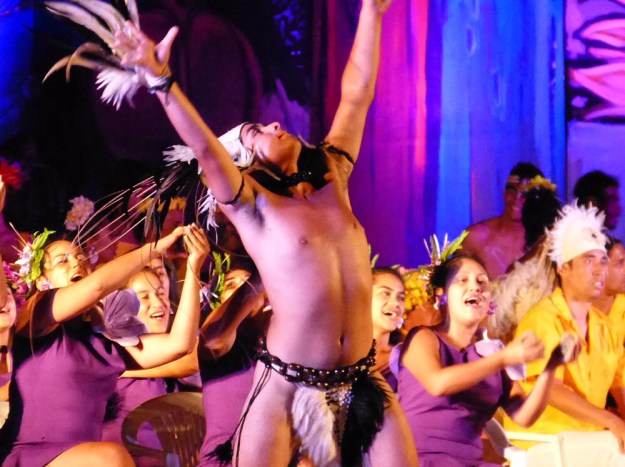
The songs and dances were telling the groups interpretation of a given theme and it was this that the judges at a table front centre stage seemed to be noting down as they marked.
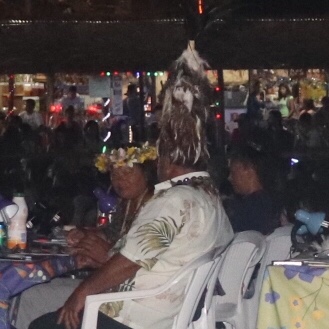
It was an amazing spectacle and the enjoyment that their energy, skill and musicianship provided was something we will never forget. We left the show just before 1.00am and the sounds followed us all the way back to our hotel 1/2 a mile away. We learnt the next day the purple team had won and the event continued until about 3.00 am! Stamina indeed
For our second day we had booked a guided tour of the statue sites across the island. Our email confirmation for the 9.30 am tour had said we would be picked up around 10.00 so we were in the middle of getting up and ready when the hotel staff were knocking on our room telling us the tour had arrived. When we got down to reception we were informed they had gone to collect other guests and would be back. Explaining to our Guide “Rodriguez” the misunderstanding he apologised and said don’t worry we go by island time meaning whenever.
The schedule for the full day tour was to visit 5 different sites including the quarry where all the statues had been carved and transported from so we set off to begin our introduction to the world of the Moai (Mo-eye) to give the statues their symbolic name
In setting the scene for our tour three things we learnt were;
Family groups formed village like settlements wherever they found sources of fresh water. Being an island of no rivers due to the porous geology they sought out natural springs and settled nearby
Chickens were a sacred animal and would only be eaten at the annual sacred day
At some time in the history of the Rapa Nui the old ways had been challenged and Statue sites demolished. This led to a dark period as our guide called it where villages would raid other settlements and slaughter each other.
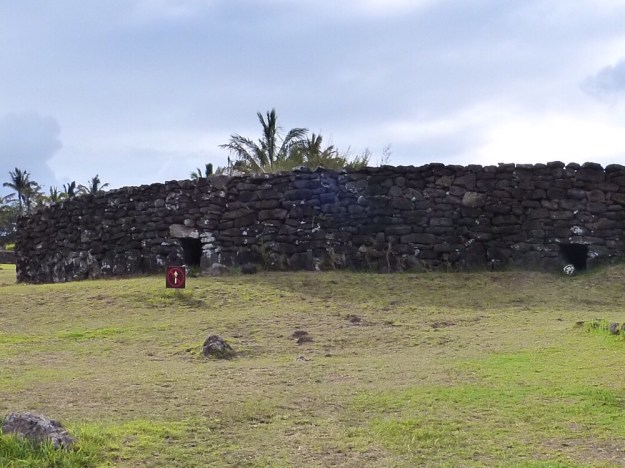
Our first site was Tahai near to the main town and we learnt as the day went on it was a site that gave the most informative introduction into the ancient ways of the first Rapa Nui settlers. This was a small cove giving access to the sea for the outrigger canoes they use and good level land with a small cave like outcrop. The families had created a village settlement of stone chicken coops and defensive shelters, sacred plinths and statues and dwellings they called boat houses.
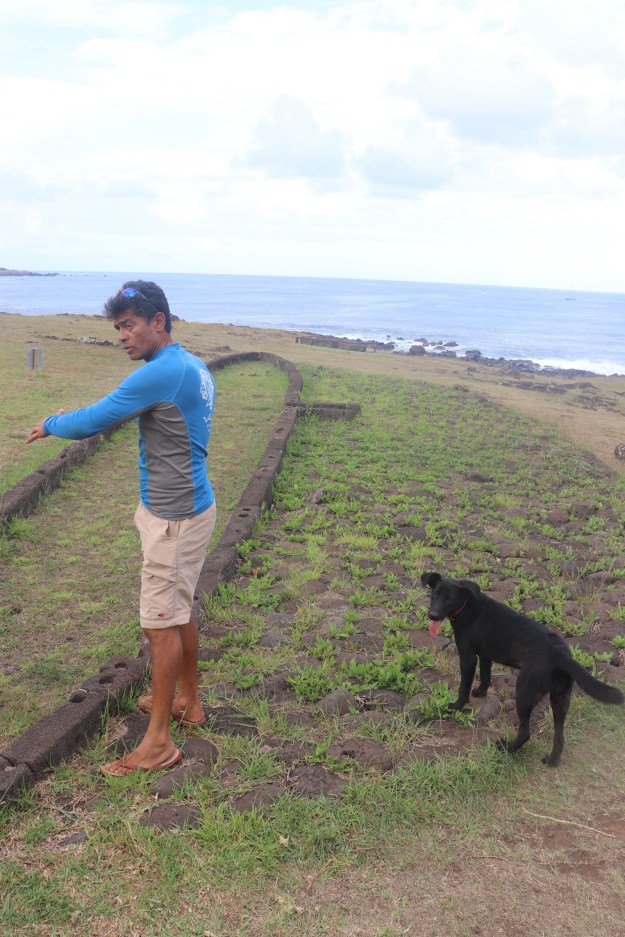

You will notice the chicken coops have no obvious door and the entrance hole when filled with a special stone would be invisible to strangers
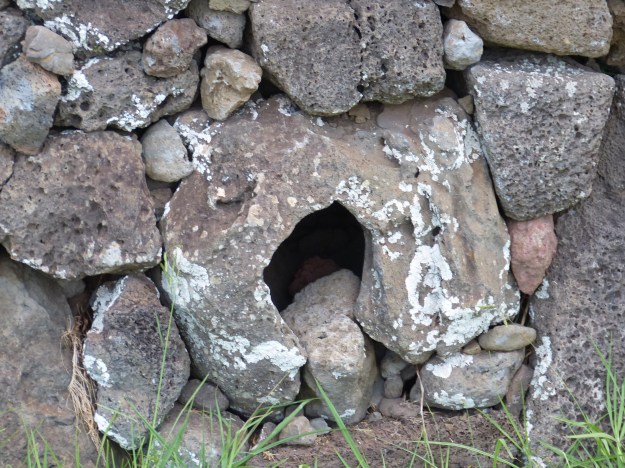
The defensive shelters were formed by enclosing the cave outcrops to give protection from any outsiders attacking the village.
In time the village would construct a sacred area with Moai statues. Those members of the village who were respected for their wisdom and ability would often be honoured by the carving of a Moai. The purpose being to allow that persons spirit to continue to guide over years to come. This was effected by placing certain skeletal remains into a depression on the Ahu (the stone plinth platform) onto which the Moai were placed. The idea being the Moai absorbs the spirit from the remains and transmits into the village through its eyes This is also why the Moai are facing into the village even in coastal settings
.
We then travelled onto Rano Raraku the site of the ancient quarry where all the Moai on the island came from. The site is one of the many volcanic cones on the island and an eruption back in the mists of time had blown off the cone forming a summit caldera and lake.
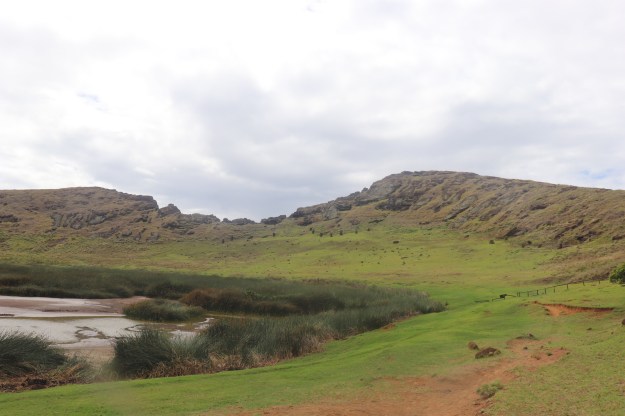
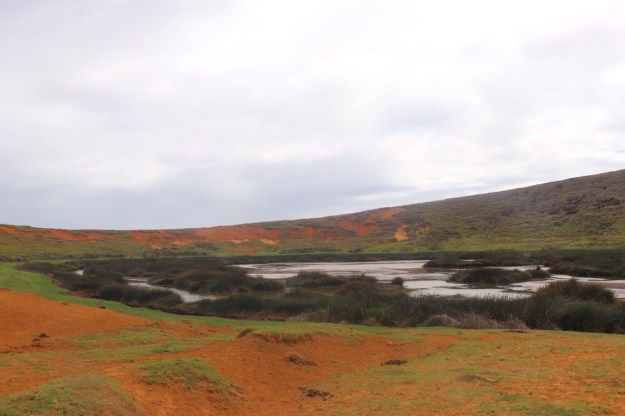
The quarry is in the outer cliff face of the volcano and is dotted with Moai in various positions standing, laying down and partially buried as well as partially carved and still attached to the cliff face. One unusual Moai still on the side of the quarry complete but not moved down the cliff face is a kneeling position Moai. The only one of its kind for reasons unknown?


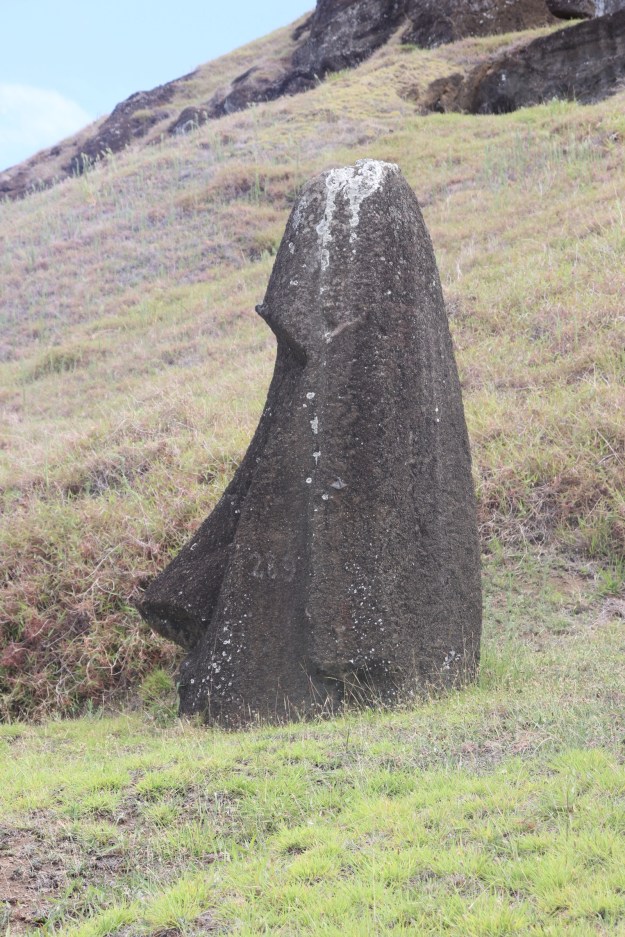
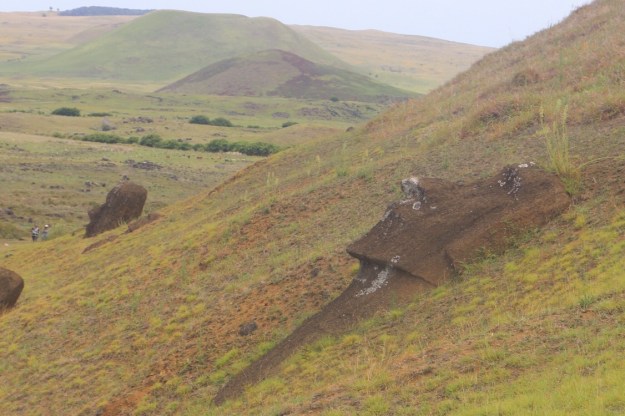
The most contentious subject for years is how were these statues moved. The largest is 10m tall and estimated to weigh 80 tonnes. But oral tradition and scientific tests have shown that they were moved in an upright position and through the use of manpower and ropes they would rock the moai on their base and use that movement to give a forward momentum that made the statues literally walk across the island
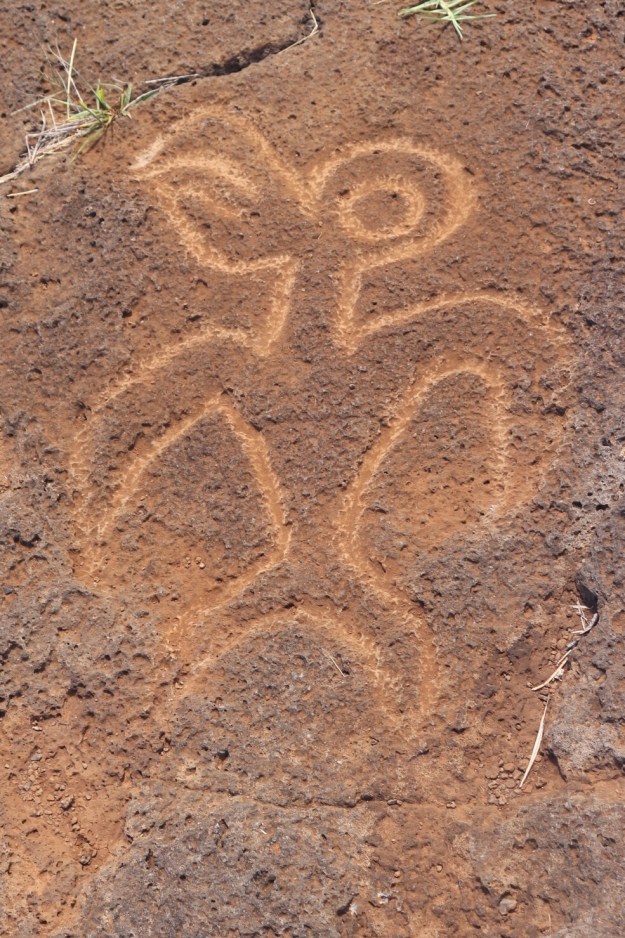
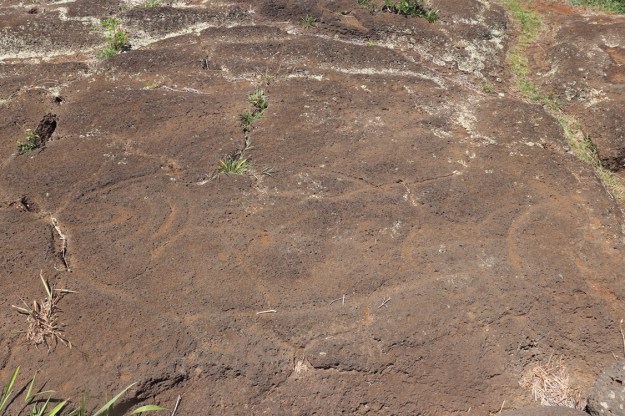
Near to the quarry is one of the most impressive village sites containing 15 Moai. as well as numerous boat house remains. stone greenhouses and artistic impressions (or petroglyphs to give them their name) of sacred images. It is no coincidence it was such a major settlement as being in the shadows of Rano Raraku it was home to many of the stone carvers and quarry workers
The petroglyphs record images of importance. Below you can see a face with a protruding tongue which is a threatening sign of warning to outsiders (Hoko it is called similar to the Maori Haka), a large image of a yellow fin tuna considered valuable as a great source of protein and which based on size of image would have been about 150kg and an image representing the bird man culture which was part of the changing beliefs in the dark period.

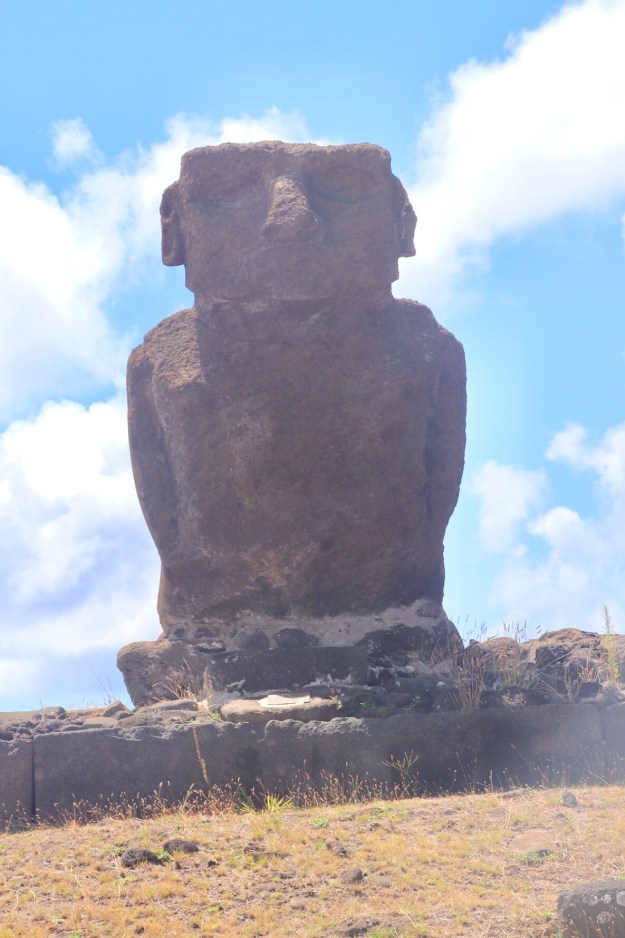
After visiting a couple of other sites we finished our tour at Akahena beach, this is the site were the first Rapa Nui travellers landed in their outrigger canoes and began to settle this uninhabited island. The oral history says they came from an island in the Marquesas chain of Polynesian islands and had sought new lands because there home was disappearing (probably due to volcanic activity)
It was interesting to see the first settlement and my point of destination, as this is where Thor Heyerdahl visited all those years ago. Unfortunately the sunlight as wrong for a great picture but it still was an impressive vision.
Our final day was going to be a long one as our flight was set for midnight and yet we were checking out of our room for 11.00am! The hotel said leave your luggage and use the lounge areas and pool showers later on to freshen up before they took us to the airport about 10.30pm
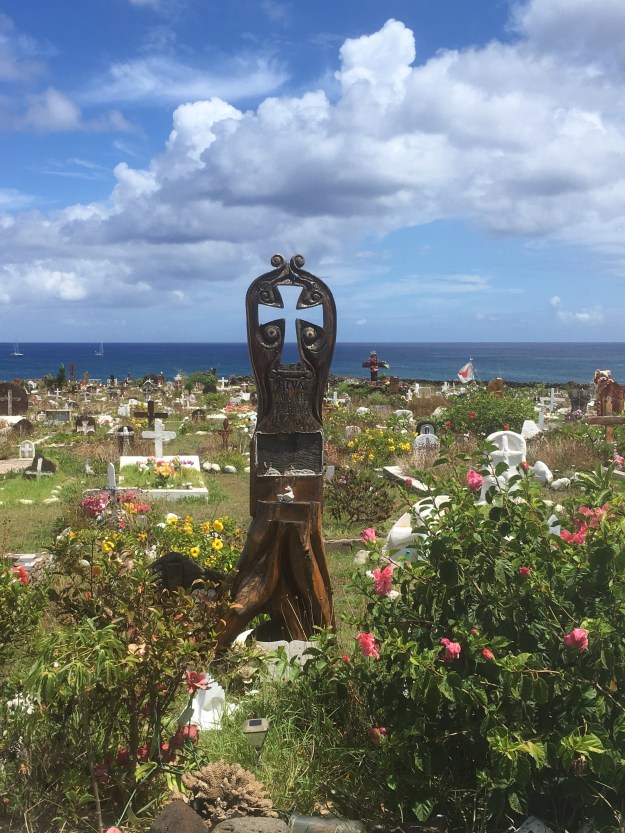
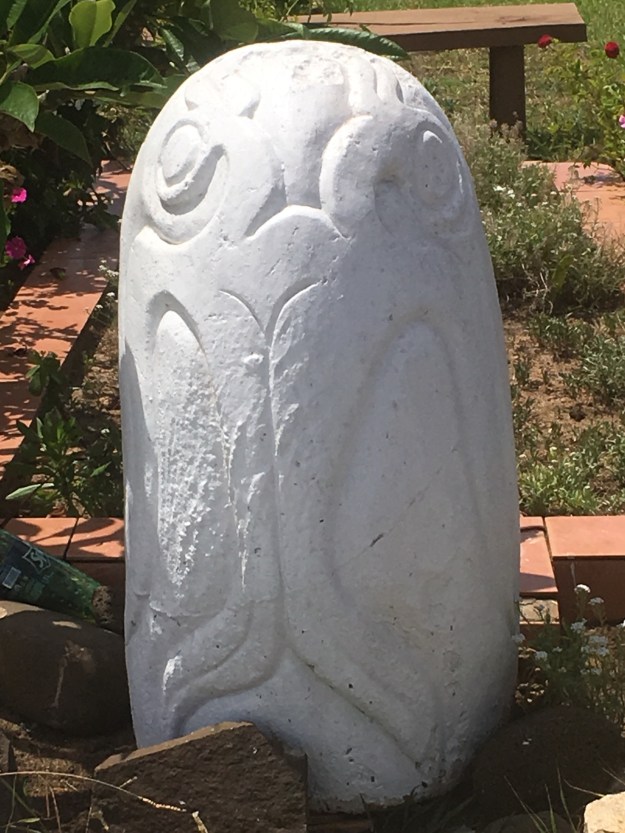
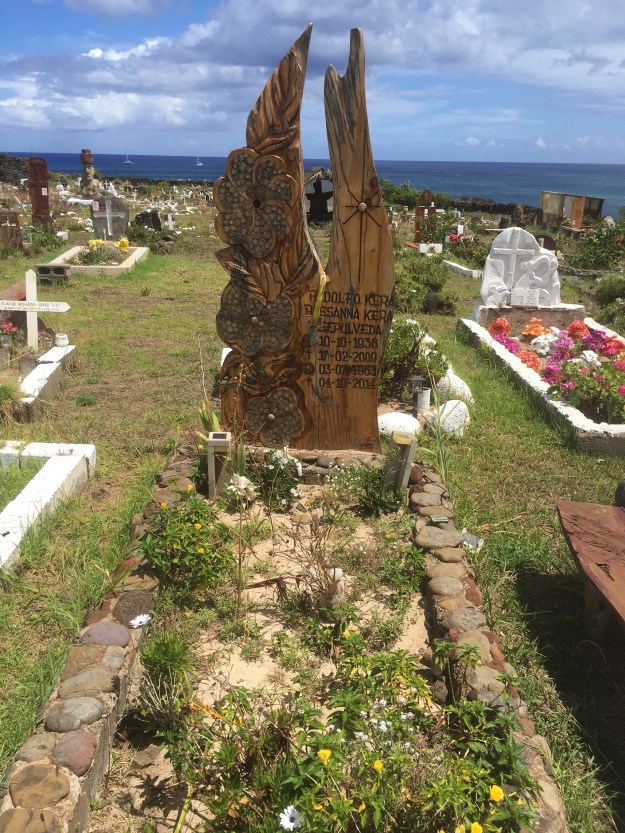
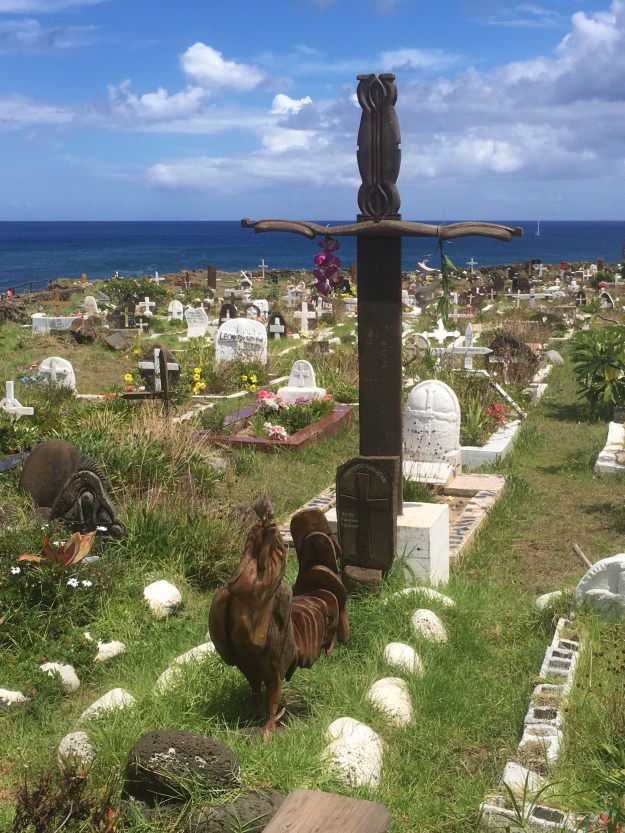
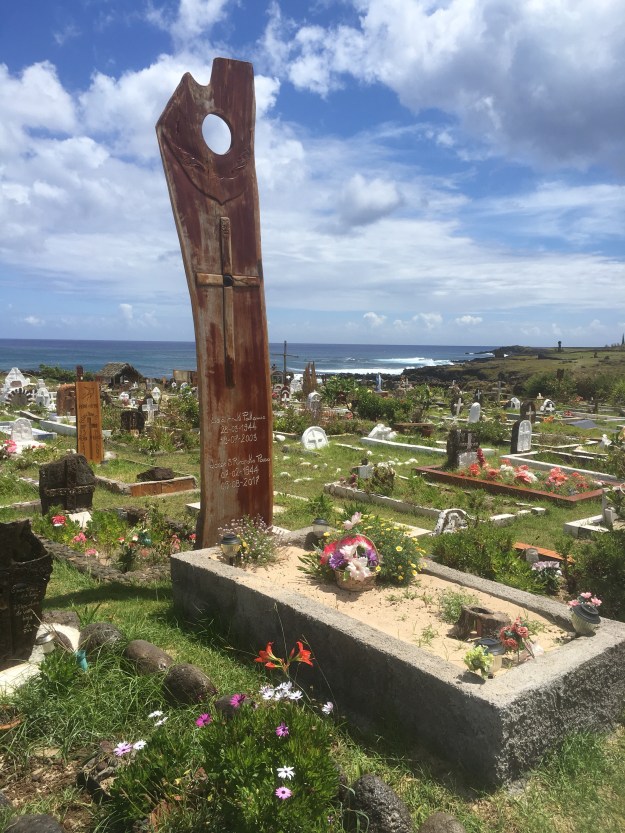
So we decided to wander into town for a breakfast which was very nice salmon cheese bagels and waffles with fruit and then go for a walk through the north side of town visiting the cemetery as the gravestones were reported to be very unusual and walked along the coast to and beyond our first site Tahai.
The cemetery was colourful and different to what we are used to.
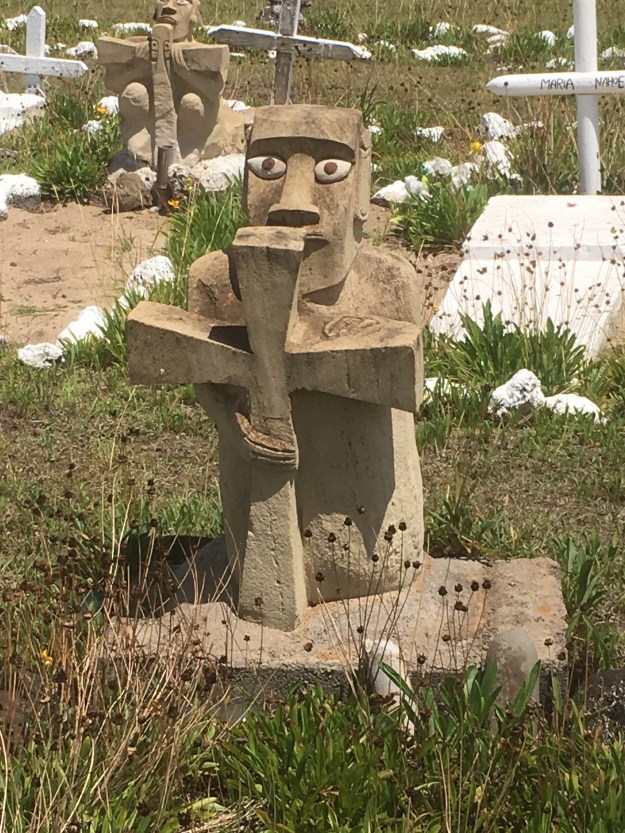
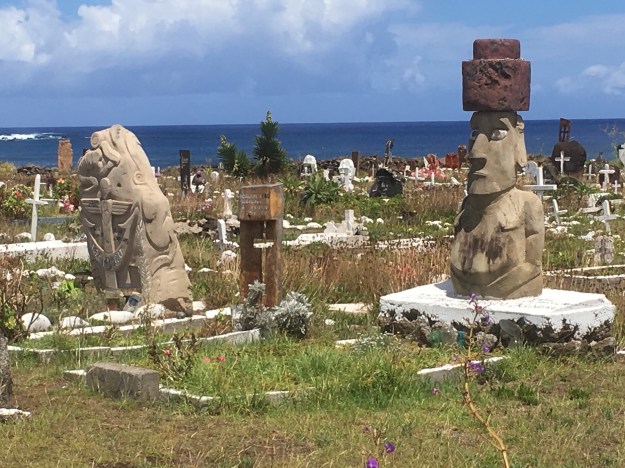
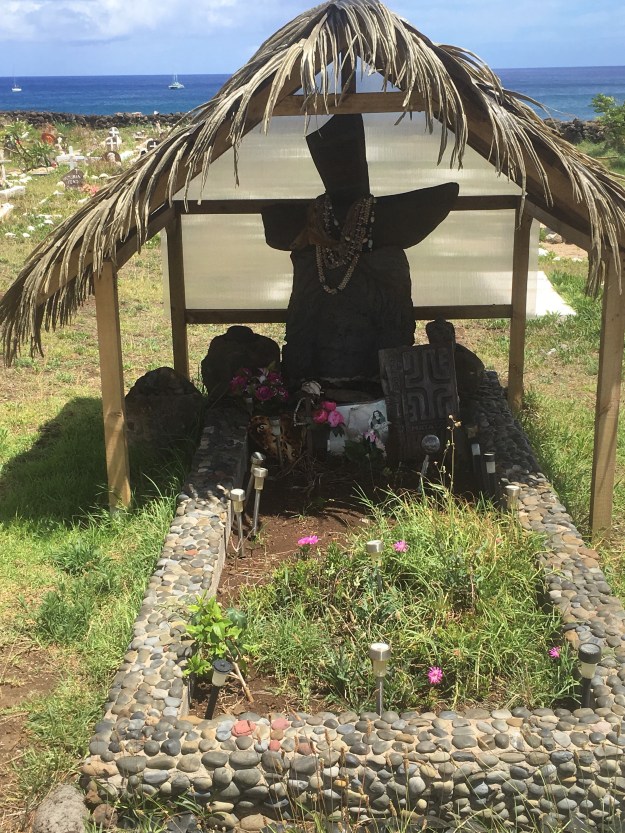
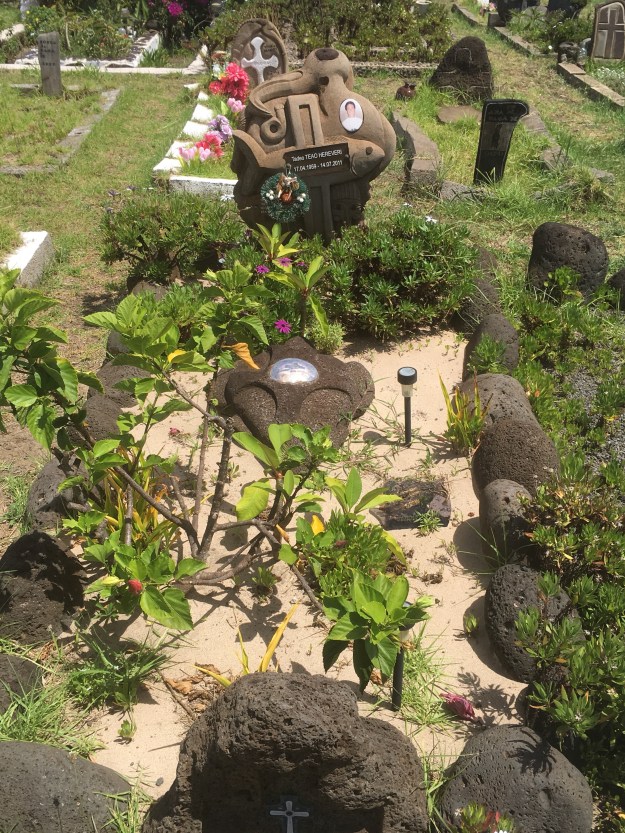
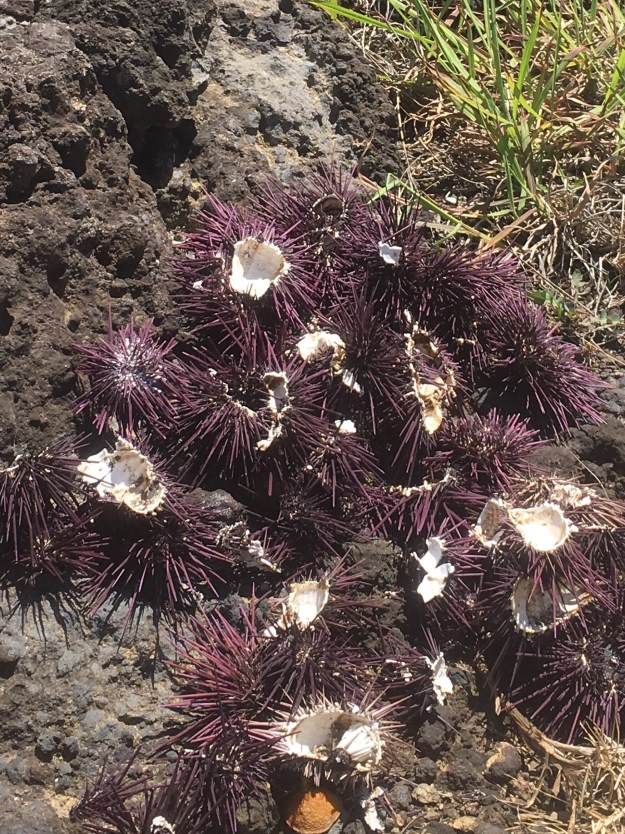
After waking the coastline and going to the next bay after Tahai we found a nice rocky cove with dramatic surf on the incoming tide and spotted the remains of an impromptu ceviche picnic of lime juice cooked sea urchins. All that remained were lime husks and sea urchin spiny shells
And so our brief visit to Easter Island/Rapa Nui came to an end. We packed a lot into our time and were exhausted after the grand tour but as an island it was enjoyable, entertaining and welcoming.
Thank you Thor Heyerdahl for the dream and thank you people of Rapa Nui for everything you shared and the memories you have given us
Lorana (goodbye)
 Truman travels
Well Charles you can tick the Moai off the bucket list! What happened to a photo of them all in a line looking out across the island? You obviously didn’t get much sleep on the 6hr trip as Steff you’ve got bags under the eyes but look quite fetching in the garland. But seriously, thanks for the very fulsome write up you are giving us on your journeys as this must also take up valuable time. Love the sunset photo and the stunning capture of the surfer running on the surf crest with yacht in the background, these are an excellent group of pics. I am looking forward to New Zealand where I expect travelling at your own leisure it will be relaxed and you can catch up on some sleep.
The islanders know how to party I hope you have some recordings of the music to go with the exotic dancers noticeable are all the mobile phones in the foreground. Bon voyage! XX
LikeLike
Yes Di we have a couple of short video recordings. You needn’t have mentioned the bags though,we had been up for over 24 hours. Xx
LikeLike
It’s amazing! The pictures are great, are you allowed to touch the statues? I would love to go .. xx Happy touring Steoh and Charles x
LikeLike
Sorry Lucy no can touch, one day I am sure you and Jim will have similar adventures.xx
LikeLike
Fantastic photos and write up of your travels. You are giving me an insight of places I will never see for myself ….thank you for the time you give to the write ups and photos. Enjoy the rest of your travels…and come back safely so that you can add Wales to your list!
LikeLike
Pleased you are enjoying them Annita, yes they do take up a lot of time but that is mainly due to the poor internet speed and Charles having left the gadget to download the photos at home.
LikeLike
Grazie mille Steph really interesting is Charles bringing back one of those stone carvings to U.K.?probably won’t go in the hand luggage.
D xx
LikeLike
Yet again beautiful photos and very interesting place. A trip to remember! It must be the highlight of your trip so far.
LikeLike