Chiloé

We continue our journey along Route5 to catch the ferry to the isle of Chiloé then along the Panamericana to the islands main town of Castro. a bustling town where like most South American towns the main square acts as a magnet drawing everyone in. Impromptu stalls appear selling anything and everything, entertainment on tap, we sat and listened to one band for nearly a couple of hours and they were still playing when we passed by a few hours later (Amerikantu check them out on Facebook,Charles has posted a short video or YouTube)

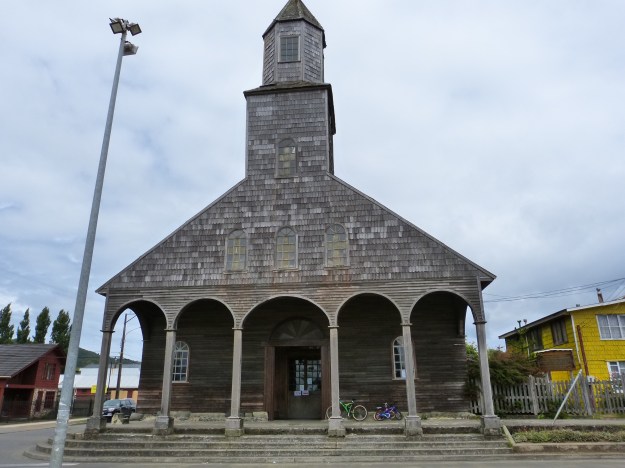
The main attraction for visiting Chiloé  are the UNESCO listed wooden churches which I have to say are awesome when you step inside and admire the detailing of the carvings and inner structure. The other attraction are the palafitos which are wooden houses where the back is built on stilts that overhang the water and act as piers when the tide is in.

8CC7C8C4-D82F-47F3-A256-C6D2FD2D36C4.jpeg

Strolling back from visiting the Palafitos we watched the fisherman tending their mussel beds and caught sight of a flock of black headed swans obviously unique to the area or migratory birds.

The Lake District anyone?

I bet your thinking Kendal, Keswick, Beatrix Potter, Borrowgates and Lake Windermere

Well you would be wrong we are talking Los Lagos in Chile and whilst it does have a similar feel it is different.

Looking out of the window of the mini bus taking us from the airport to Puerto Varas I thought we had returned to the U.K. green fields, trees and herds of cows merrily munching the lush grass, then as we entered the town and dropped down towards the lake there they were, two snow topped volcanoes as a backdrop to the sparkling water reminding me we were still in Chile.

Lago Llanquihue was our lake of choice and in Puerto Varas we had found a nice guest house in an area of the town known as the Monumentos Nacionales area where a refurbishment project is currently underway to restore the original buildings and as you walk around you get a sense of being in a German alpine town.

The lakes are numerous small settlements established about 120 years ago by an influx of Austrian/German immigrants who were obviously reminded of their Alpine homelands and began recreating home, their architectural heritage can still be seen in the buildings around the town and the number of German restaurants.

We took a walk along the lakeside and discovered an artisans tent full of stalls selling the usual local crafts, jams, knitted products ranging from socks to ponchos but the stall I fell in love with was selling a range of quality wooden products for pennies, back home they would cost a fortune unfortunately all to big and heavy to carry in a case. We also came across what I thought was a plastic bag on the shore line, zooming in with my camera I realised that it was a bedraggled looking egret whom  I managed later to catch admiring his reflection in the water. In the evening we sauntered into town where the crowds were gathered to watch what appeared to be the emergency services march by, later we were treated to a band entertaining everyone in the main square, they had a good sound and gave a full on performance.

Taking advantage of the local buses we visited two of the towns further around the lake, Frutillar was our first day trip and we found a very smart beach type lakeside resort. With a curious blend of local housing, schools, churches and businesses mixed in with tourist hotels, restaurants, coffee and gift shops. Frutillars big claim for being modern is they had built themselves a concert hall, the Teatro del LagoSur, right on the lakeside for an annual season of classical music festivities. A big statement of wealth and culture.

Puerto Octay was the second lakeside town we visited. Arriving in a quiet sleepy main square we found a local restaurant where we had lunch then set off to explore the lakeside. A very pretty place, Puerto Octay has somehow ( thankfully) been overlooked by the tourist trade, the people we met were locals just going about their daily lives pottering in their gardens or soaking up the sun by the lake. We did come across a strange looking bird and some great graffiti which i just had to photograph.

All Toured Out

After taking the overnight bus from San Pedro we arrived at La Serena and leaving our bags at the bus depot headed into town to get some breakfast and find an Internet cafe. We needed to organise our onward journey from the Elqui valley as I was under the impression there would not be internet access where we were going. Turns out I was wrong we had a days extremely slow access so thankfully we did book a flight to Puerto Montt and accommodation for our next leg before heading to our pre booked accommodation on the outskirts of Vicuna.

For  some unknown reason we were under the impression that our accomodation was based in Pisce Elqui and not Vicuna so we took the bus and only when we arrived at Pisce Elqui took out the paperwork to check the address and found we should have got off in Vicuna so across the road we went and back on the bus. Having added a further hour onto our journey we finally arrived at our accommodation (Elqui Terra ) tired and bedraggled.

What an oasis of peace and tranquility Elqui Terra is. Set in a secluded spot surrounded by mountains it offers four spacious comfortable rooms with use of a communal area that contained a kitchen and dining space  where our hosts served a delicious breakfast every morning, and a lounge area all looking out large openings onto the gardens and pool area. Our hosts Roberto and Alejandra provide a great breakfast sourcing their products from the local community, jams full of fruit, avocados from a neighbour, grapes and watermelon from their garden. If you need a taxi Roberto is there to book it,we wanted to do a night visit to an observatory, I wanted a massage no sooner said than done what great hosts.

The Elqui valley is famous for its production of Pisco which has a similar taste to brandy. The grapes from which it is made can be seen growing all around the valley and spreading their way up the mountainside to heights that make you wonder how the vines are tended and the fruit harvested. Obviously we had to visit a Pisco distillery of which there were many in the valley, we opted for the one on the road to Vicuna. First was a tour of the museum area with exhibits of the original equipment used followed by a tour of the factory with its modern hi tec equipment. At one point the door of the barrel storage area was opened Wow the alcoholic fumes knocked you back, I am convinced you could get drunk just standing there and inhaling .

Following our distillery visit we headed into Vicuna stopping at an Artesan village on the way for a browse around the shops and a delicious coffee based drink topped with ice cream and cream yummy.

On our second day we decided on a walk into the village located in the opposite direction to Vicuna for lunch at a vegetarian restaurant recommended by Roberto.Setting off we walked down the track next to Elqui Terra along the side of the river  then up onto the road towards Daiguista, where we found a small artisan shop selling a mixture of ceramics and painted hessian wall hangings. Saw and purchased two of the hangings which we thought will look great above our bed at home and fit nicely into our cases.

It was an 8 km walk to the village and feeling lazy after our lunch we decided to take a taxi back. A quick dip in the pool, shower and then a massage which was done outside in a quiet part of the garden, a slight breeze lifting the white gauze sides of the massage tent while all around birds were singing what bliss and what a perfect end to our last day.

Thank you Roberto and Alejandra for making us feel at home and giving us a perfect two days, just what was needed after our busy time in San Pedro.

Jason, if you are reading this we hope you make it to Putre and enjoy it as much as we did. Stay focused and you are sure to achieve whatever you set out to do, just don’t lose your sense of adventure.


San Pedro de Atacama


A tourist trap serving the backpackers travelling across the borders to and from Bolivia and Argentina. As you walk into town every other doorway takes you into a tour guide company or money exchange and on the back of these the obligatory bar, cafe and restaurant. Yet take one of the many tours into the surrounding area and you find yourself in a dramatic and surreal landscape.

After discarding our bags we headed into town and a variety of the tour companies to compare prices and although slightly more expensive chose a three tour package with Terra Extrema as they offered an English speaking guide and came across as more professional than the other three we had approached. We also managed to get a reduction on a fourth half day tour.

Tour 1   Valle de la Luna – we joined our fellow travellers at the Terra Extreme offices at 4pm and left to catch the sunset. Stopping first to climb to the top of a ridge from which there was a 360degree view of the valley needless to say I opted out when I saw the climb yes I would have made a valiant effort to get to the top but looking at it I knew my fear of heights would kick in then where would the group be? Instead I left the courageous ones to it and set off the lone walker on what I could see was an easier route which would still enable me to take some stunning photos.


Next came a trip to a “cave”  (more a large cleft in the rocks ) winding our way through we could appreciate the layered rock formation and the salts and minerals retained in them.

Then joining what appeared to be every tour bus in town it was a mad dash to catch the sunset, sorry to say disappointing probably because the sun went down quite quickly behind the mountain and very little moisture in the air to reflect light.


Tour2  A full day tour taking in the village of Toconao with its pretty bell Tower then onto breathtaking views as we crossed the Tropic of Capricorn dropping  down to Laguna Miscanti and Laguna Miniques.

Unfortunately a selfish tourist had upset the locals when he decided to go windsurfing on a lake near the red rocks where flamingoes were nesting which put a stop to future tours having full access. Fortunately our driver knew where we could have limited access for photo opportunities so managed to get some photos.

Final stop of the day was after lunch at the flamingo reserve on Salar de Atacama and stepping out the van wow was it hot obviously the salt was just reflecting all the heat. Here we saw the Andean and Chilean flamingo besides a pair of Chilean avocets.

Having seen flamingoes in the north then again here further south one can appreciate the different environments in which they appear to thrive, greener and cooler in Putre and a dry desert environment in San Pedro.

What a full on enjoyable day.


Day3 –  A 4am start to get to the Tatio geysers which are close to the Argentinian border at 4300metres above sea level. Everyone emerging from the van bleary eyed due to the early start.

It is the worlds heighest geyser field with sixty four geysers spurting steam to a temperature of 84 degrees described in the guide books as a Dantesque vision, it did not disappoint.


Returning we stopped at an abandoned mining village abutted by a newer small settlement of subsistence farmers who had also tapped into the passing tourist trade by offering food and locally made crafts.

Day 4 – Our final day and a half day tour to see the Petroglyphs (rock carvings ) at Hierbas Buenas two sets of carvings aged between 1200 and 2000 years old set yet again in stunning rock formations. The carvings were a record by the original settlers of what their life was like showing what was a challenge or success.  We finished our tour at the area known as Valle arcoiris (or rainbow valley). The name comes from the rock formations of many colours caused by the different chemical composition of the silica rocks.

Another late one folks thankfully we now have access to a decent internet connection so hopefully should soon get up to date.

Buenas Nochas

PUTRE (sound of water)


Day 1 –  We are here in Putre a small mountain village 3530 metres above sea level it was originally a16th century Spanish settlement which controlled the surrounding native population. We set off early with a spring in our step enjoying the local scenery as we went. Our destination was a six kilometres walk away to some local caves to see the ancient cave paintings. As we walked it was amazing to see how the indigenous Aymara people manage to cultivate such an unyielding landscape using stone faced terraces and successfully grow crops of corn and alfalfa, the alfalfa to feed their mixed livestock of sheep, alpaca and llamas. This area although not as dry as the rest of the province has long dry spells with areas lacking water supplies. The solution to help farming and cultivation is to create water channels built into the mountainside with the direction of the water controlled via small gates very similar to our canal waterways but on a much smaller scale. These water channels were obviously of great importance to the Aymara in keeping their crops healthy.

We were about four kilometres into the walk when I noticed a rock fall along the track we would be taking and that the track had really narrowed down as it wound its way along the mountainside. Well being a bit squeamish about heights decided that we had come as far as I was prepared to go so about turn pronto and head back but not before we had rested next to the trickling stream that ran through the valley bottom and observed some of the bird life. The trek back was arduous as the high altitude started to take its toll, so after many rest stops we finally dragged ourselves back and collapsed on the bed.

Day 2 – Today is our first trip which started really early at 7.30 am breakfast was on the way. We headed out on the Bolivian highway into the mountains passing mainly heavy Bolivian lorries heading to and from Arica which for Bolivia is the nearest access to the sea. Our guide who was full of bonhomie throughout the day introduced us to coca which looks not to dissimilar to dried bay leaf, you chew it to give you energy then spit it out the taste is not to bad but the bits that continue to lie in between the teeth are off putting. Our destination was Salar de Surire 113 sq km of salt flat famous for its flamingoes of which there are three species the Andean and Chilean flamingo and the rare James flamingo. We drove up through the mountains onto the altiplano passing some stunning scenery on the way.  Also spotting herds of Vicuña which are related to the alpaca and llama and are a protected species, local people who are licenced are able to temporarily catch them and shear them for their wool though they can only do this every three years. We also spotted viscacha that look like rabbits with long curly tails  and the lesser Rhea an Ostrich like flightless bird.

After driving around the perimeter of the salt lake we returned via the Polloqueres terma (thermal bath) with everyone making the most of the opportunity to take a dip which was followed by a picnic lunch.

Our guide had forecast that due to the cloud cover that morning it was likely to be raining on our return. True to his word we had rain, thunder and lightning with displays of sheet and forked lightning striking the ground. A dramatic end to the day!

Day – 3  For today’s trip our host at Terrace Lodge Flávio was our guide taking us to lago Chungara one of the worlds highest lakes overlooked by the dormant volcano Volcan Parinacota. He introduced us to his friend “Chukka” a blue eyed alpaca who came when called affording us all a good photo shot.

We then carried onto the lake doing a short circular walk which took us past a viscacha colony and along the lake which hosted blue billed ducks, giant coots and more flamingoes. we left the lake heading to a tiny ancient Aymaran village which is now home to only two families whose children along with 4 other children living in nearby hamlets attend the village school. The teacher drives in for the week returning home at weekends! The little church has some 17th century frescoes which are a mixture of  religious and historical imagery. There is also a story attached to a table in the church that one night it walked through the town and stopped outside a mans house and the next day that man died so they tied it down in the church.

p1090603

Flavio was a great guide very knowledgeable about the local area sharing information and generously pointing out things of interest along the way stopping to enable us to photograph scenery, pointing out colonies of the Andean flicker a member of the woodpecker family that because of the absence of trees lives in holes that they make in the sandstone cliffs. Telling us about the local fauna llarita explaining how it grows and it’s medicinal properties. This plant grows 1cm per year and can be 4000 years old.

Apologies for the late update but since leaving Putre we have not had internet access and have been experiencing trouble trying to publish photos. We are now in the Elqui valley so have some catching up to do re our experience of St Pedro de Atacama, catch you later.


Another one bites the dust

Arica, Arica what can I say certainly a culture shock, broken pavements, stray dogs a plenty though all well fed, potholed roads or “events” as the locals call them, but look beyond the obvious and you find warm friendly people reminding us why we love South America.

Yesterday we visited a private collection of shells gathered from around the world they were all shapes, sizes and colours, such perfection and natural beauty.


On our way we came across the cathedral built in cast iron by the Monsieur Eiffel who went onto build something called the Eiffel Tower which you may have heard of. But this cathedral and another civic building was built in Arica in the 1870s (before the Eiffel Tower) in his Paris workshop and then shipped over and reconstructed here in Arica. A simple building but attractive because of its simplicity.

Finally we took a taxi to El Morro which is the highest point and where the last battle between Chile and Peru took place. It now houses a military museum and is a great place to view the city.

Later walking into town for a meal we could hear all this music ahead of us so delayed our meal to go and find out what was going on. In true Latin American fashion the town was celebrating twelfth night I can’t tell you how many different dance bands there were but what a spectacle everyone in high spirits having a good time and all ages taking part.

Today we headed out of town to the Azapa valley to the Museum of San Miguel de Azapa which holds one of the most important archaeological heritage sites in the country. They have a display of the Aymara culture, an original olive press and a display of mummified corpses of the Chinchorro people who not only preserved bodies but foetuses as well. The exhibits vary in age but the oldest go back 10,000 years.

We then went on to a hummingbird sanctuary where the birds are wild but attracted by the vegetation. It was started by a local lady who decided to plant flowers and shrubs that would particularly attract the hummingbird. A difficult bird to catch on camera due to their size and speed therefore I am pleased to say that we did capture a few images.

No the two birds on an aerial are not hummingbirds could not resist inserting a photo of a pair of birds of prey which I managed to capture as we left the sanctuary.

Tomorrow it’s an early start as we catch the 7am bus to Putre, a small town in the high altiplano of the Andes at 3500 metres and our base for exploring the higher sights of the Andean mountain range. where we will go back to Madrid temperatures of 12 degrees. A definite contrast to here in Arica where we have been enjoying clear skies, sunshine  and temperatures of 26 degrees.

Anna and her nephew Alejandro here at Hostel La Paskana have looked after us well so a big thankyou to them both and we would recommend there hospitality to any of you that venture this way.

Putre here we come.

Moving on

WOW what a stunning view as we flew over the Andes, absolutely breathtaking the photos do not do them justice. Mountains gradually give way to green valleys as the plane starts its  descent on to the tarmac.


Just a fleeting visit to Santiago due to a flight cancellation changing our plans. Stayed in a stylish apartment which was filled with some great art work, also brilliantly located for getting around on foot. As we have booked a further four nights in Santiago prior to our departure to Easter island decided to do a circular walk around taking in the main square, Pinochets old headquarters and finishing with a walk in the park leaving the serious sightseeing for our return.

Sorry  folks hoped to give you some photos but having trouble loading them?

Arrived in Arica ( the most northern town in Chile and the nearest to Peru ) what a change of scenery sand as far as the eye can see flanked by the Pacific Ocean one side and the Andes mountain range the other. We were met by a charming young man who decided to take us on a detour along the coast road pointing out things of interest on the way. Odd coming to a crossroads with road signs reading Bolivia one way Perú the other.

Besides sand the other thing in abundance are vultures I have never seen so many think of the largest rookery you have seen then multiply a hundred times ( might be slightly over exaggerating) not sure I will be laying on the beach I don’t want to be anybody’s dinner.

Dropped of our bags and went for a walk ending up at the bus station with the intention of booking our onward tickets. There is only one bus a day to Putre so thought it best to make sure we were on it also decided to book the bus to San Pedro de Atacama to ensure we could get a sleeper. Got talking to a really helpful lady (Beatrice Morice) in the ticket queue who helped us purchase our tickets and interestingly ran trekking tours  ( Atacama desert bike tours ) she had just come back from Bolivia where she had been running some tours and was on her way to Putre for a couple of days rest before returning home to San Pedro We have her card and hope to meet up with her for a drink when we get there.

more exploring tomorrow.

Habla Luego

Bags are packed and ready to go

Farewell Madrid😕

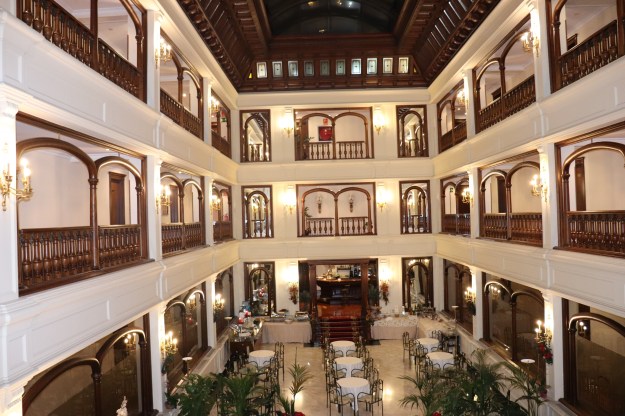
We have had a quiet couple of days staying in a lovely hotel Don Pio reminiscent of one we stayed at in Mereda capital of the Yucatan region of Mexico. It has a three storey atrium which houses the dining area with all the rooms opening  onto balconies that look down into the atrium, beautiful.

D3883CFF-F119-4060-9705-EC7125086DBC

Yesterday  being New Year’s Day  all the attractions and shops were closed so we blended in with the locals and spent the day promenading around the town visiting a local bar for tapas and a few drinks.

Today we have been more adventurous heading 28 miles north on the train (for the princely sum of £4.50p per person return ticket and 50 minutes of our time) to visit El Escorial a Spanish royal site and UNESCO world heritage site which historically has been a monastery, basilica,royal palace, museum, library, university and hospital. Definitely worth a visit to see the difference between how the Hapsburg and Bourbons utilised the palace and the building itself was stunning. After visiting El Escorial we went for a walk around the town which had various life sized figures depicting the nativity story wise men on camels, shepherds with a flock of sheep that took up a whole street, wonderful to see. Dropped in to a bar for drinks and lunch got talking to the English  guy next to us, (Ben Curtis) he had come to Madrid 19 years ago from London met his wife and now runs an On line language business (www.notesinspanish.com) Decided to walk back to the station thankfully all downhill and not that far ( we had taken a taxi up). We had arrived in sunshine and blue skies now the mountains were shrouded in mist very spooky.


Tomorrow the real adventure begins Santiago here we come.


Feliz 2018

Well here we are in Madrid our great plans to greet the new year with the locals have gone awry. Having overshot our metro stop from the airport thanks to (Booking . Com’s misleading directions resulting in a 1.5 mile walk ) we finally arrived at the hotel around 11pm shattered and definitely not up to trekking back to Plaza Major to enjoy the celebrations. Instead having begged some mixers and ice of the nice chap at reception we are watching Madrid welcome in 2018 on the tele in bed having hit the mini bar and (not sharing the one packet of peanuts we found) I (Steph) have had the lions share thankyou Charlie xxx

In true Truman fashion had the taxi waiting outside while we finished packing only realised it had arrived on going out to throw the rubbish in the bin. Frantic phone call in the cab to neighbours to ask them to go and turn on the alarm which we had forgotten to set and apologies for not going to take our farewells, oh well it’s good they know us so well.

An uneventful journey once we arrived at the airport usual bleeping going through passport control due to prosthetic knee, duty free the usual rip off , actual flight ahead of schedule must of had the wind behind us, good old Blighty glad to see the back of us?

Currently watching sequel to airplane in Spanish listening to all the fireworks outside.

Wishing all our family and friends a wonderful New Year  may it bring you all that you wish for.


To Speak or Not to Speak

So this weekend and our departure is almost upon us and i have been attempting to learn spanish or “Aprender Espanol’ as my teacher and classmates would say.

But after 10 weeks of lessons i am a raw beginner, yes i have learnt some phrases and words (probably more than i appreciate) but i still think my most used phrase is likely to be “perdonome habla poco espanol)

Do i try and communicate in Espanol or do i chicken out and play the englishman abroad? Well i am going for making a fool of myself (and hopefully new friends who correct my mistakes) and it will be using as much spanish as possible – hopefully no wars are started or jails visited!!!

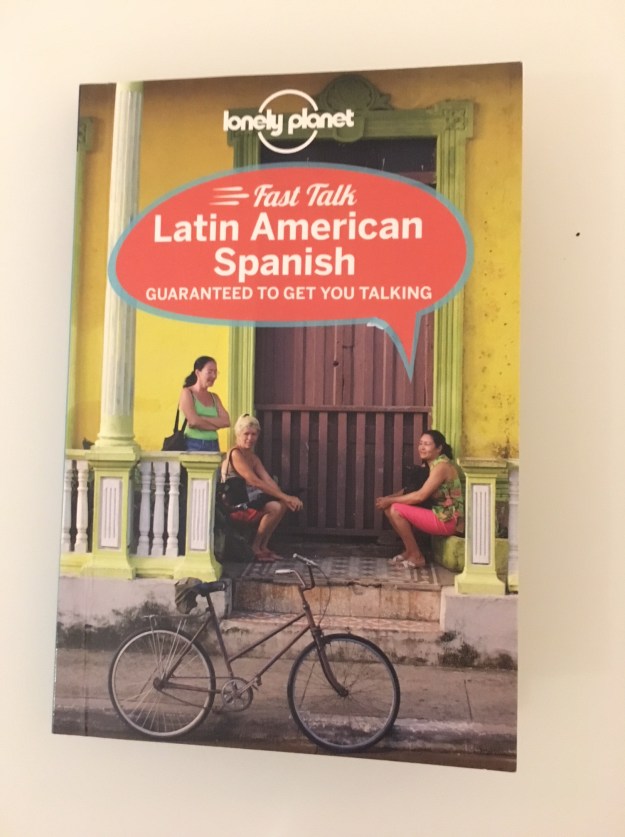
My Learning for Fun teacher – Louise – very kindly treated me to an end of term present to send me on my way into Latin America and i am sure it will be well thumbed during our time in Chile.

Hasta la vista

IMG_8966