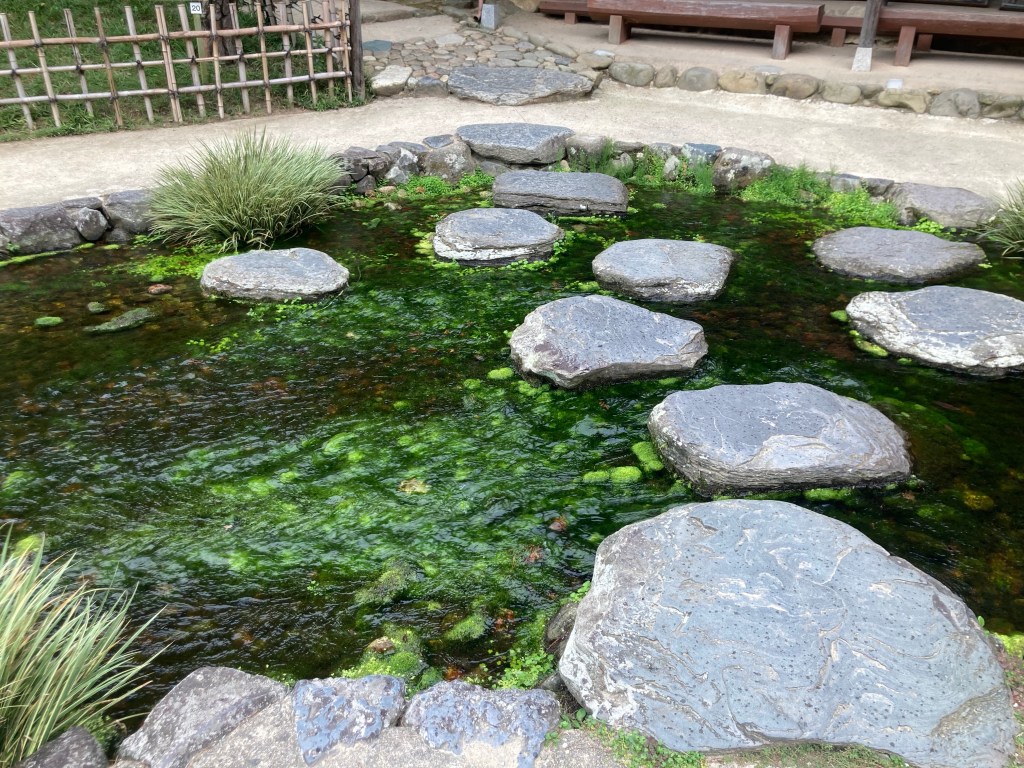
Intrigued by a relocated historical village we visited Shikoku Mura. A collection of historical buildings that had been relocated from across the island of Shikoku to preserve the historical usage and lifestyles. The village exceeded our expectations and successfully educated you on how village life existed. The variety of the buildings provided an insight into various traditional country crafts ie: soy sauce production, sugar cane pressing, bark steaming for the production of paper, rice flour production by watermill.
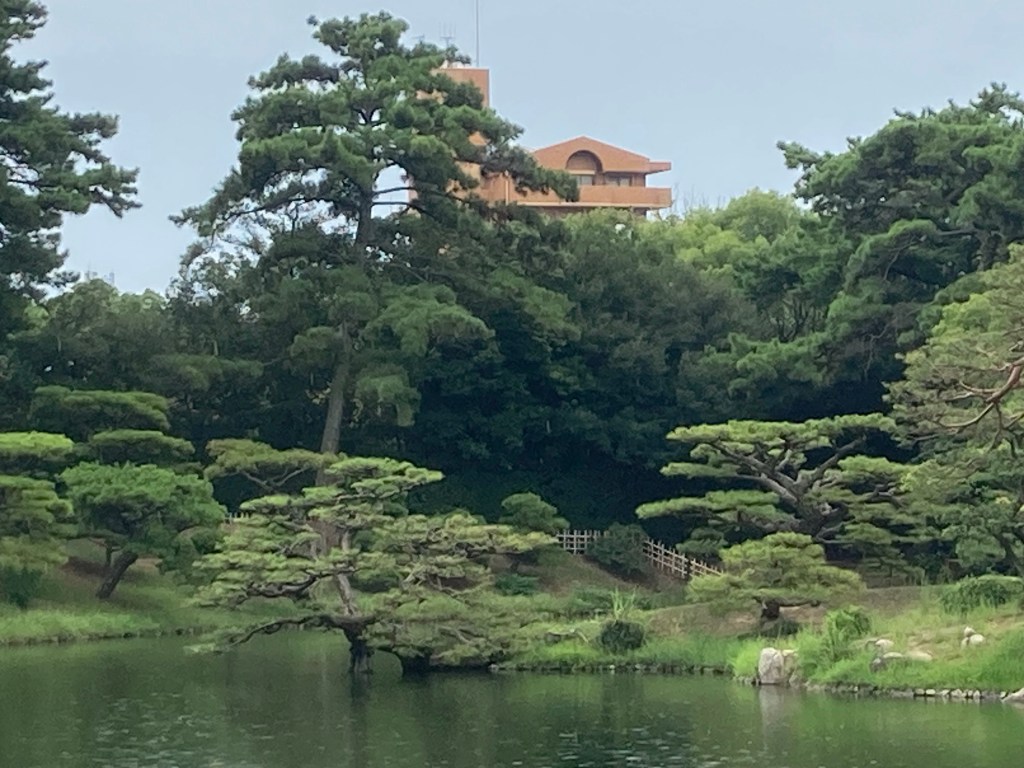
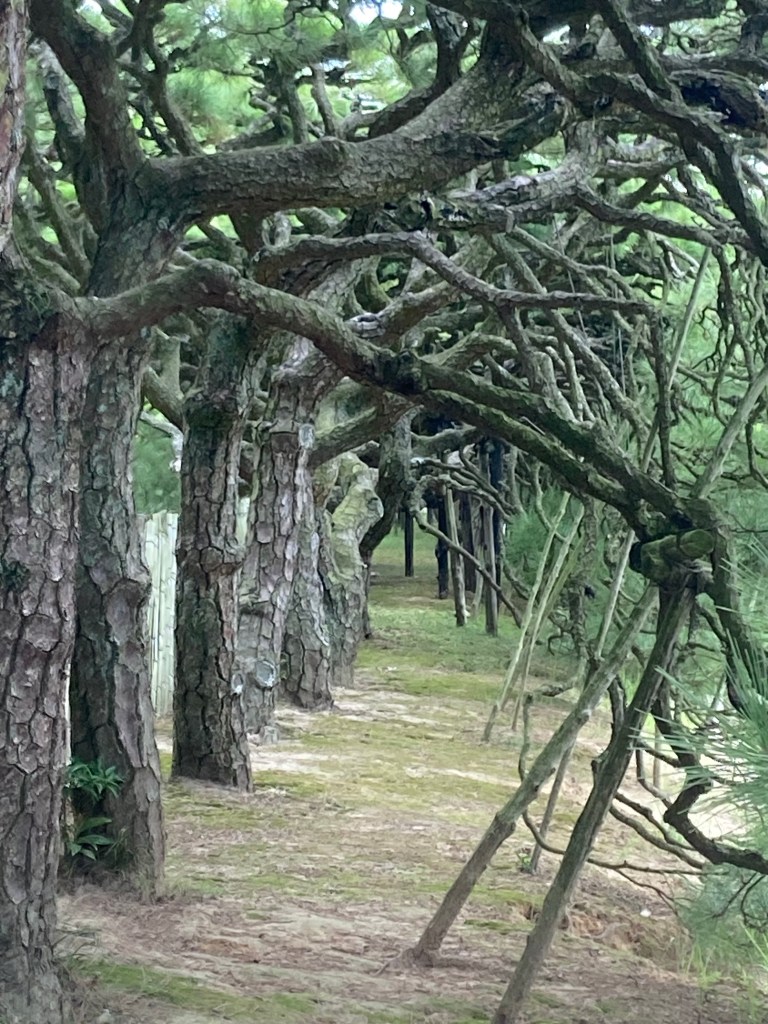
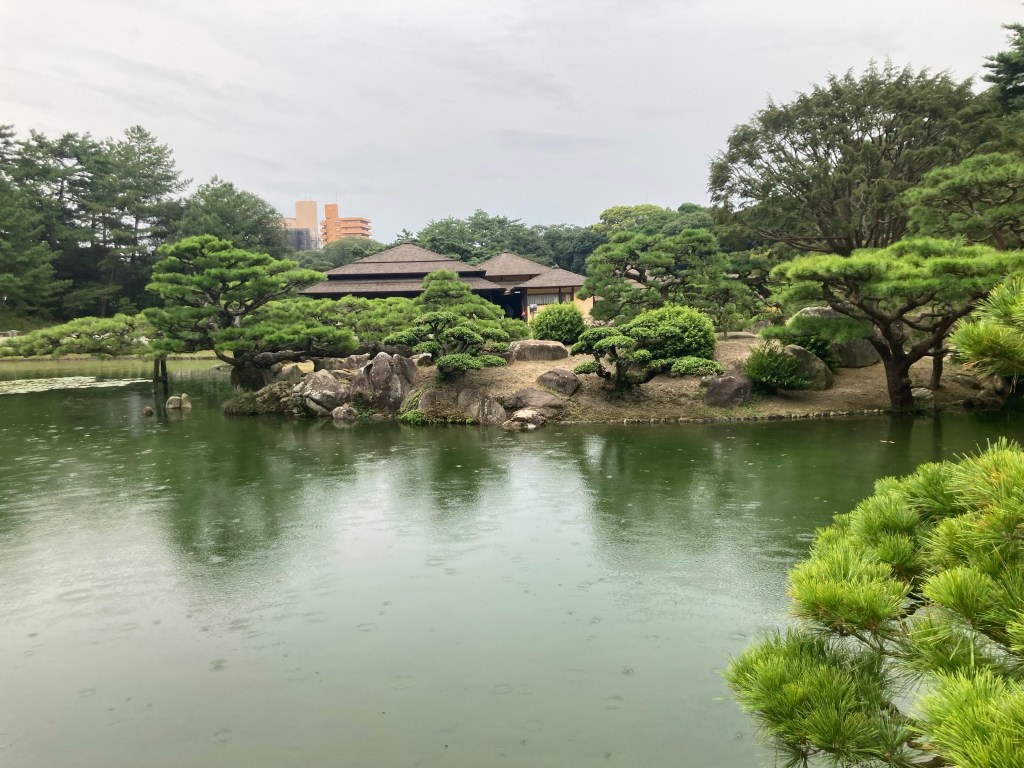
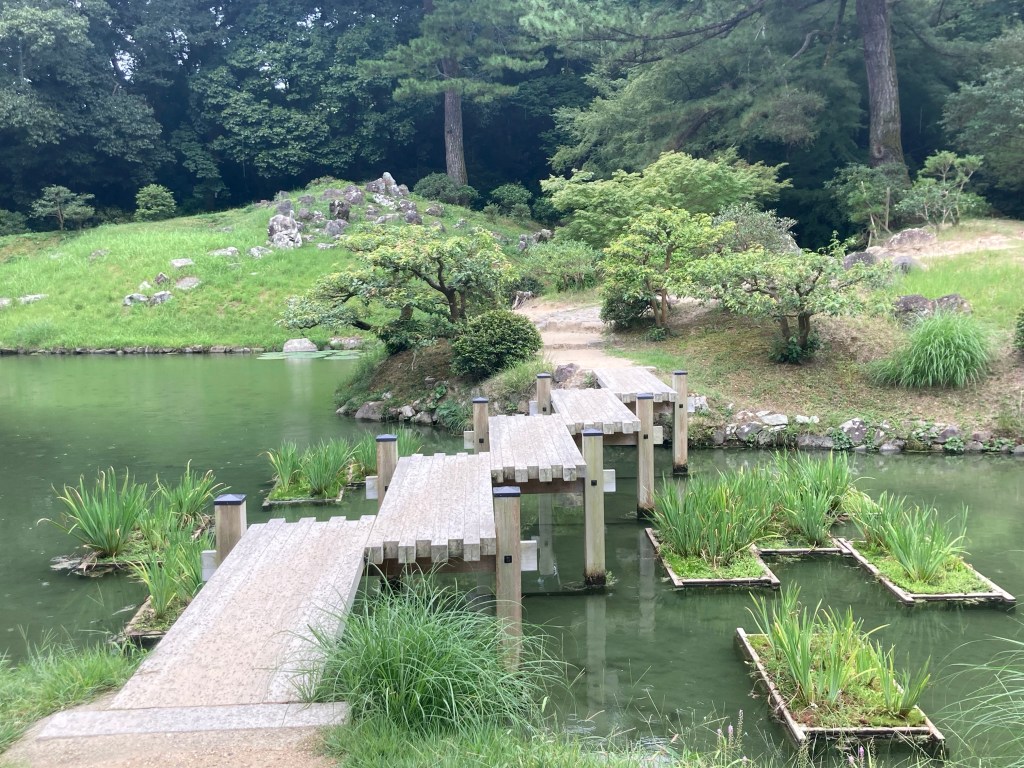
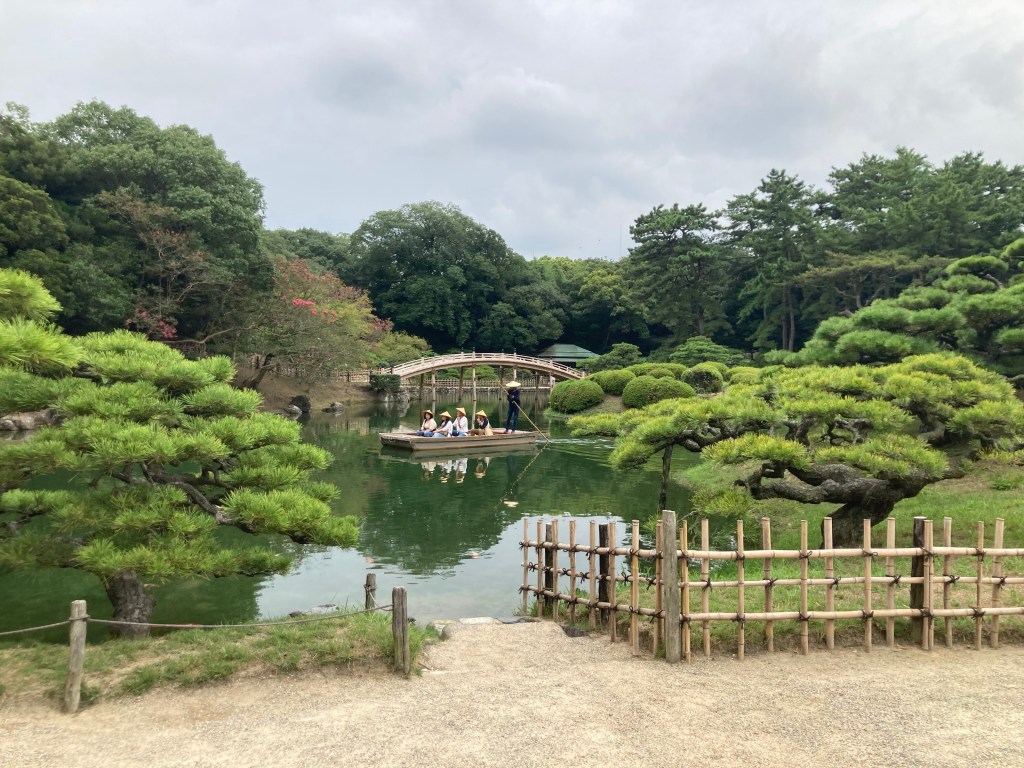
If you read about famous Japanese gardens Ritsurin garden does not get a mention in the top ten yet for us it epitomised everything we love about Japan and it was one of the highlights of our trip. It is split into two halves old and new, the original garden was developed four hundred years ago the new one a hundred years ago. The original four hundred year old garden is in a very traditional style especially the marriage of trees, water and view points whilst the newer garden has less obvious water areas and the viewpoints are less dramatic. It should be noted that within the garden there are approximately 1400 pine trees that had been planted to create dramatic views through their density and traditional shaping.
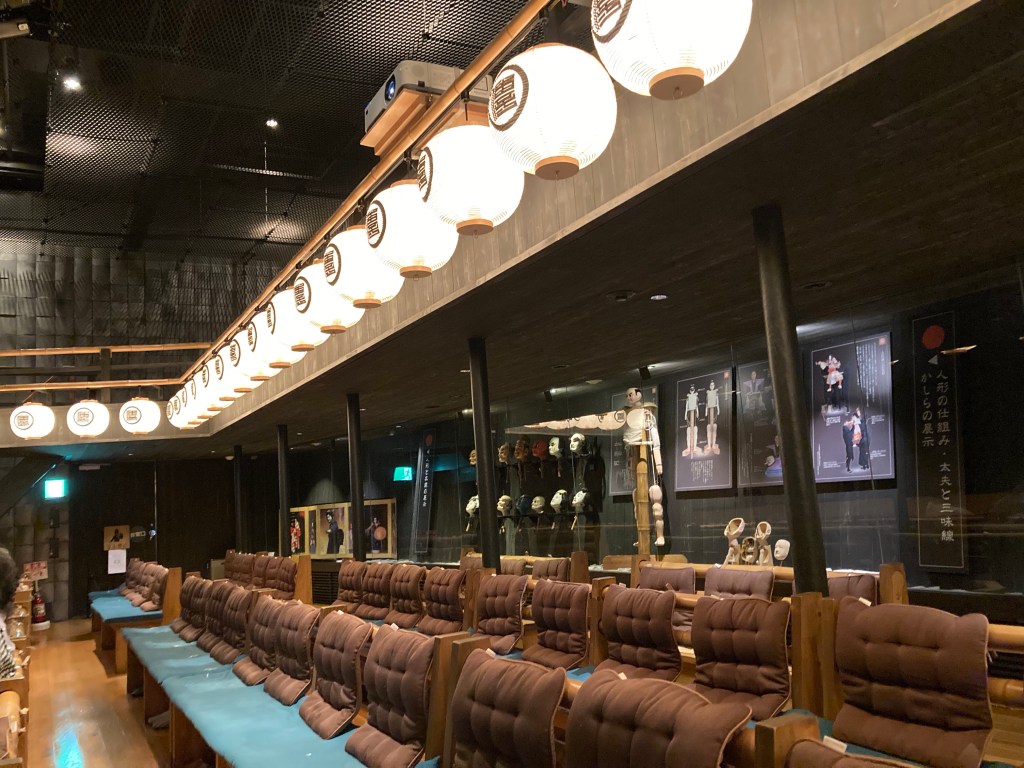
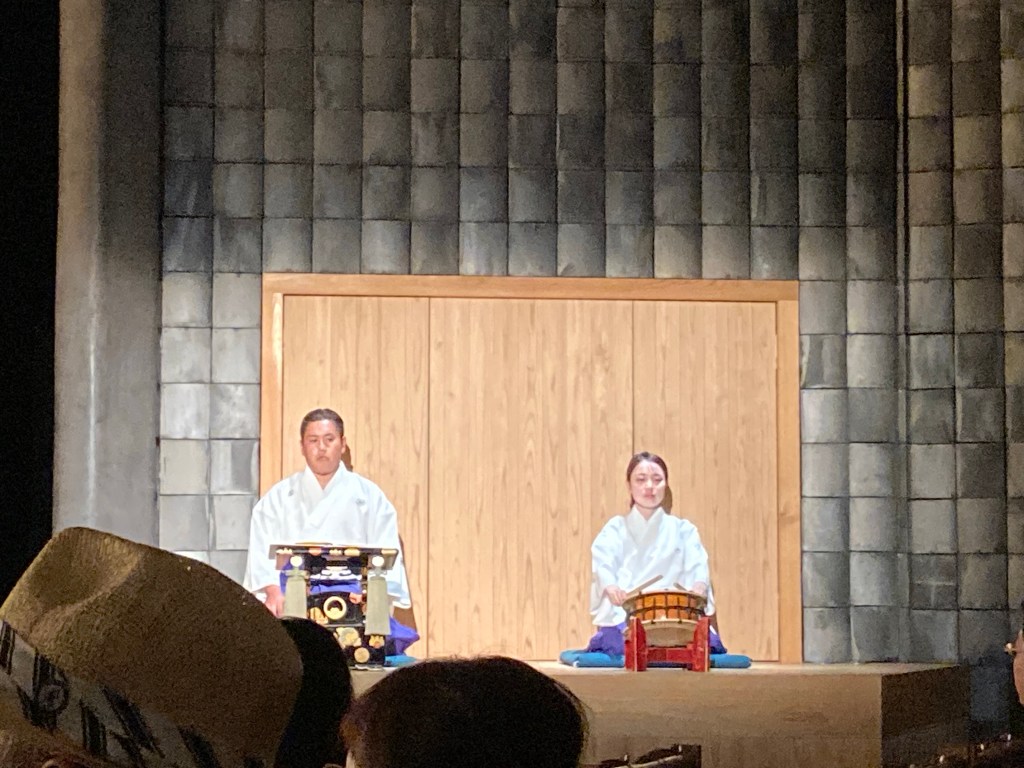
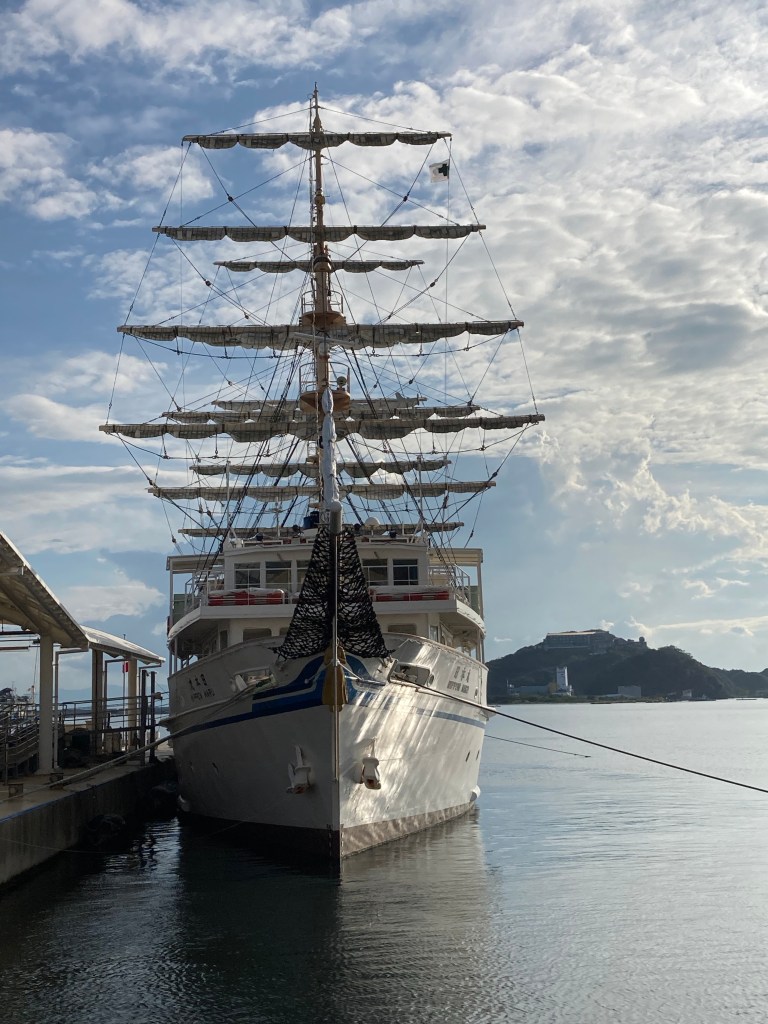
After visiting Fukui Dinosaur museum we planned a long drive across the mainland onto the island of Shikoku via causeways and bridges to a town called Takamata. The destination proved ambitious so tiring we broke the journey on Awija island and overnighted at Fukura-Kuo a harbour town. We found our Michi no eki (overnight road service station) was located right in the centre of the main harbour and the on-site buildings contained a large visitor centre,supermarket and gift shop and a booking hall for the “Whirlpool cruises”as well as a puppet theatre that gave 4 shows day with our arrival being just in time for us to catch the last show of the day.
We expected to be seated, curtain rise and show commence but we were surprised to receive an introduction to the performance involving puppeteers, stage colleagues and musicians which began with an explanation of the storyline, how the puppets were manipulated and a tour back stage to see the behind scenes equipment and how they would be used on stage.
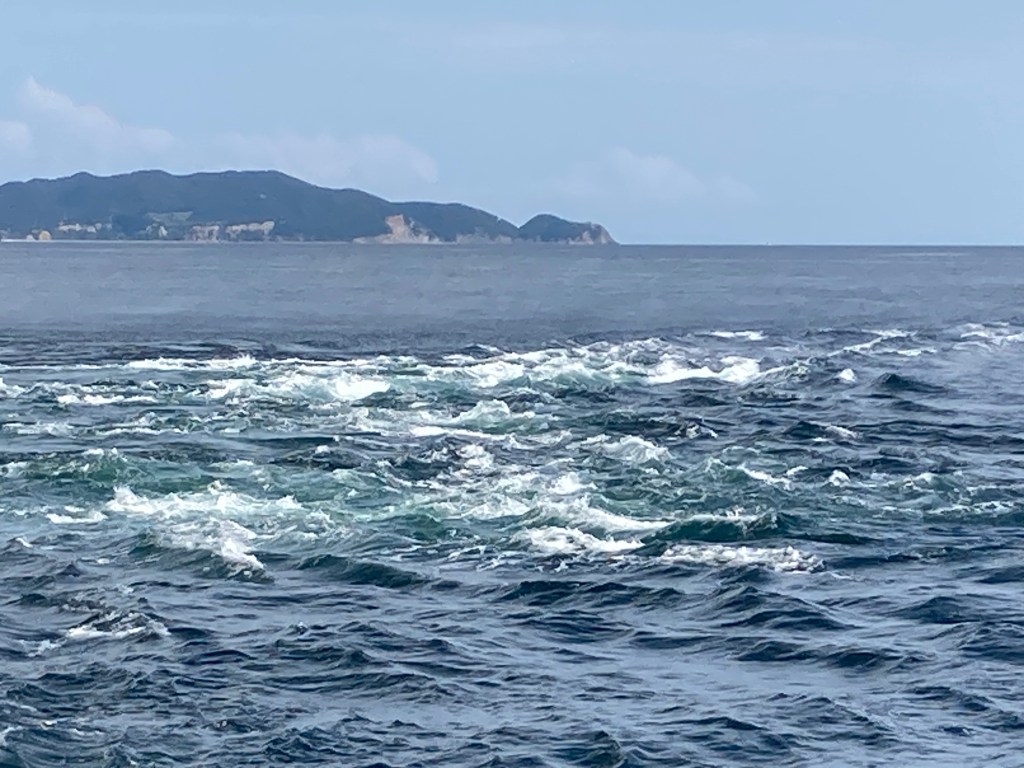
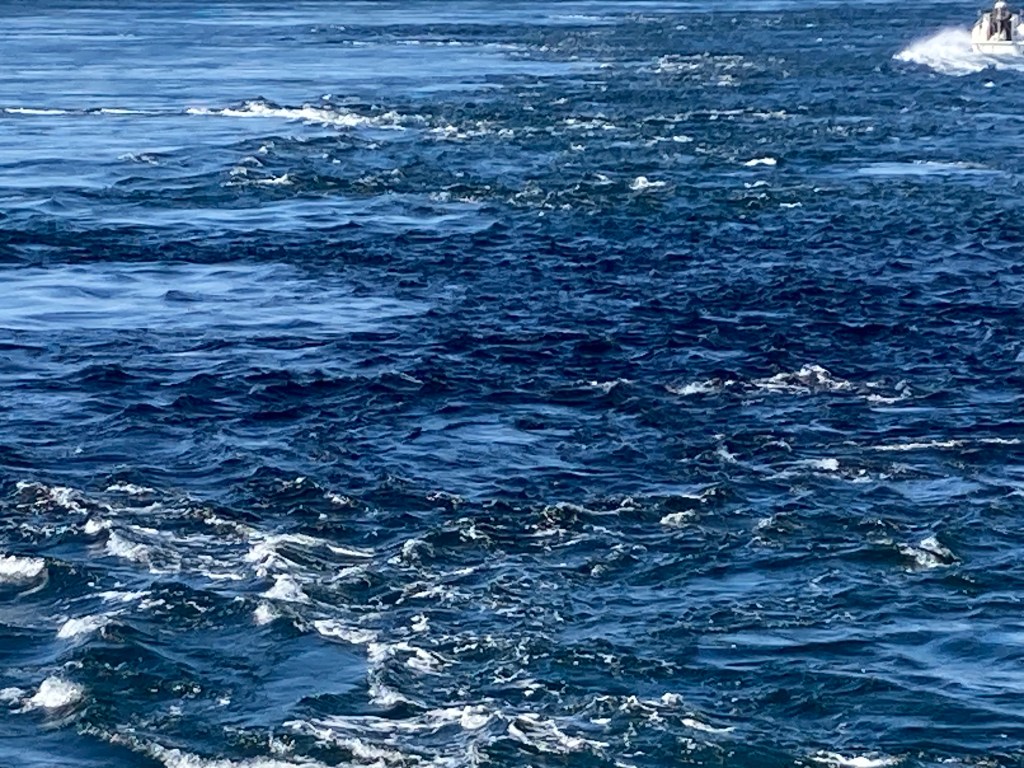
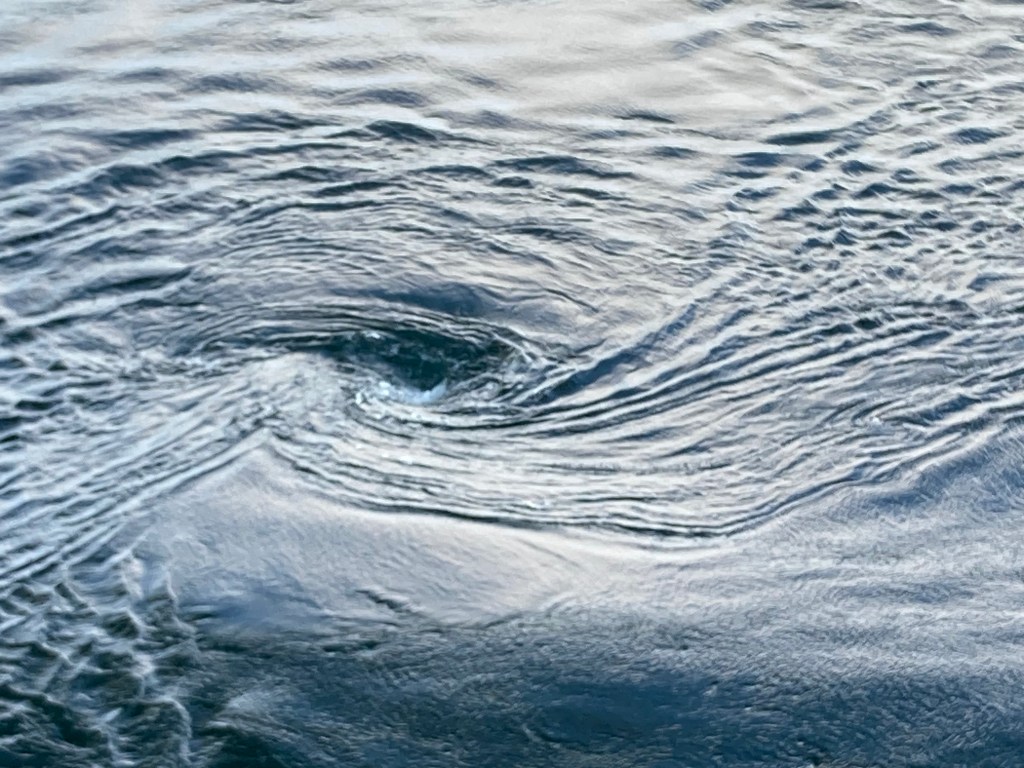
We could not leave without taking a boat trip to observe the Naruto “whirlpools” There is a unique phenomena called the Inland Sea which is a massive body of the Pacific Ocean trapped behind 3 of Japans 4 main islands. Twice a day on each tide the 2 bodies of water try to move large amounts of water between each other but the entrance to the inland sea is through a narrow channel no wider than 1.3 kilometres between Naruto ( on the tip of Shikoku island) and Awaji island. This creates whirlpools as the two bodies of water collide.
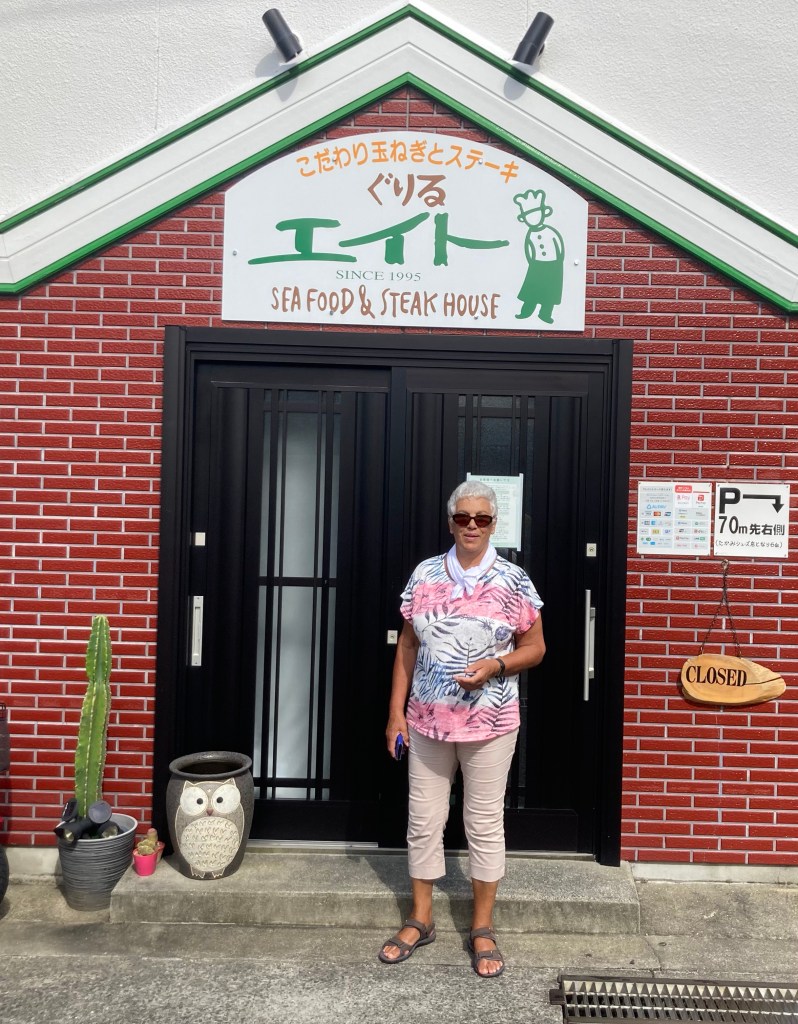
We could not close this blog without mentioning Grill 8 a steak and seafood restaurant where we had the most tasty tender wagyu fillet steak cooked by the chef on a teriyaki grill right in front of us. Perched on stools at the bar the food just kept coming tasting dishes to start followed by soup, salad ,steak with rice and veg sides culminating in a custard style sweet absolute perfection.
Our heading has come out of three consecutive days of dipping into history.
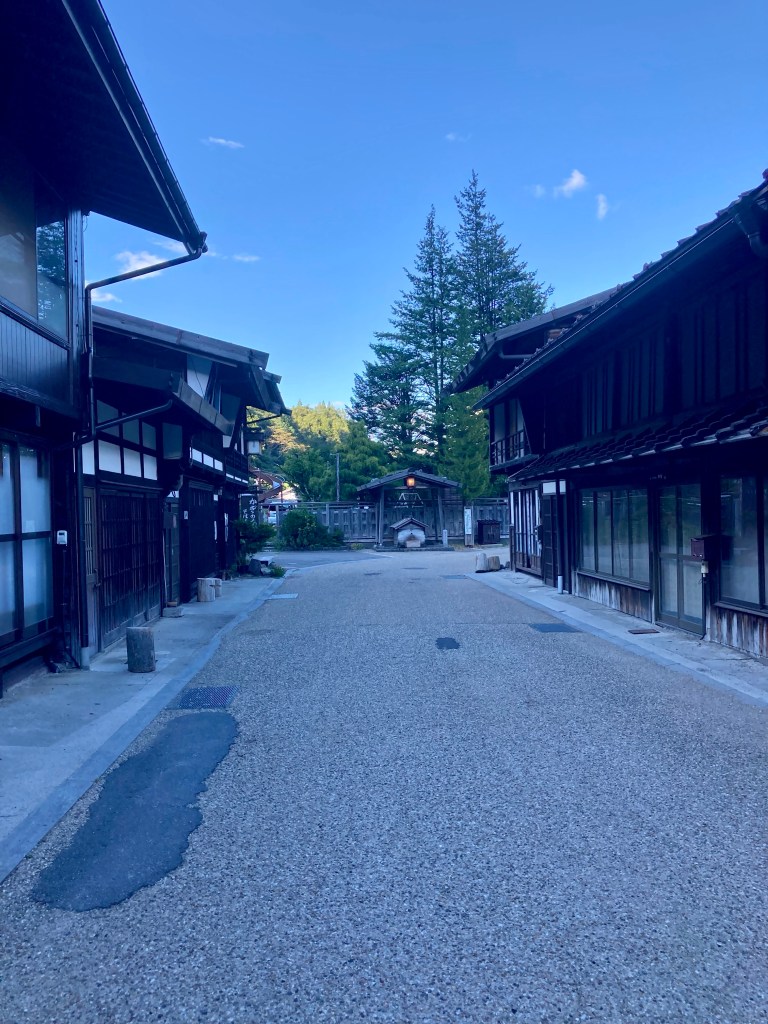
First was a visit to Narai Juka which is the best preserved of many historical villages founded in the Edo period (1603-1868) along the route from Tokyo to Kyoto. The Emperor had decreed that all travel between the 2 cities must be on foot unless you were on Govt business when horses could be used. The villages had a duty to provide lodgings and food for travellers. In addition one or two sizeable households were selected as official inns for the Govt travellers and had to ensure horses could be fed, watered and exchanged as required and they had to ensure human labourers for government business were always available. As the major user of these facilities was post carriers they became known as “Post Towns” They still retain a sizeable population judging by the number of the original buildings in use as homes but some have converted frontage to trade from as tea houses/coffee shops, restaurants, B&B or shops selling local products like herbal medicine, lacquerware and craft items
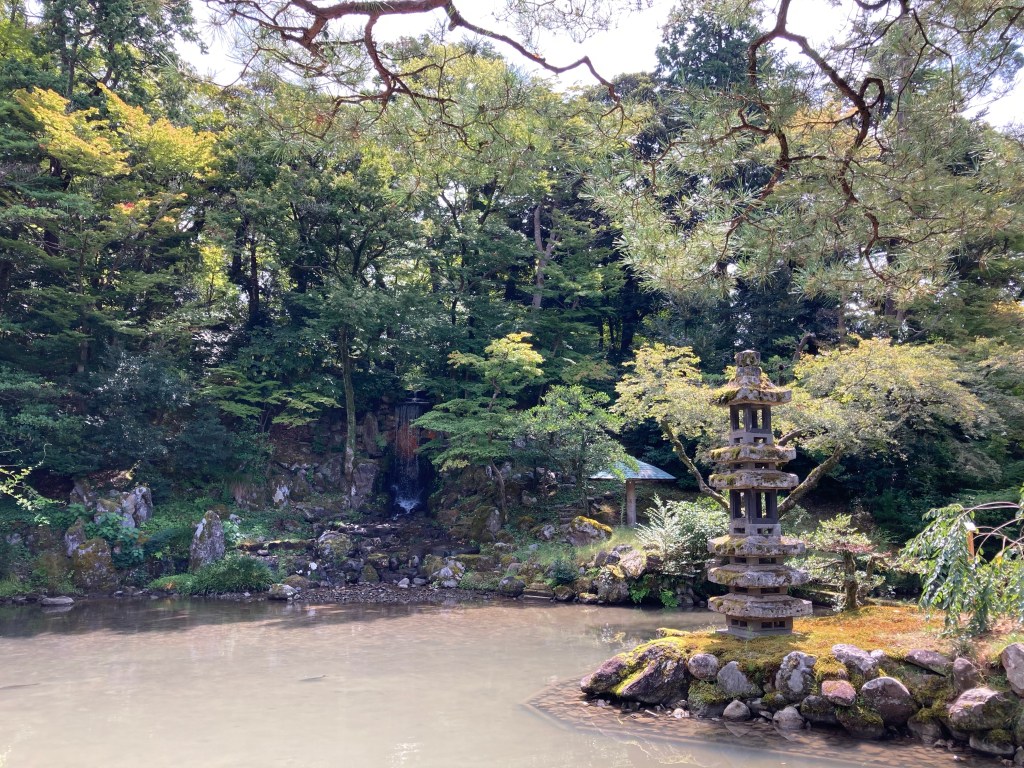
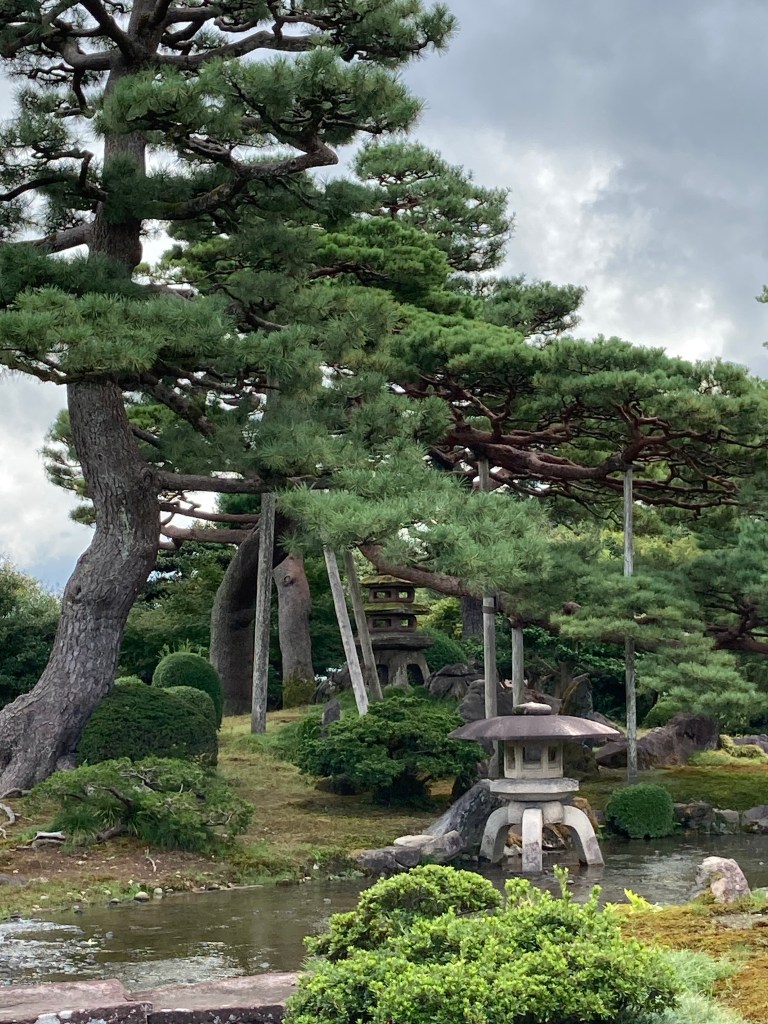
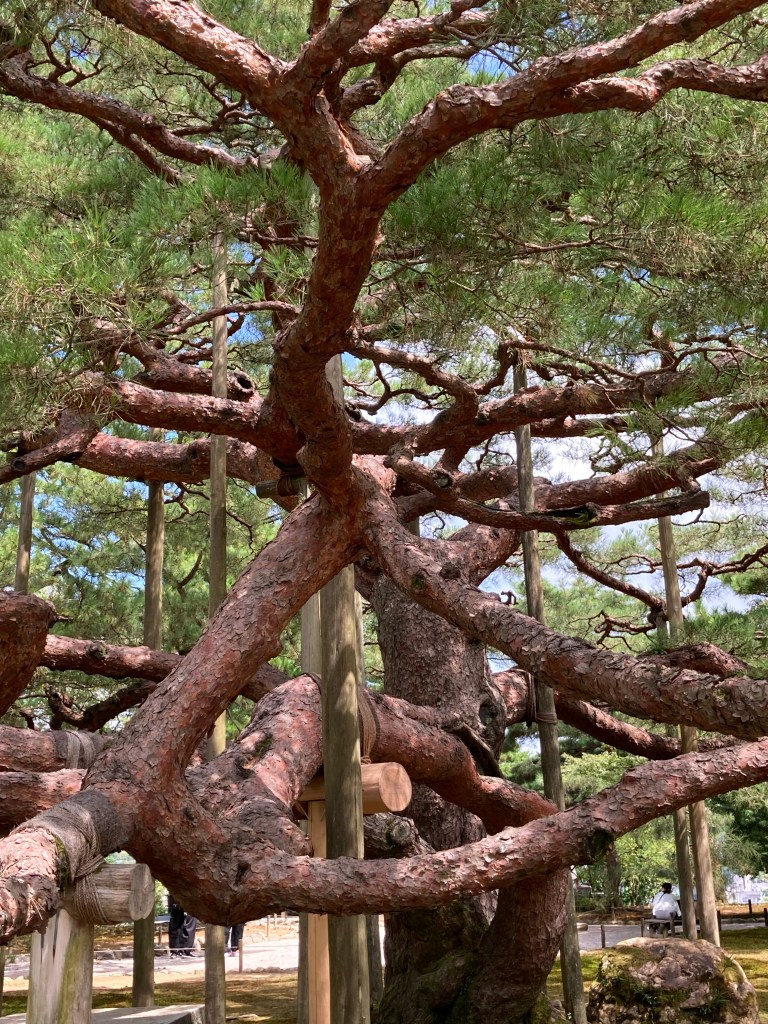
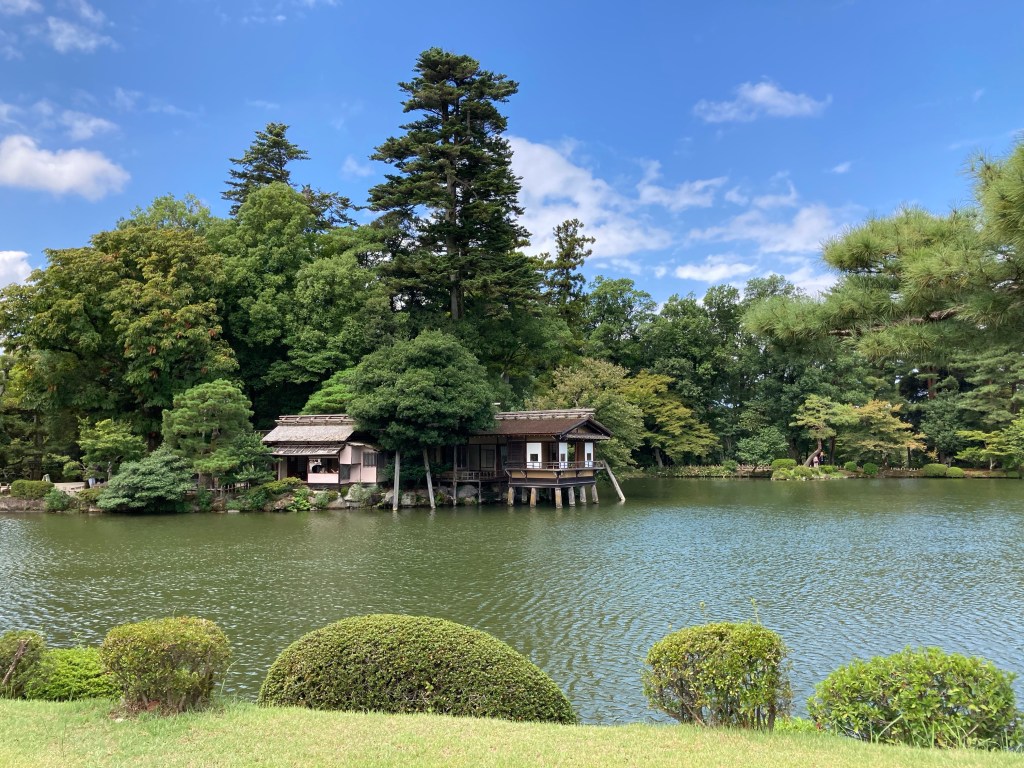
Our next historical location was the town of Kanasawa to visit the renowned gardens of Kenrokuen which were created in 1600. These occupy an elevated position in the centre of the town and are considered one of Japan’s three most beautiful gardens, The name Kenrokuen means “having six factors”, representing the attributes of the garden: spaciousness, tranquility, artifice, antiquity, water sources and magnificent views.The garden covers an area of 11.4 hectares and looks over the city below with views to the nearby coastline.
Weeding moss
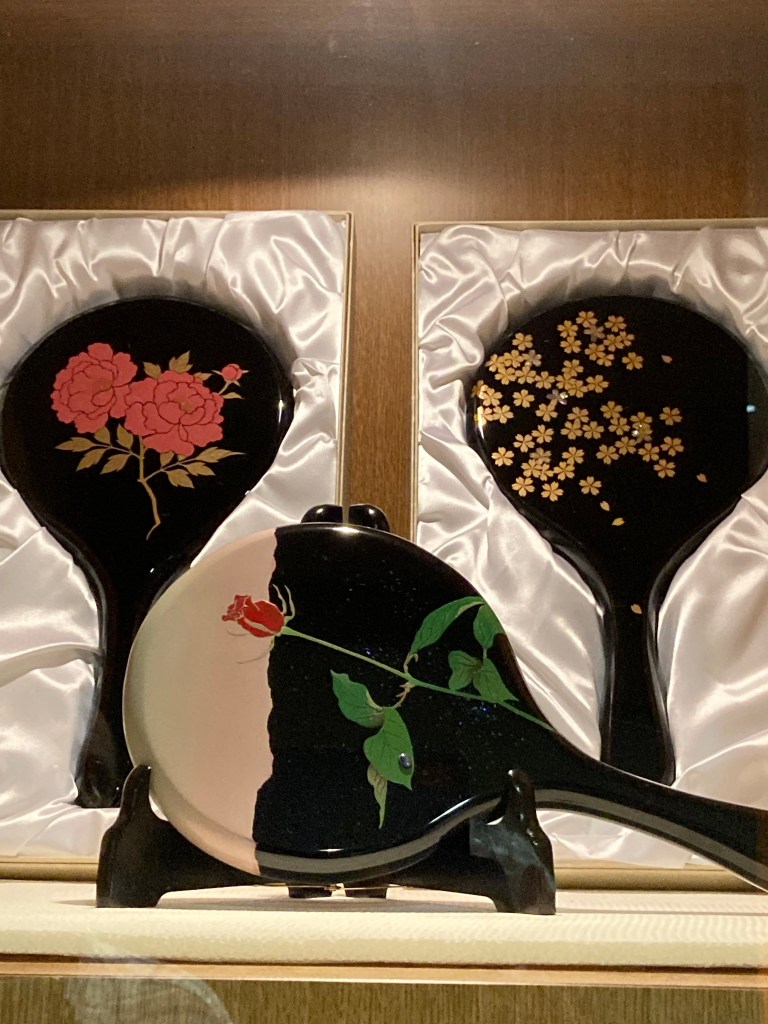
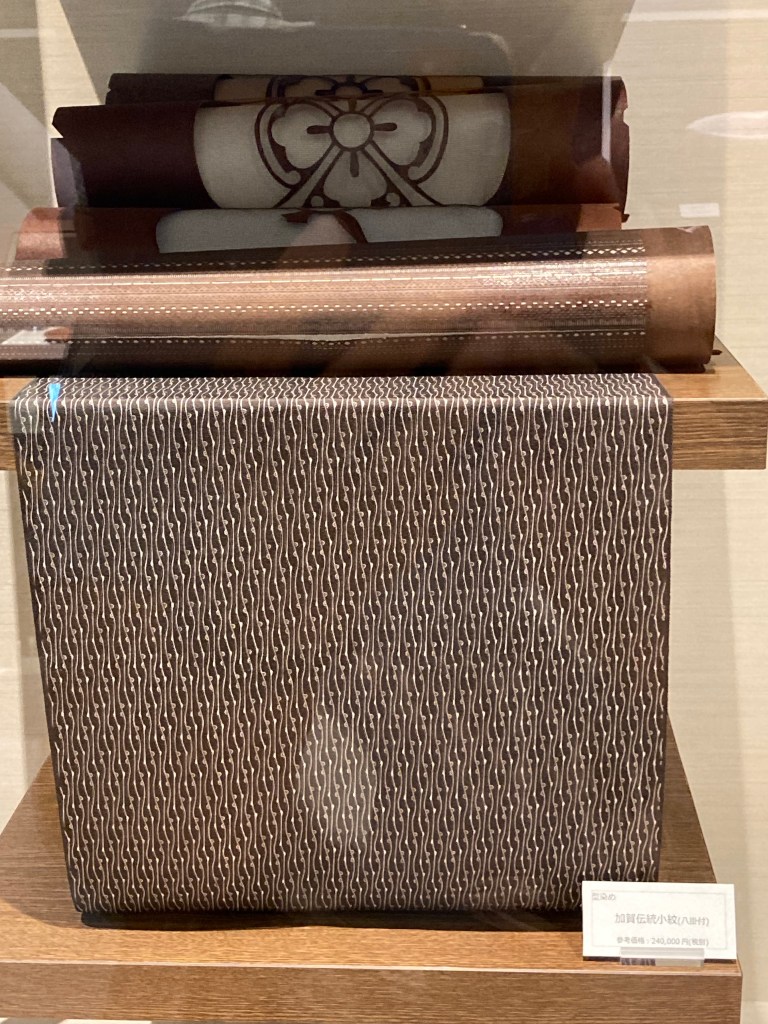
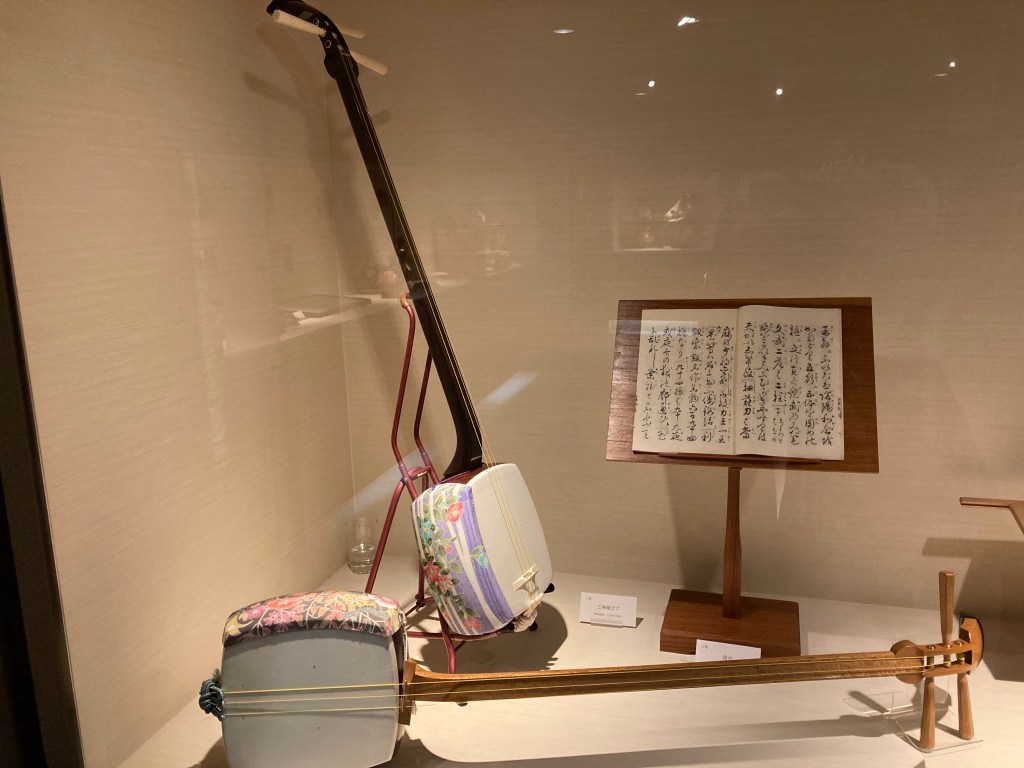
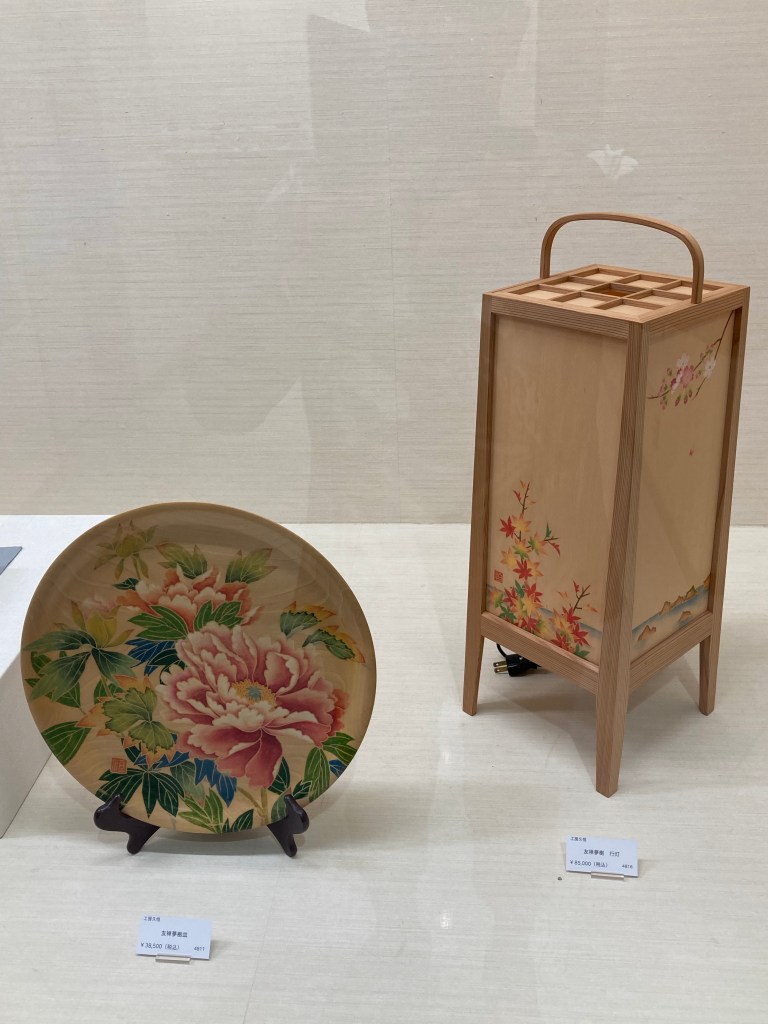
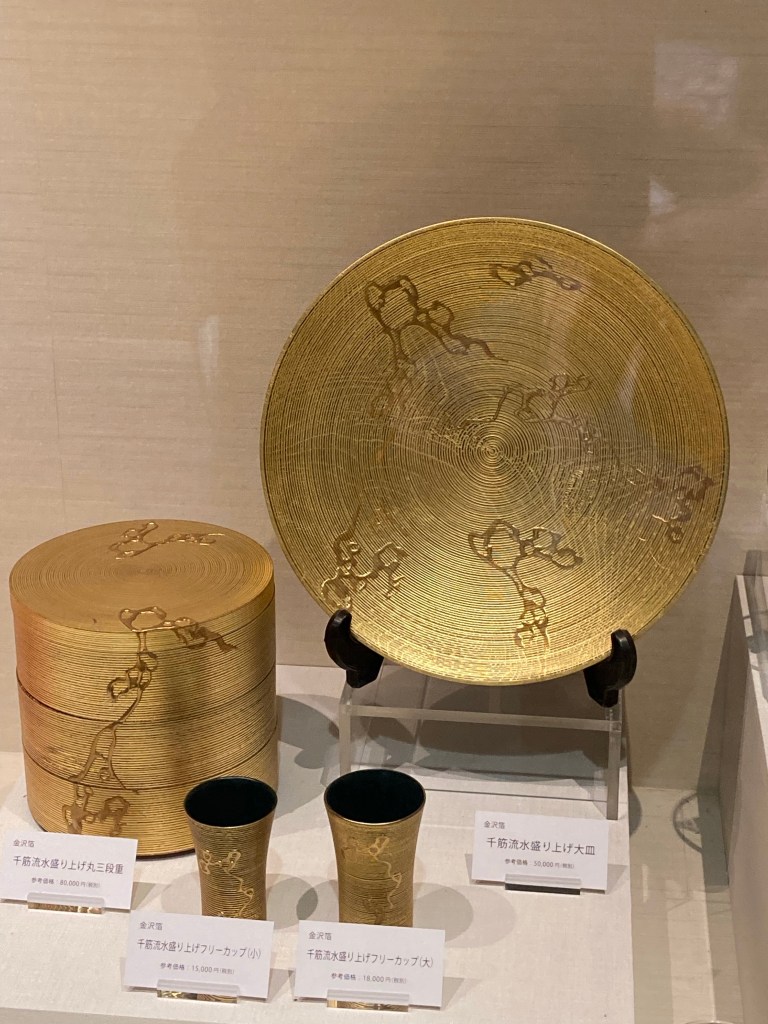
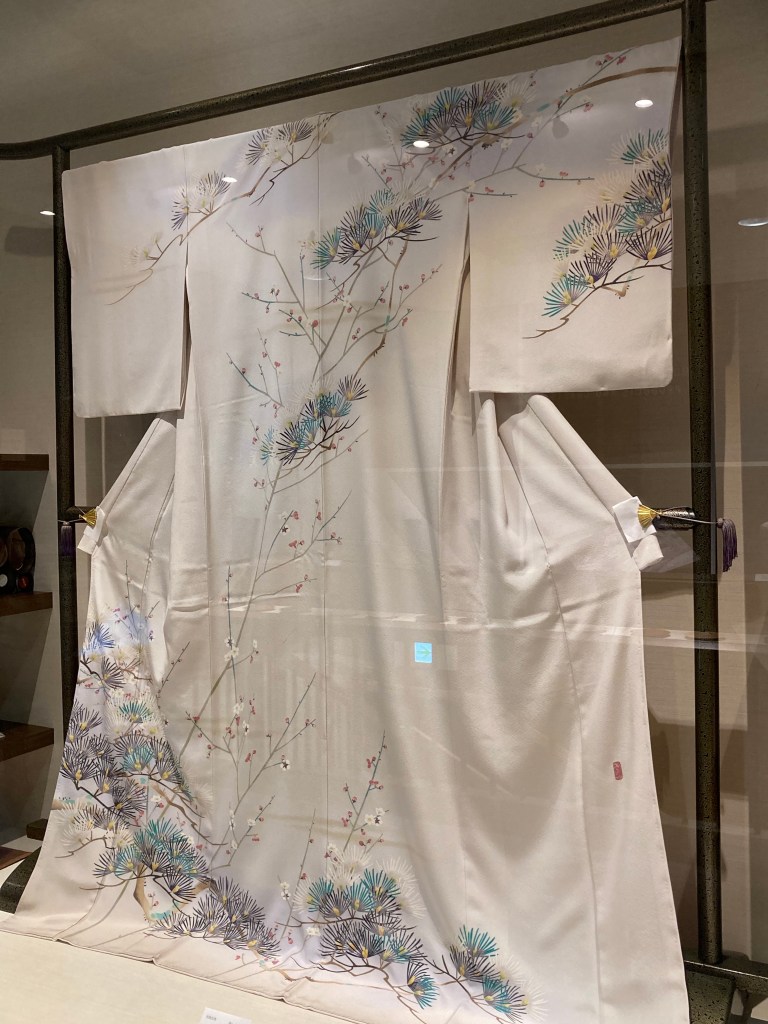
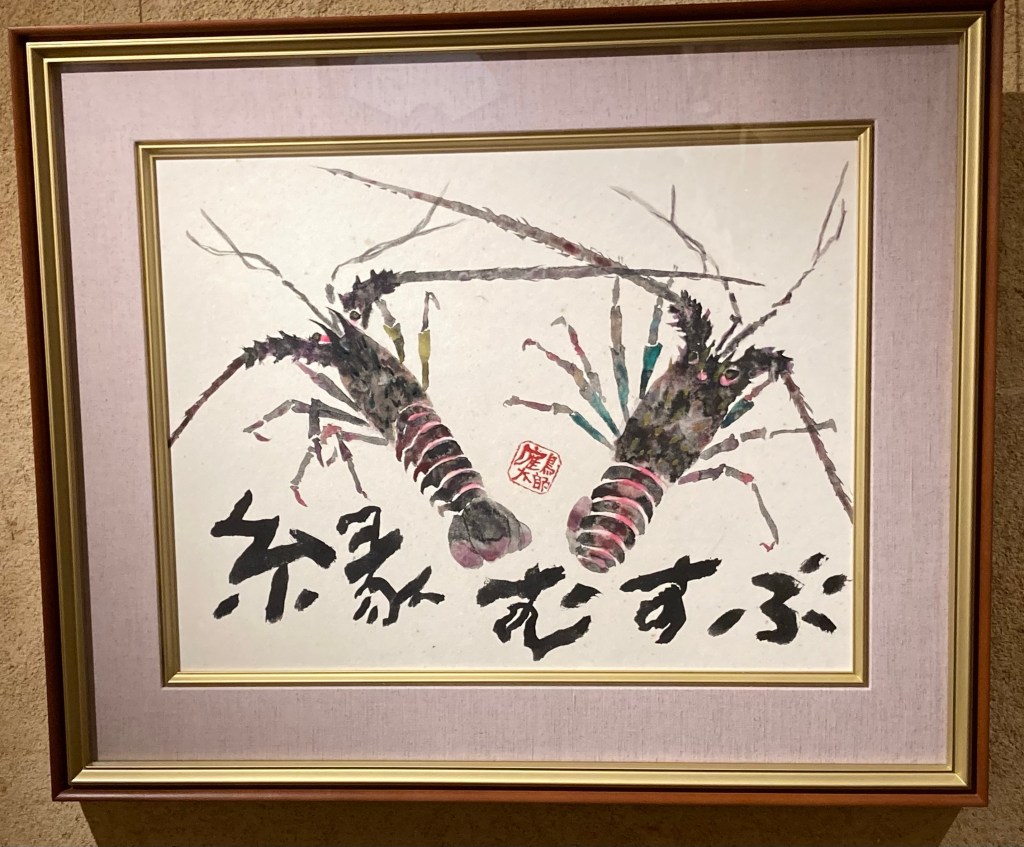
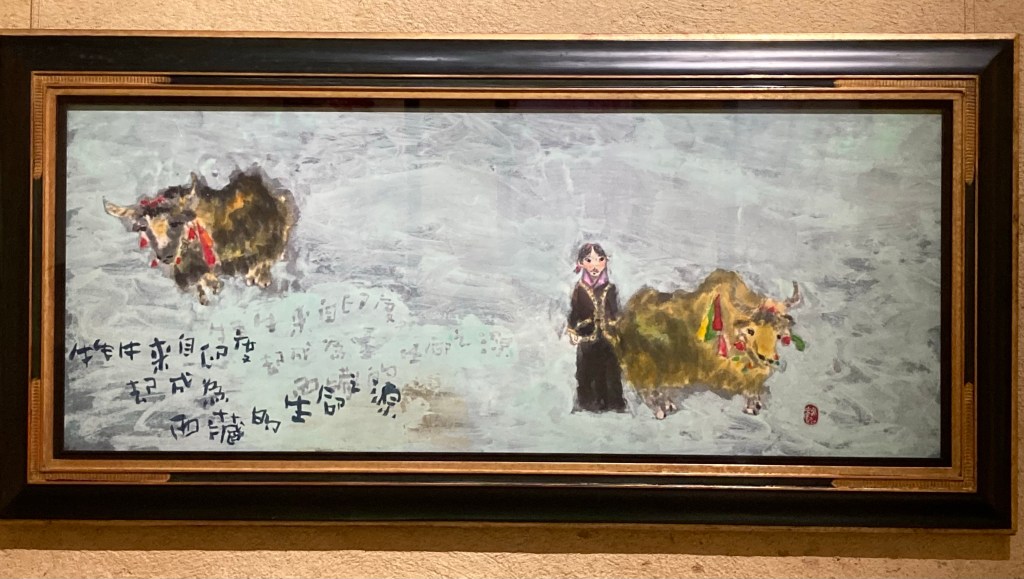
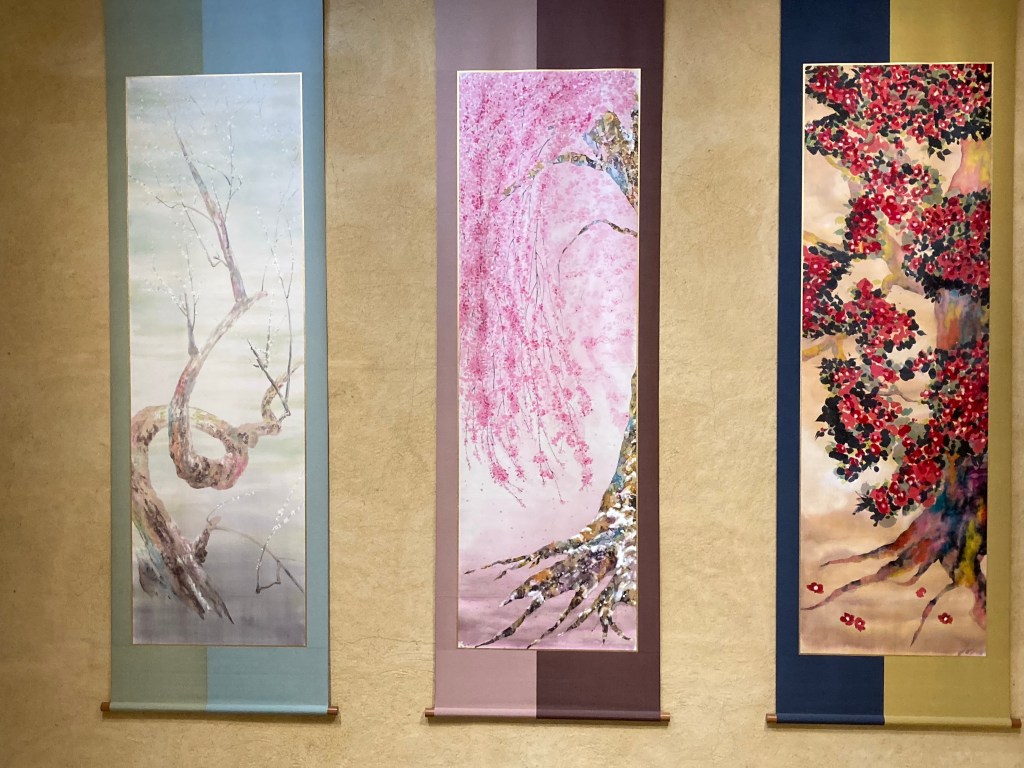
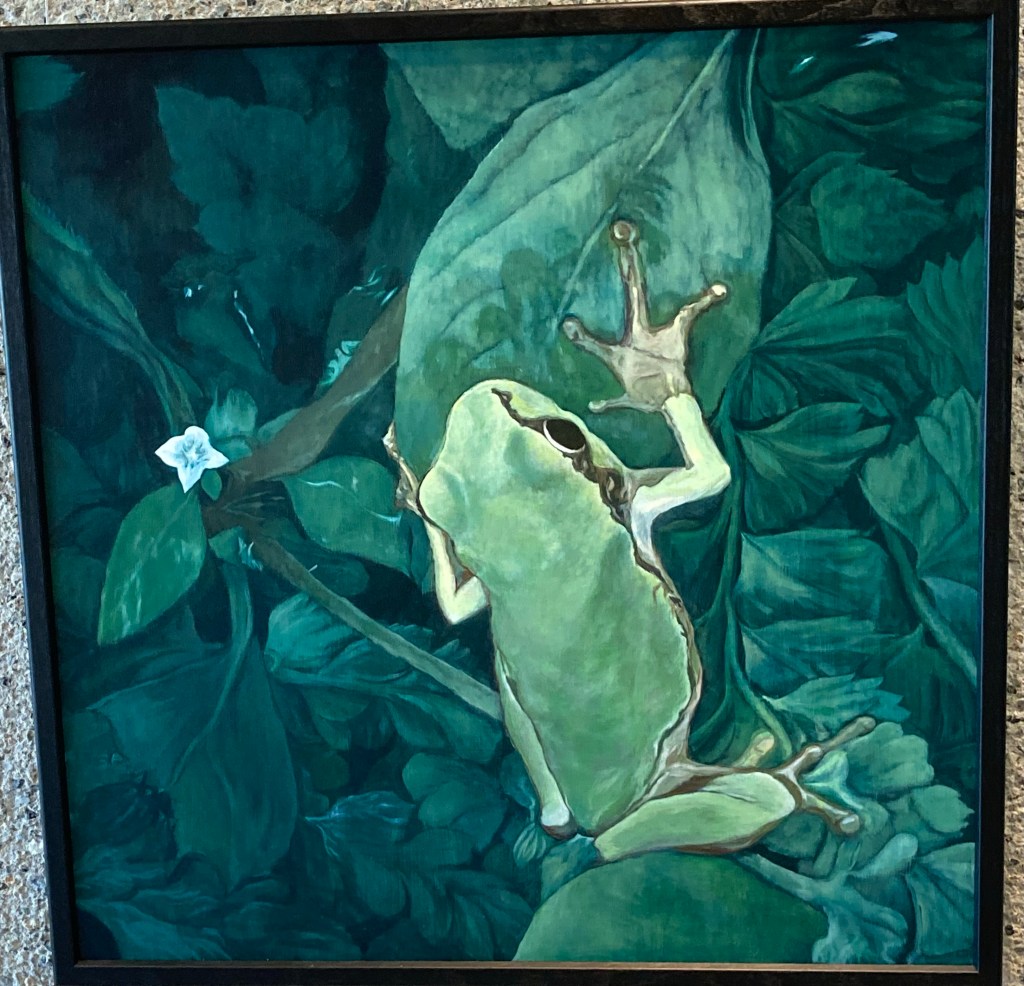
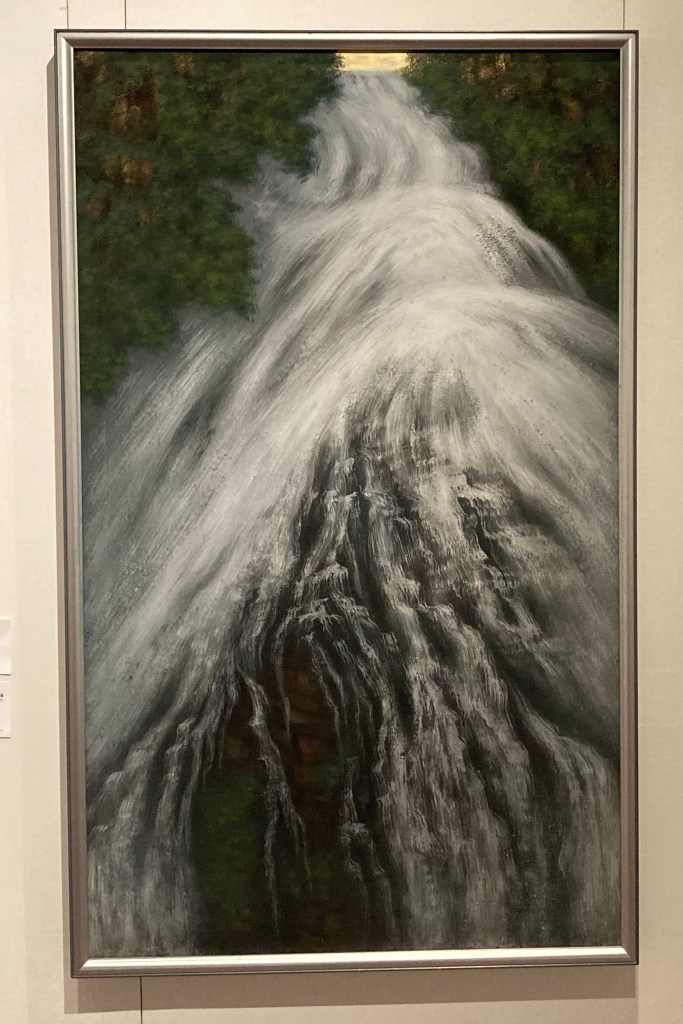
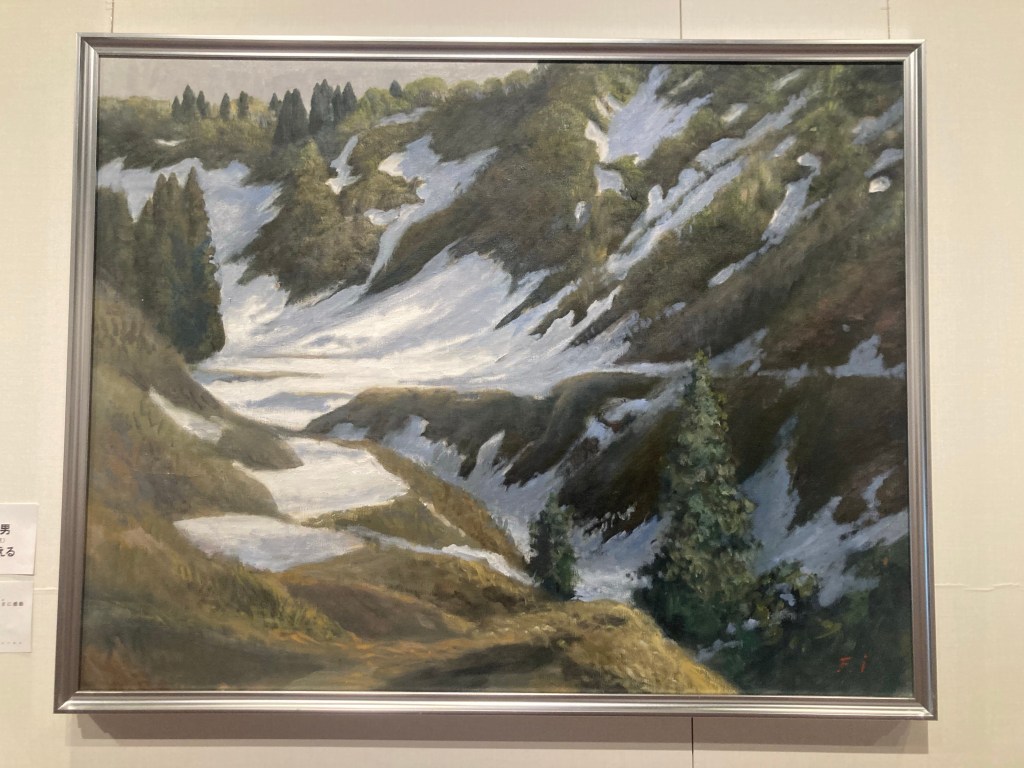
In trying to find parking ( not easy) we stumbled across a museum with parking on the edge of the gardens. The parking was the attraction but on visiting the museum discovered an amazing display of local crafts and art that the museum had been set up to showcase
Paper easily mistaken for material
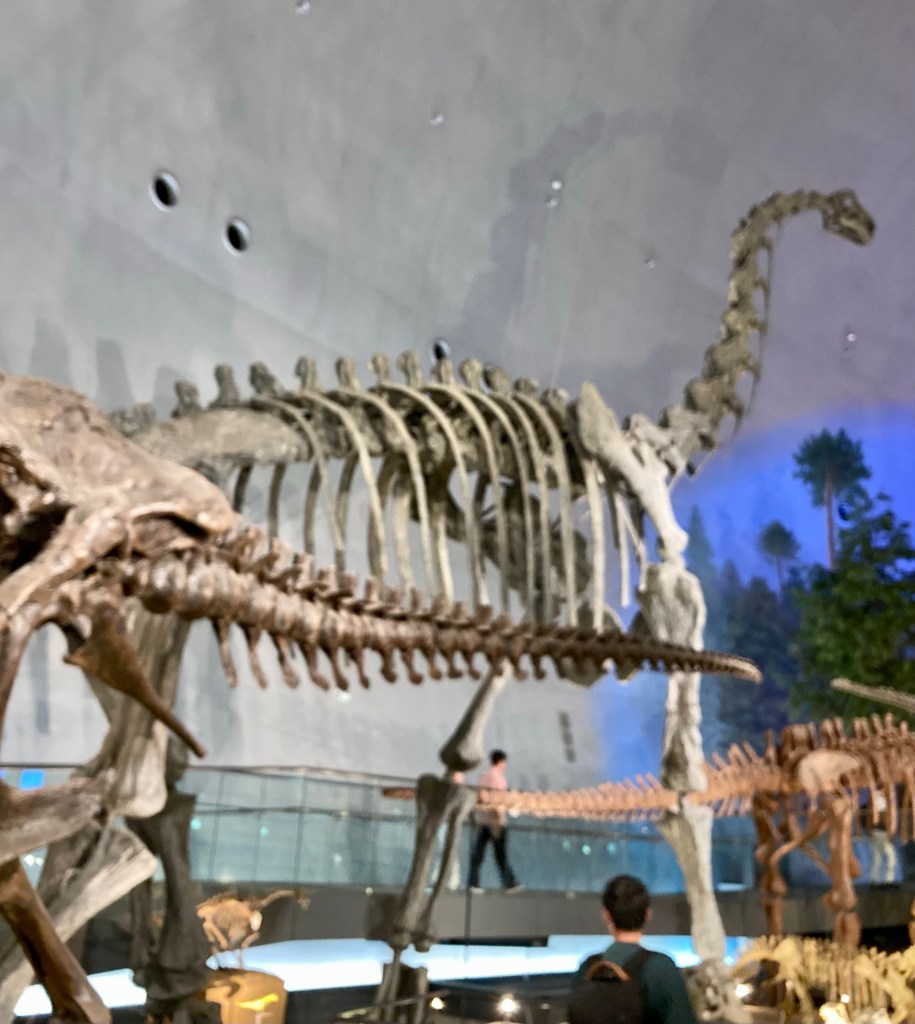
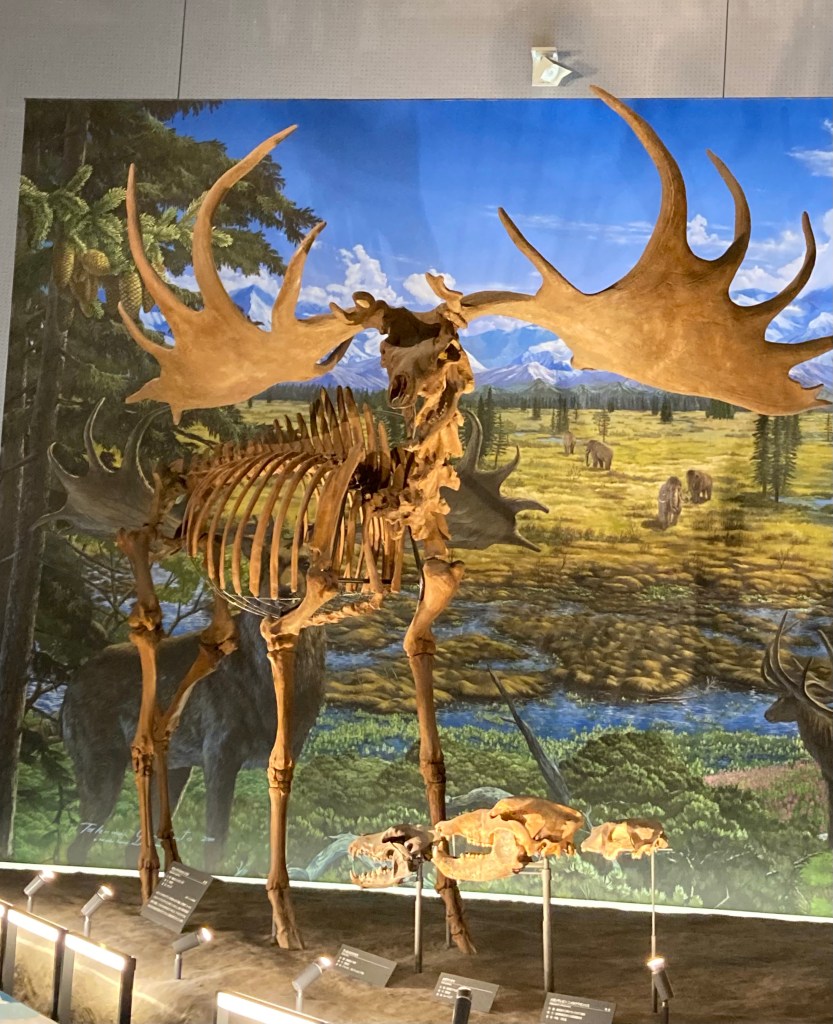
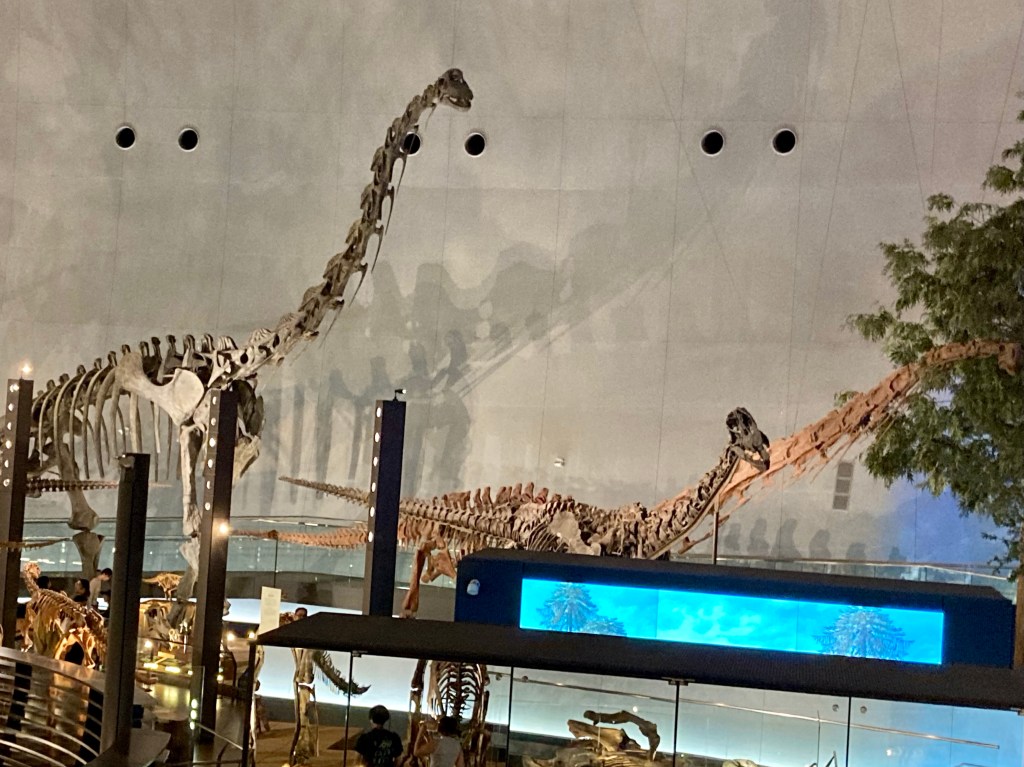
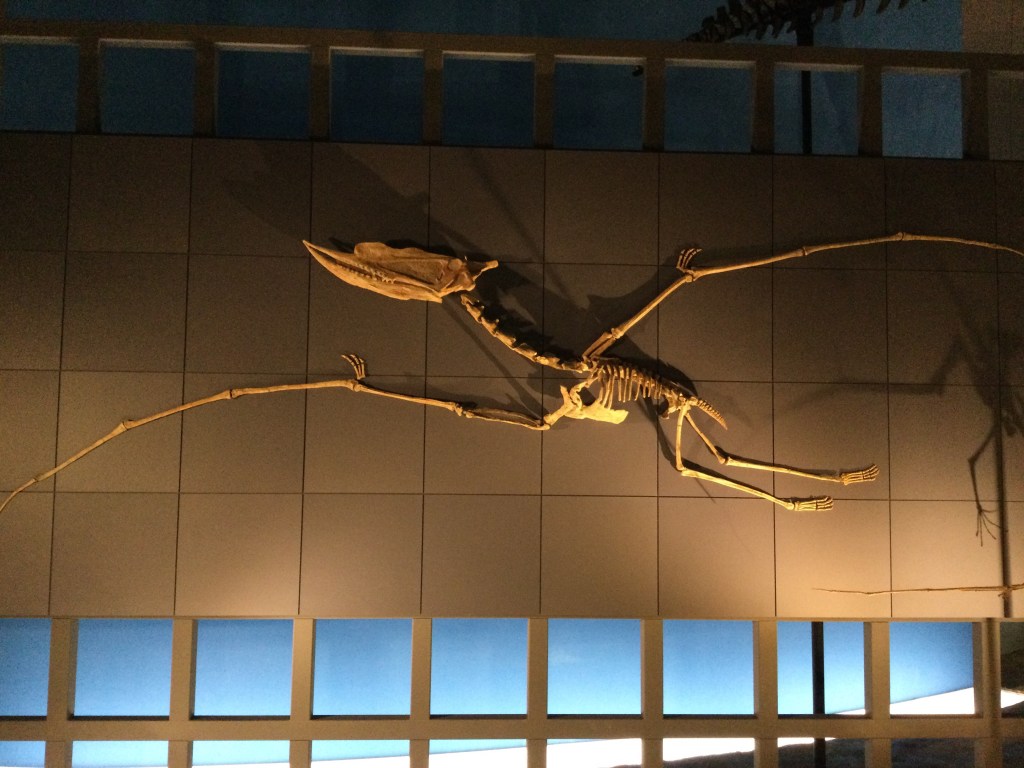
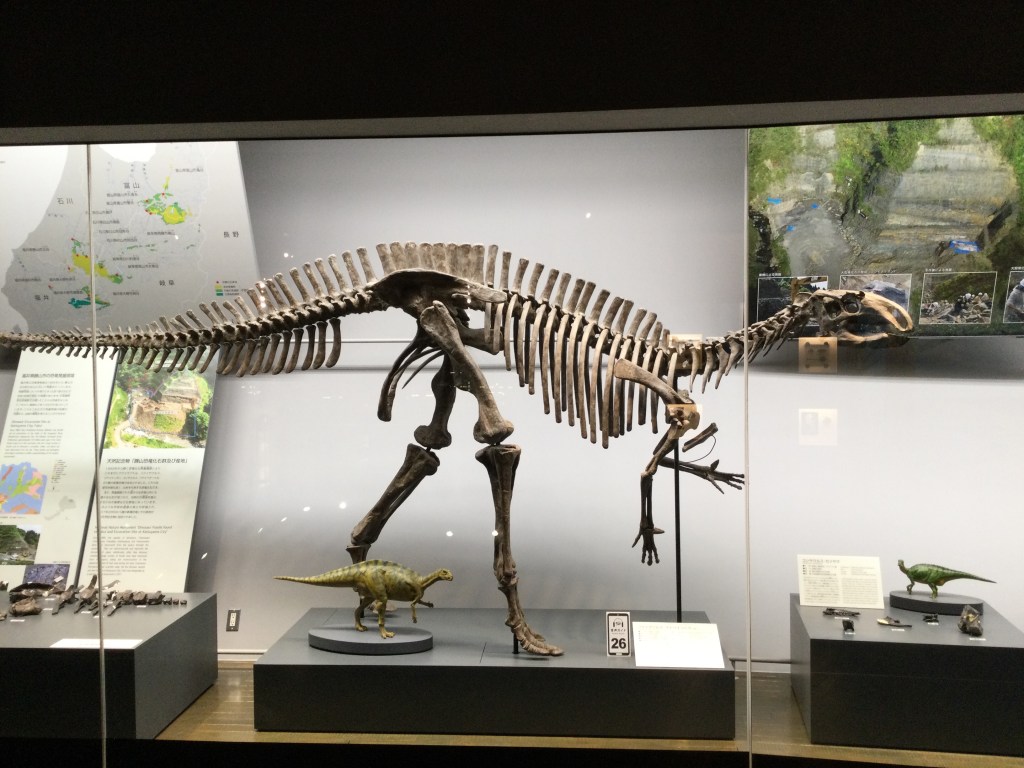
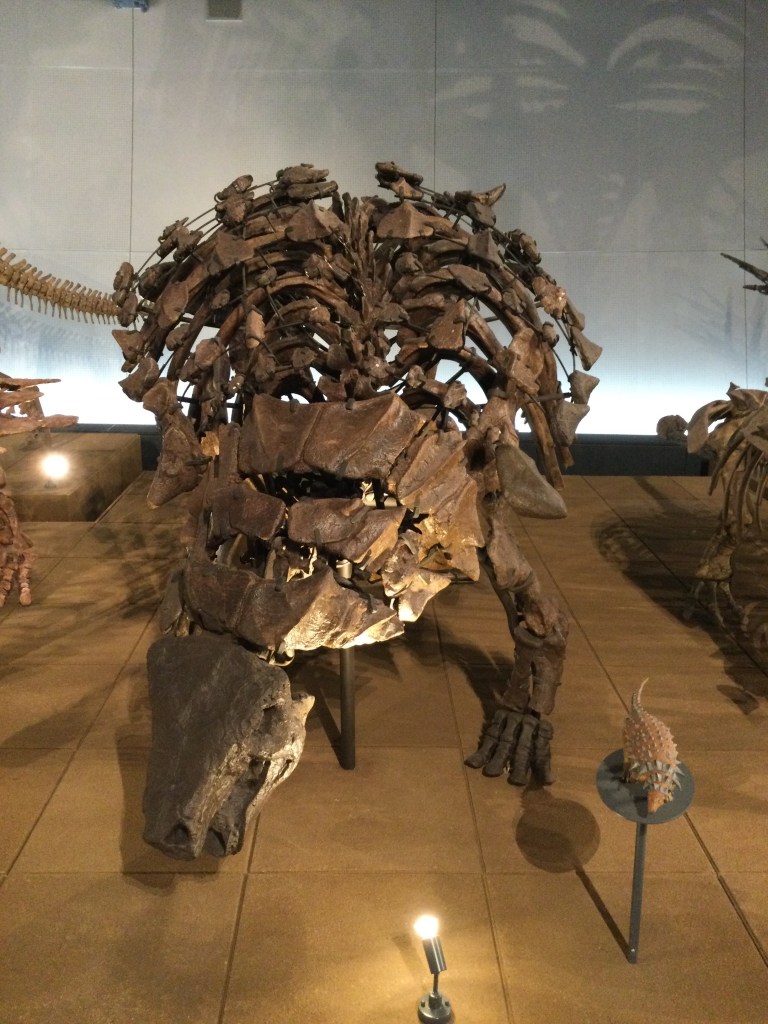
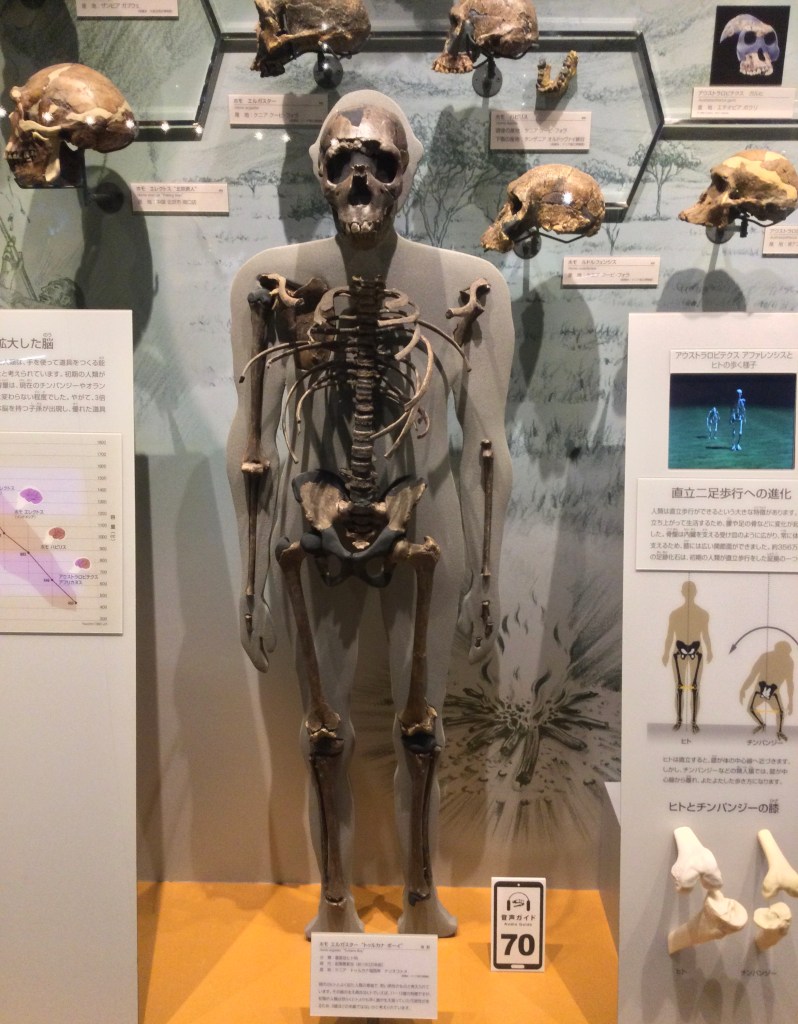
Our final delve into the past was the dinosaur museum in Fukui which was built specifically to house what they had found in a quarry in the river valley. It was a museum which not only exhibited the local findings of dinosaur remains but had acquired exhibits from around the world and a very wide range of human anthropological remains that showed the evolution of man and other animals. All housed in a stunning setting, no wonder it is regarded as one of the leading archaeological museums in the world. …
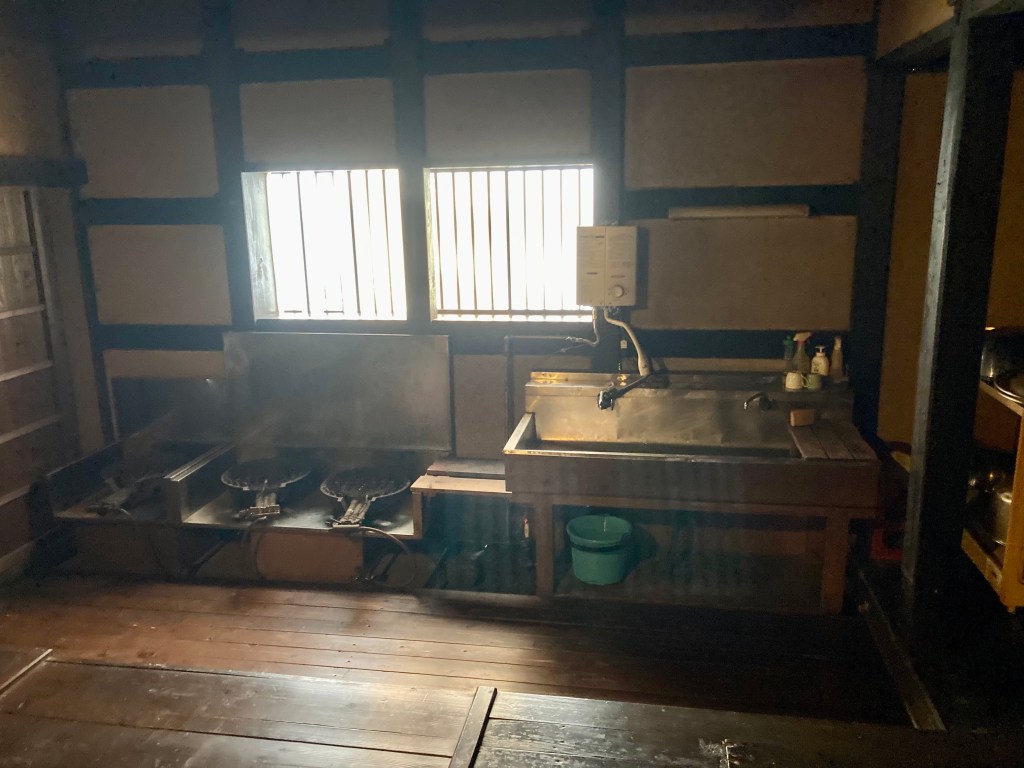
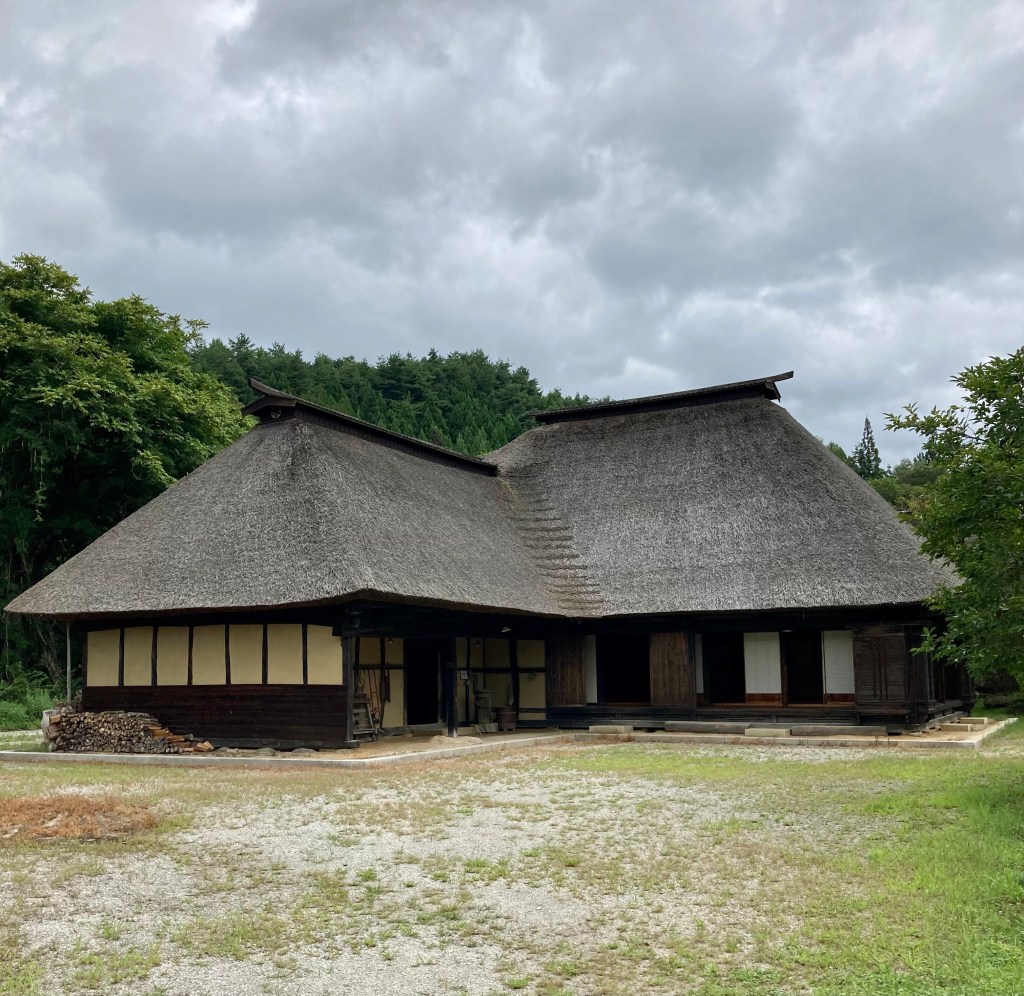
Disembarking the ferry we headed for the small town of Tono which is located in a river valley nestled between two mountain ranges. We were so impressed with the location that we decided to stay a couple of nights. With an early on our first morning we decided to drive just outside of the town to see Tono Furasato village which is a cluster of relocated original farmhouses from the middle of the Edo period (1603- 1868) which have been carefully preserved
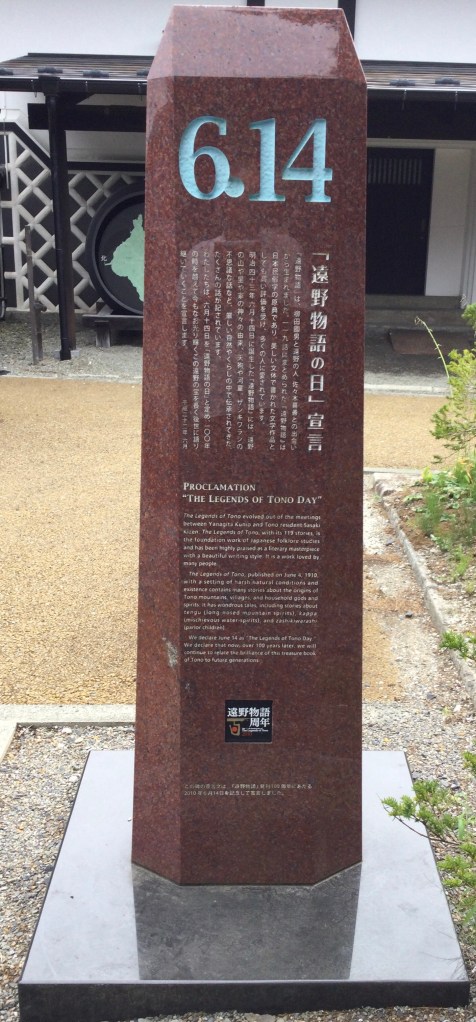
We also visited the Tono Folktale museum which had been converted from an old Sake brewery and incorporated an adjacent historic Ryokan ( small hotel) to showcase the mysterious folktales for which the region of Tono has become famous. First published in 1910 “The Legends of Tono” (Tono Monogatari) is a famous book containing 119 stories and was written by Kunio Yanagita an academic who specialised in folklore and became fascinated by the Tono tales after meeting a local writer and making many visits to the area and staying at the Ryokan Yanagita
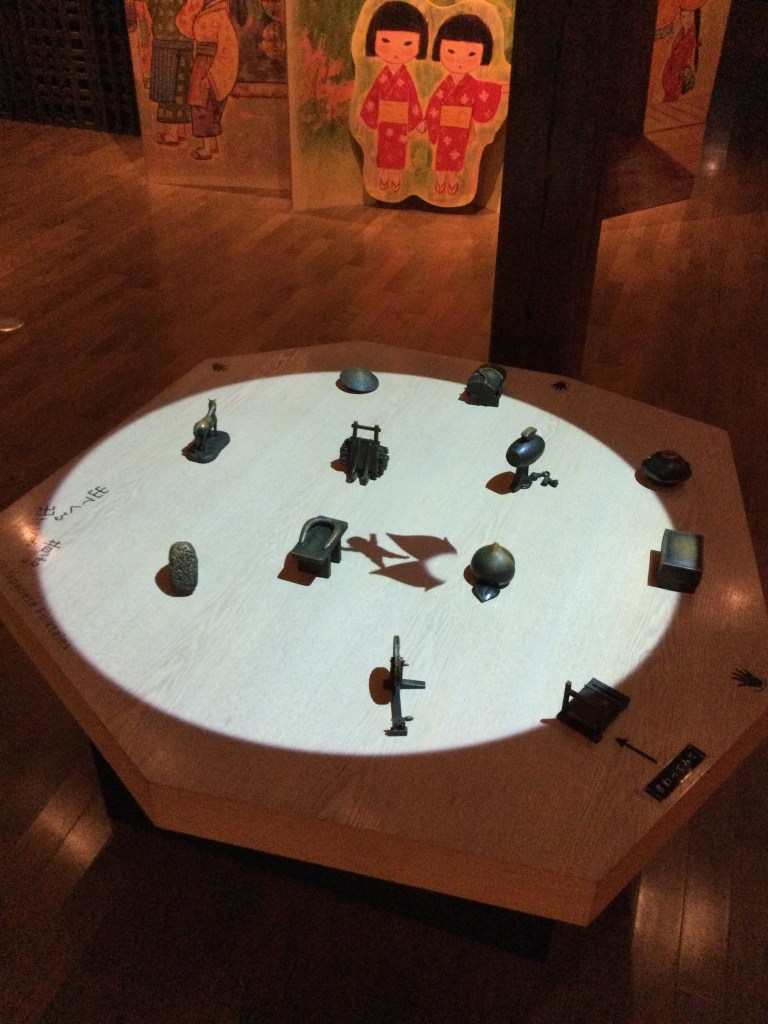
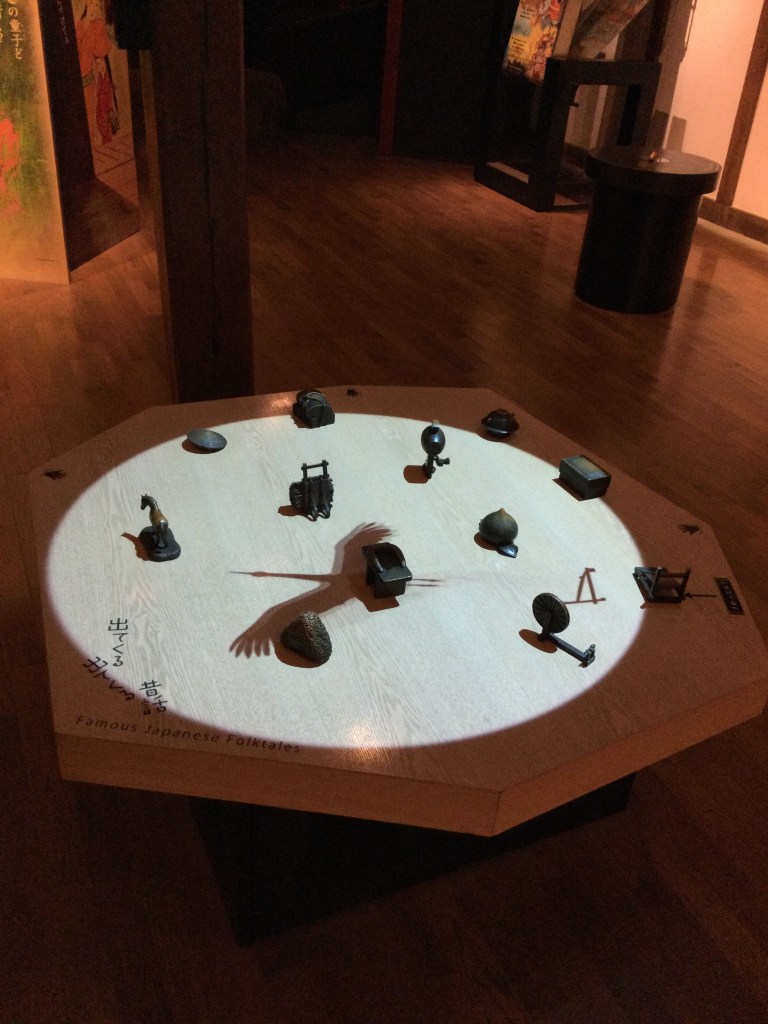
Tanagitas roomExhibit that cast shadow reflecting the different stories Outside shot of Ryokan
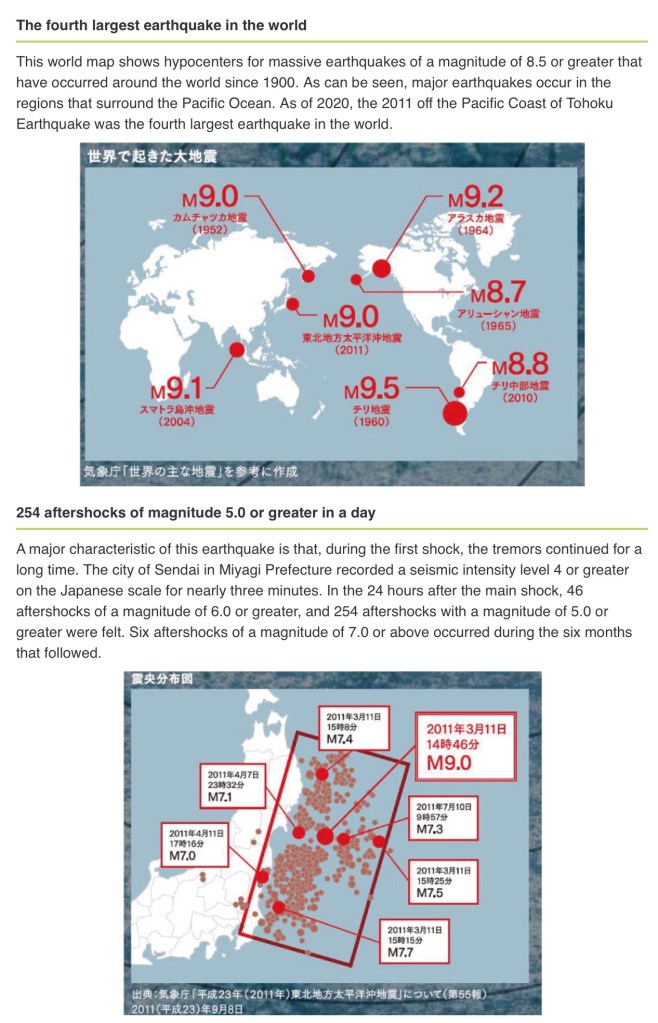
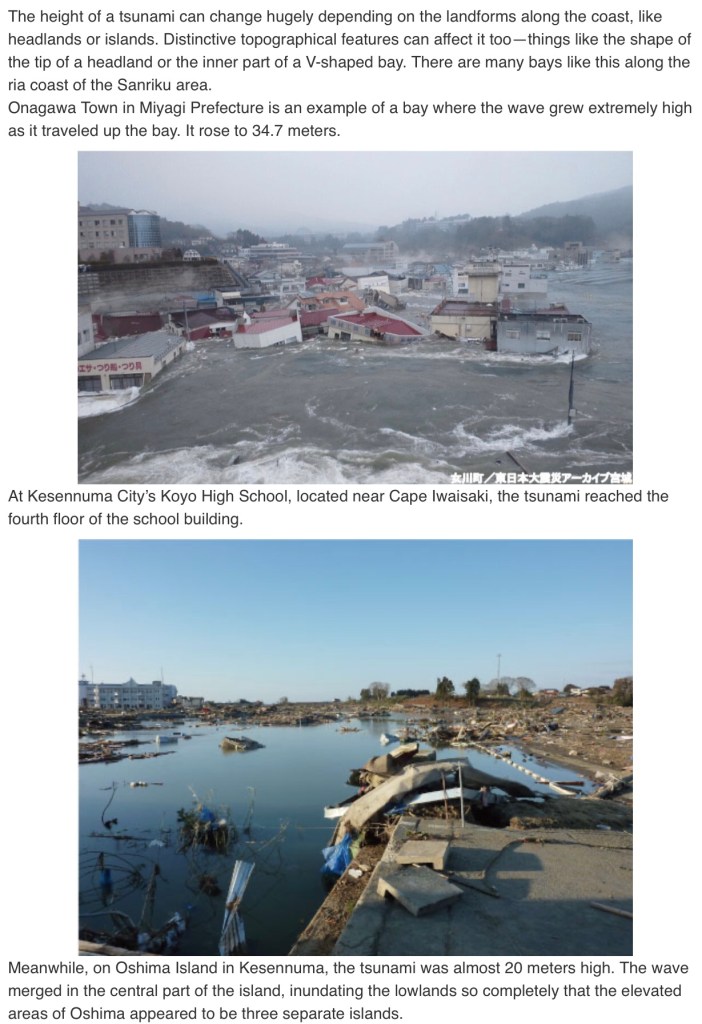
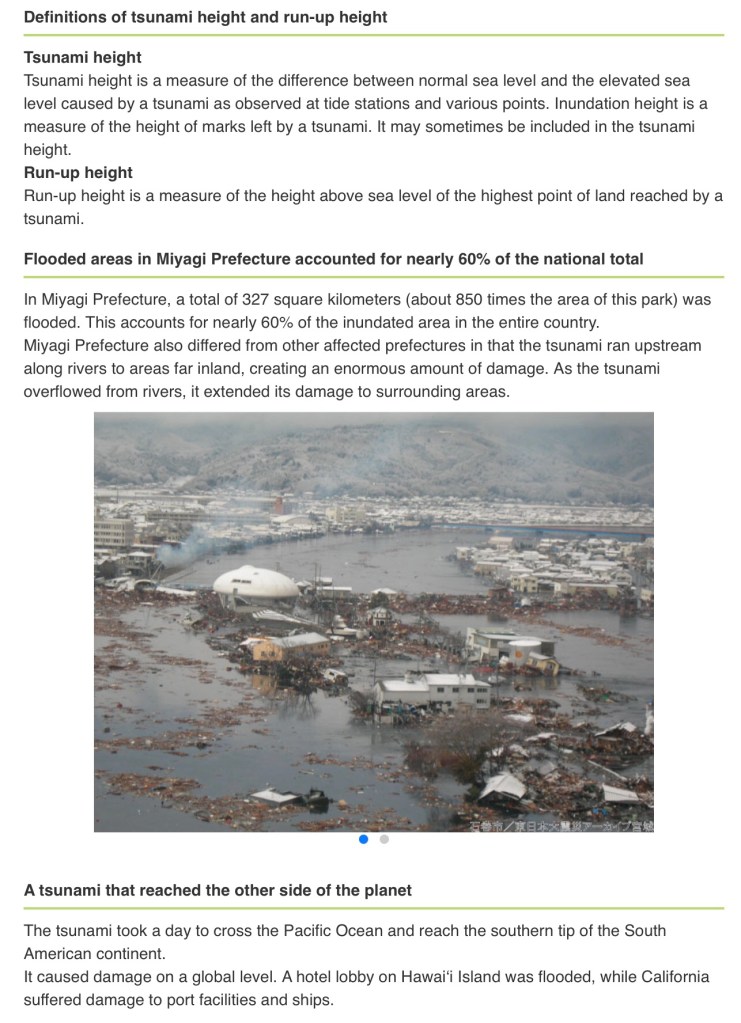
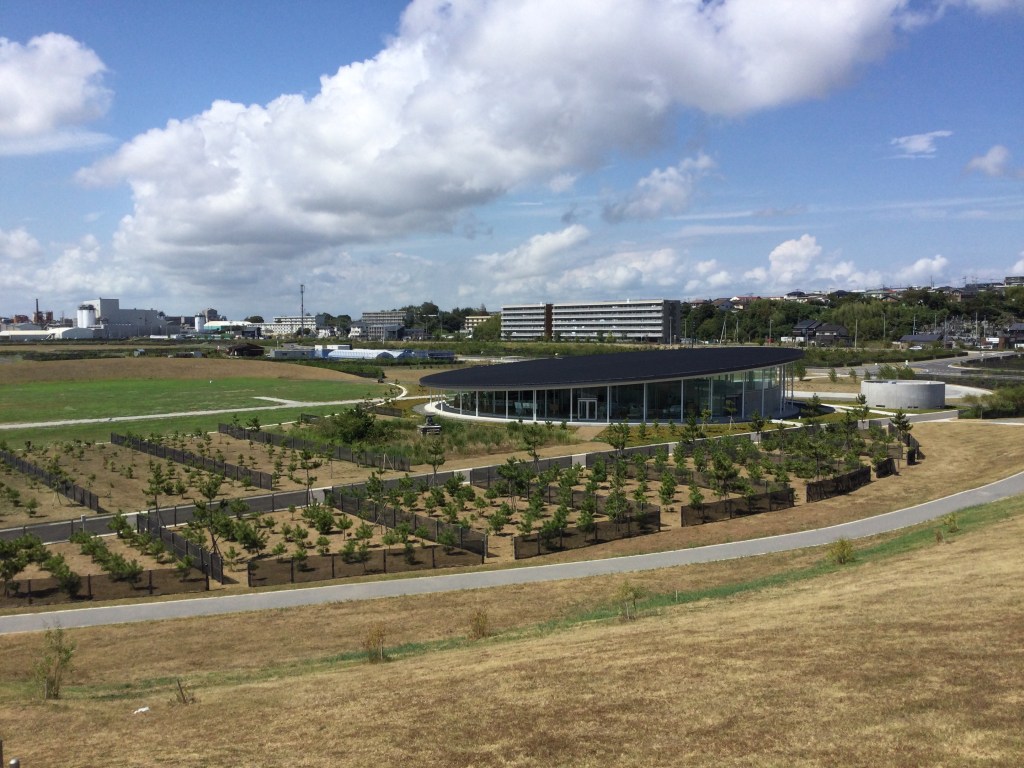
Leaving Tono we headed for the Tsunami Memorial Park at Ishinomaki Minamihama which proved to be a very sobering visit. The Memorial park was constructed to commemorate the lives lost and to pass down memories and lessons learned from the Great East Japan earthquake (Tsunami) which occurred at 2.46 pm on March 11th 2011. Ishinomaki city was the most affected by the disaster with 4000 casualties with the Minamihama cho, Kadanowaki cho and Hibarino cho areas worst affected and another 500 people losing their lives due to the fire caused by the tsunami that followed the earthquake. The park has kept the framework of the community streets from before the disaster as the main pathways around the park. The museum building houses information display panels on the earthquake disaster, videos of the actual tsunami and survivors stories. The museum was designed with the glazed wall at one end of the roofline being set at the same height as the peak Tsunami wave that hit the shore, a height of 9m! The clear message from all of this is the only way to save your life is to runaway .
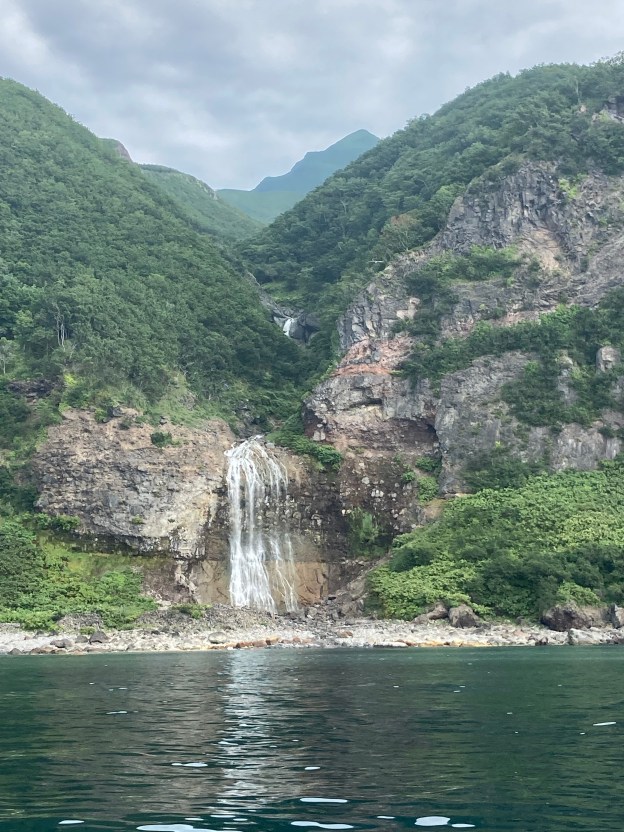
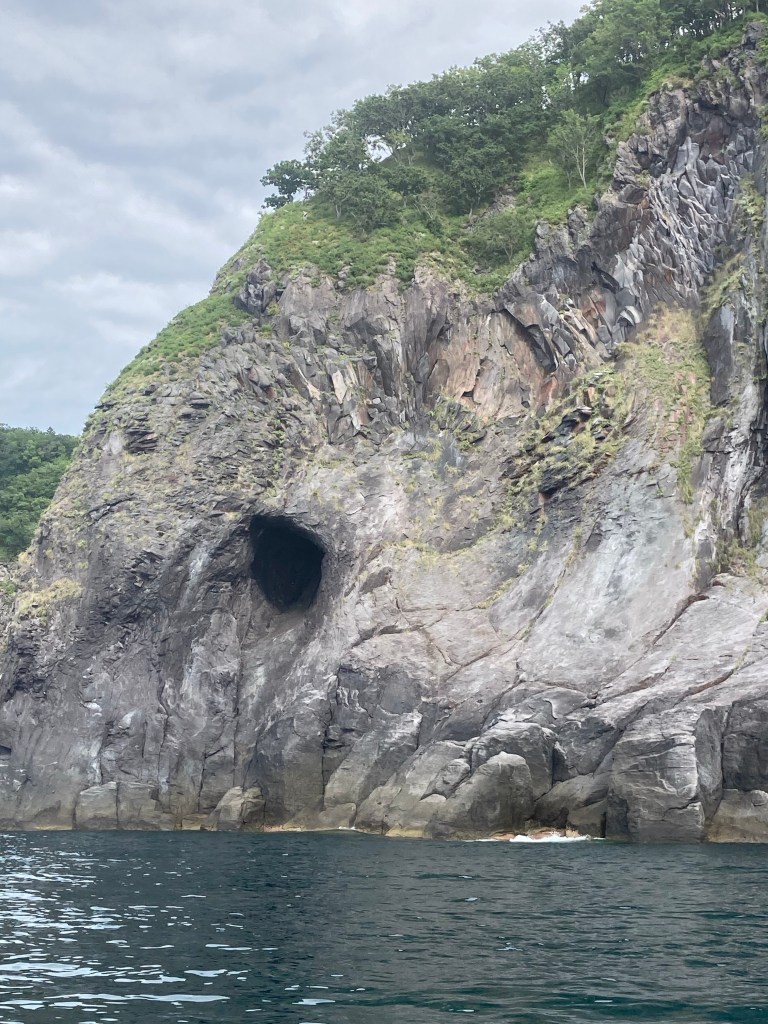
There are three large National parks on the island and we aimed for Akan- Mashu National park in the hope of seeing bears, white tailed eagles, red foxes and deer. We were not disappointed as we saw all but the bears as we drove through the area. Having booked a boat trip which took in the unusual rock formations and passed along the shoreline where there was a high expectation of spotting a bear or two we got lucky and saw one albeit from a distance.
Elephant rock
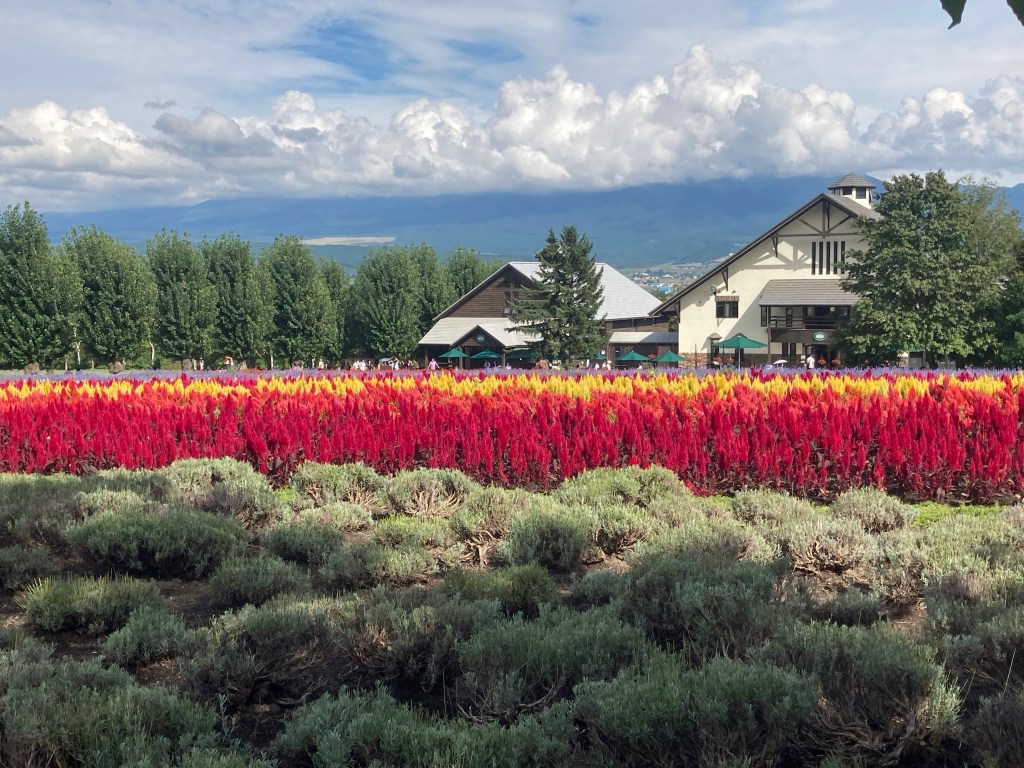
We had on our itinerary a visit to a lavender farm and “the village of sunflowers” sadly we were too late in the season to see either in their full splendour. However the lavender farm was a well developed commercial business with laid out walks amongst the flower beds, restaurants, shops selling everything lavender including lavender ice cream which was very yummy.
Two of Hokkaido’s gems are a gin distillery which boasts international awards and the first whisky distillery in Japan based upon traditional Scottish methods of production .
The gin distillery was our first stop. Set in a small but beautifully landscaped gardens, the distillery itself was based in an old outshed and after climbing some rickety wooden stairs we found ourselves in the tasting area 🤡 After sampling seven gins all of which had very distinct flavours I clanked out with four bottles which still kept me within my duty free limit.
The country loves its scotch whisky and so it shouldn’t be a surprise that somebody was sooner or later going to try and produce a whisky true to Scottish traditions. Masataka Taketsuru was the young man to do this. In 1918 he travelled to Scotland and took a chemistry course at Glasgow university and then apprenticed at three different Scottish distilleries making copious notes in two journals that became Japans first guide to whisky production.
In 1920 Masataka returned to Japan with his Scottish wife Jessie Roberta (Rita). She was the daughter of Masataka’s landlady in Glasgow and in spite of objections to an international marriage from both family’s the two had married earlier that year and Rita decided to emigrate to Japan to support her husband’s dream. She never returned to Scotland but made herself a part of the local community and established a school for young children
When Rita passed at the age of 64, Masataka was too depressed to attend her funeral. Suggested by his son Takeshi, he decided to make a special whisky to express his love to Rita for her commitment to his dreams
It symbolised the ultimate fruit of his love for Rita, both in taste and design.
The last 5 days have seen us say goodbye to Sado Island and hello to the island of Hokkaido the northerly of the Japan islands.
Our journey took us along the west side of the Japanese mainland to the northern port of Aomori through changing landscapes of rice plains, river valleys and cedar forested mountainsides.
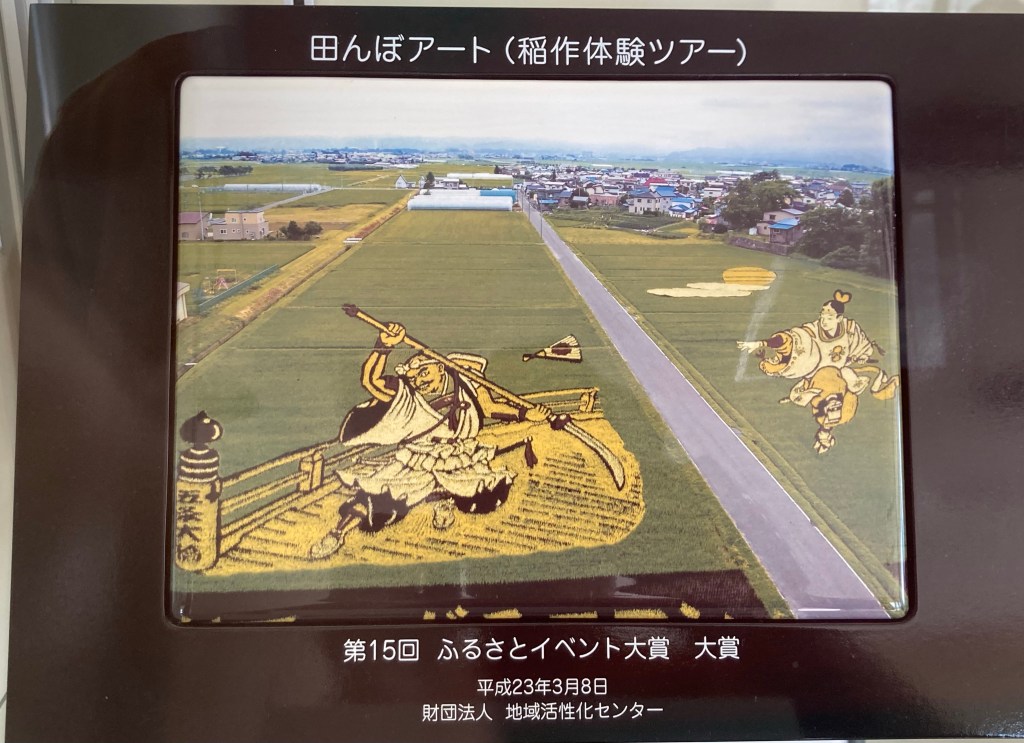
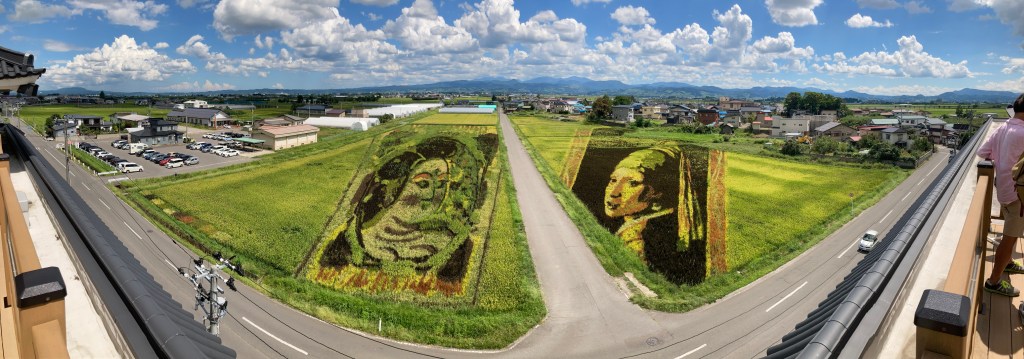
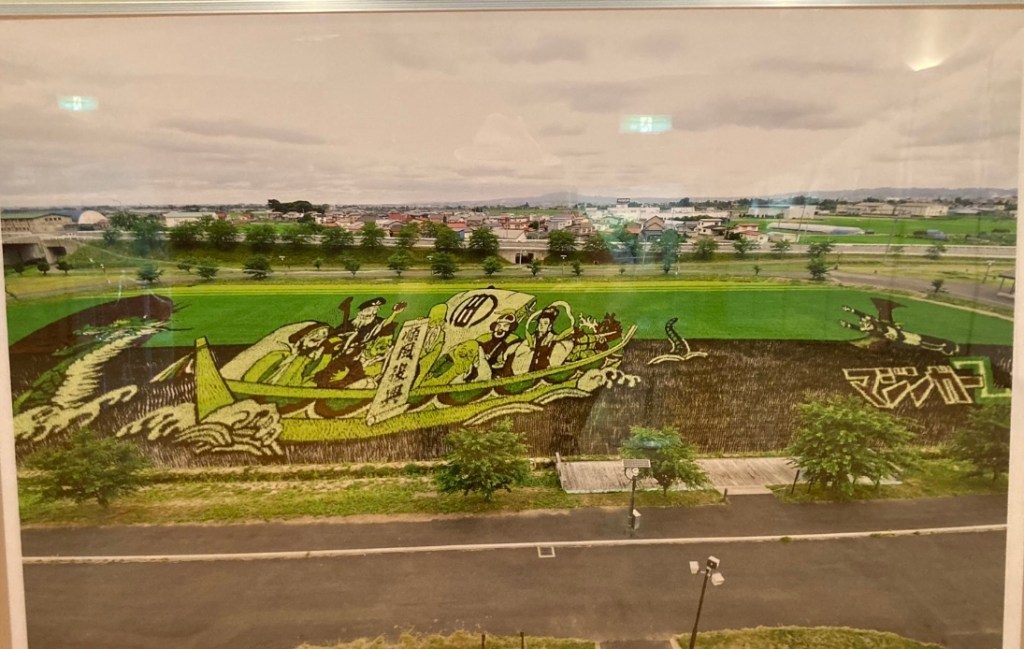
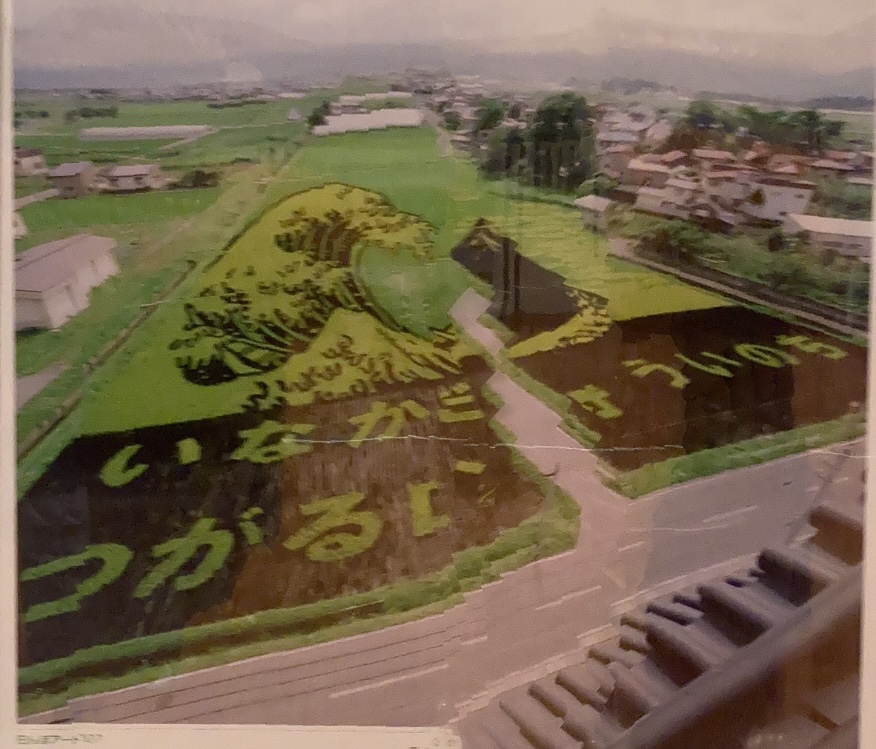
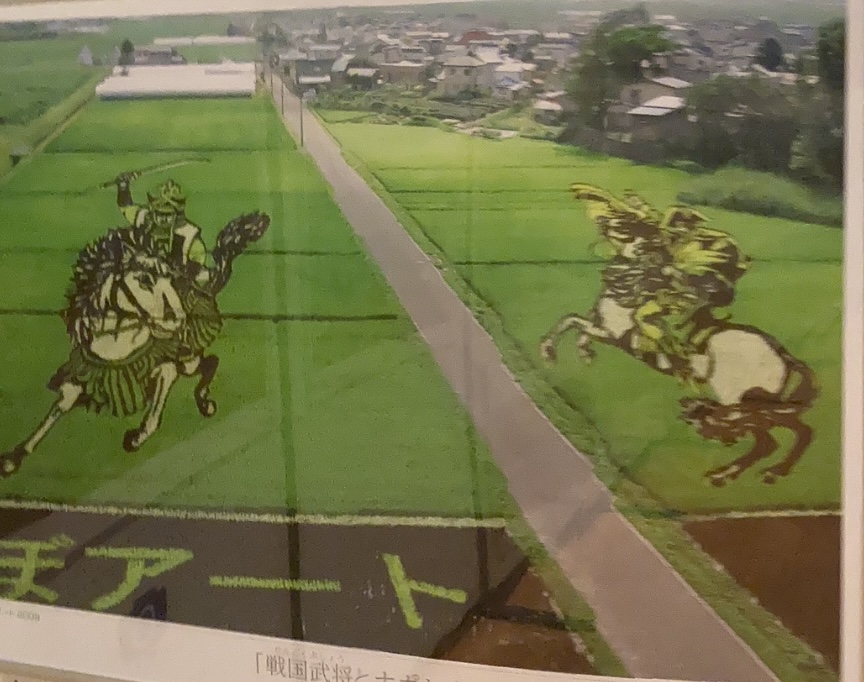
We have already shared the amazing Rice Paddy Art of Inakadate in a blog and this blog is about a house, some photos, a temple, a samurai village and something called Nebuta.
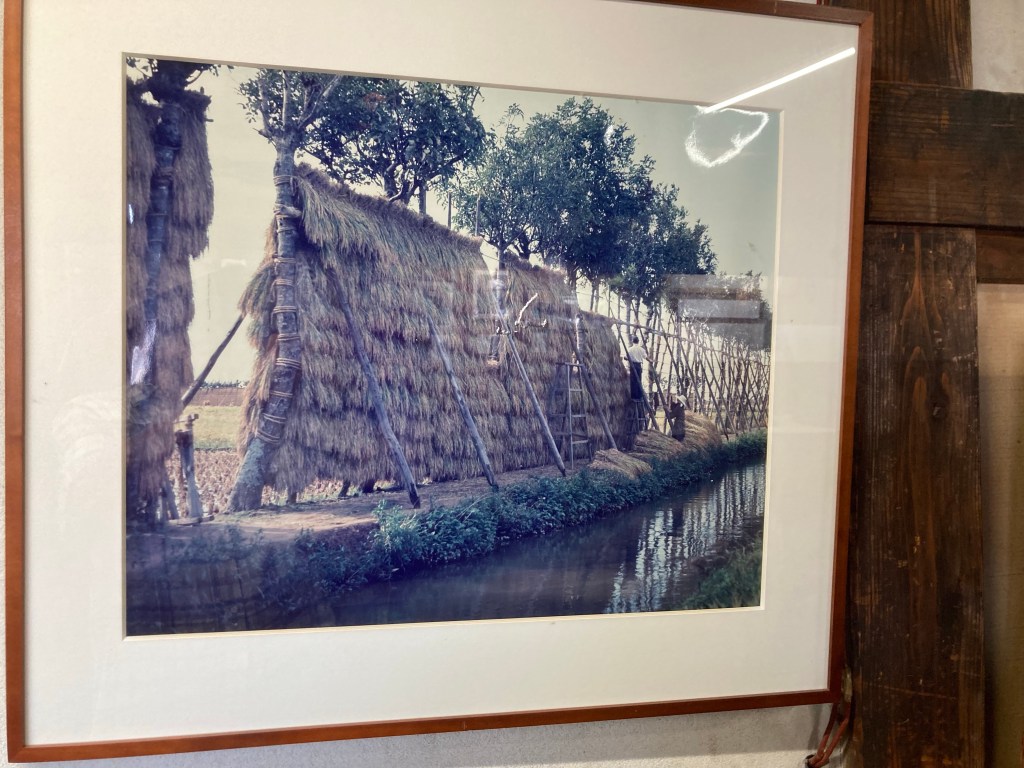
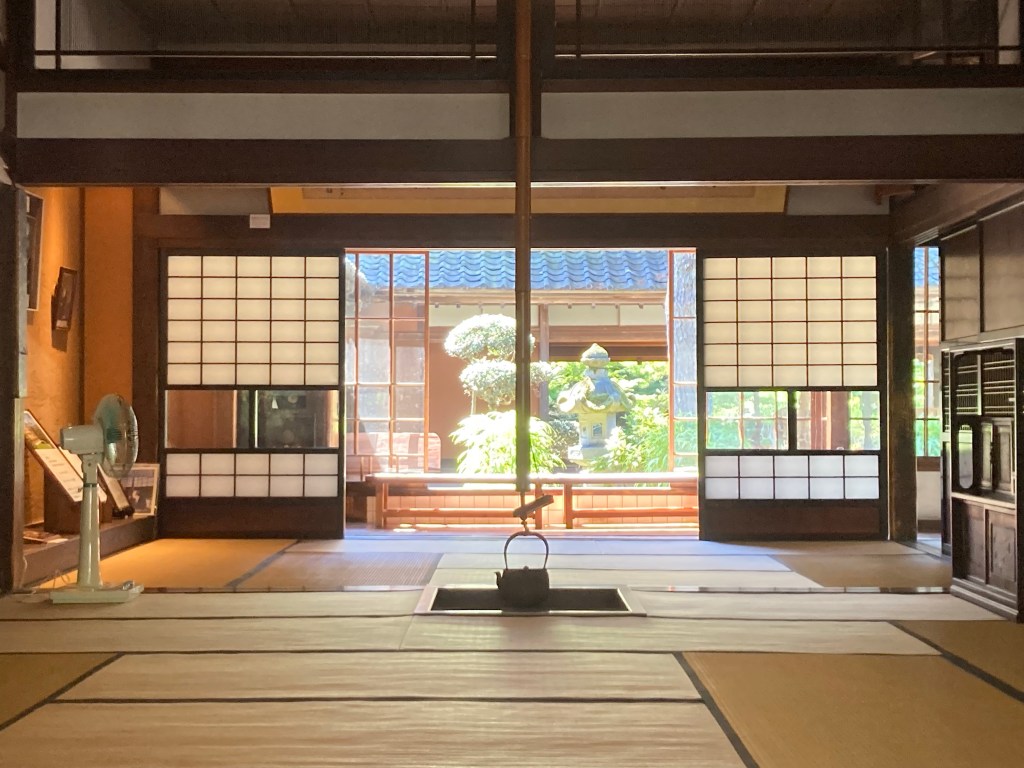
The House – or to give its full name “Northern Culture Museum” started life around 1768 as the home of the Ito family, rice farmers on the plains of Echigo. They built an enormous fortune and in their heyday acquired 14 million m2 spread over one city, 4 districts and 64 towns and villages. In their heyday they produced an annual crop of over 30,000 bales of rice with each bale about 60kg!!
Drying Rice stalks
Their modest home grew to be in the grounds of 7 acres of gardens whilst the floor area of the house was 1 acre and houses a range of quality artefacts from China Japan and great civilisations across the world
It is no wonder that the house and its contents are recorded as a National tangible cultural asset but the end of WW2 nearly saw the house and grounds siezed for redevelopment. It was the efforts of the head of the family and an American lieutenant charged with cultural work that led to the creation of a museum trust to acquire and preserve the house and contents
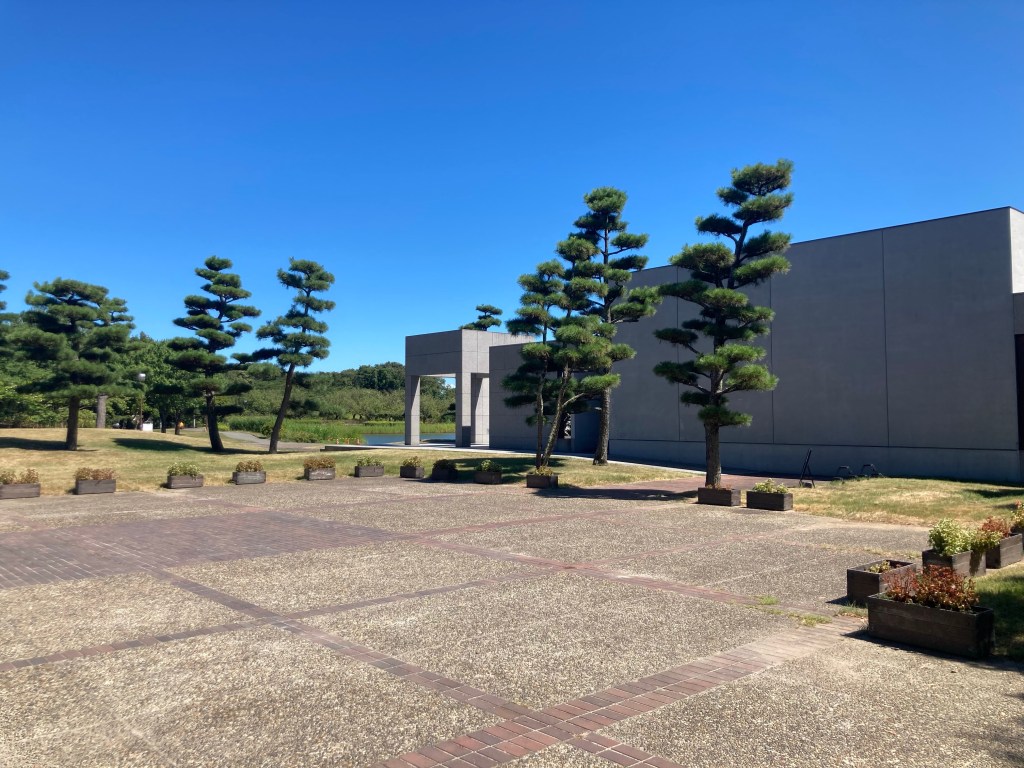
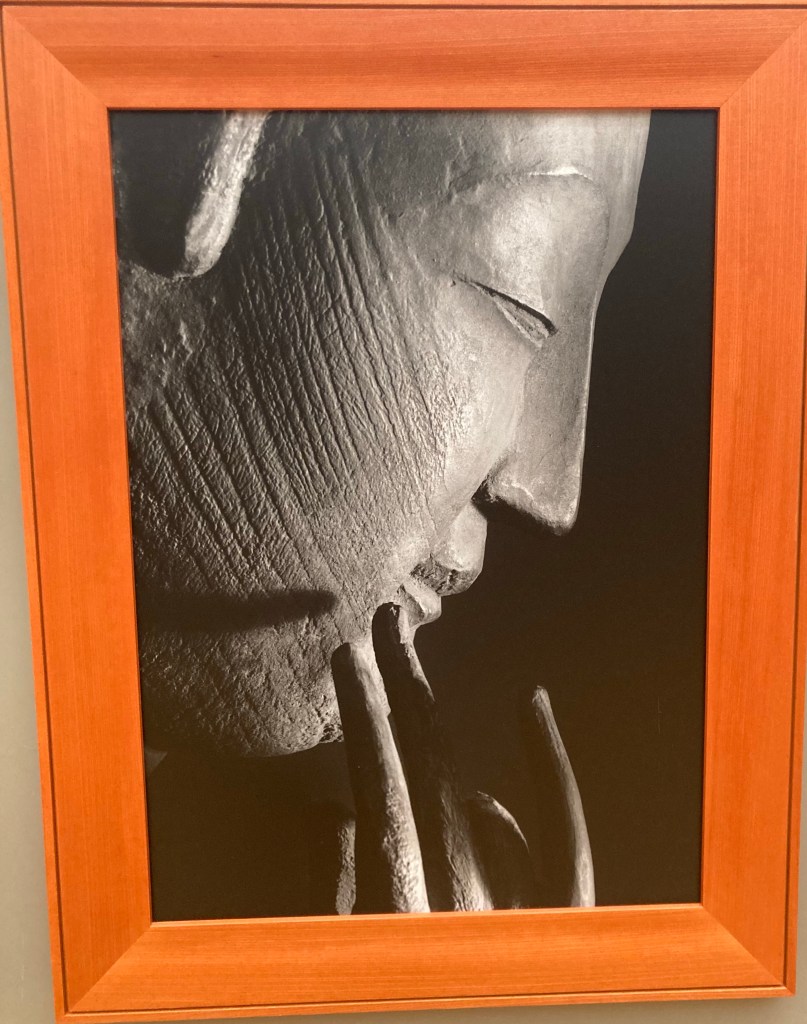
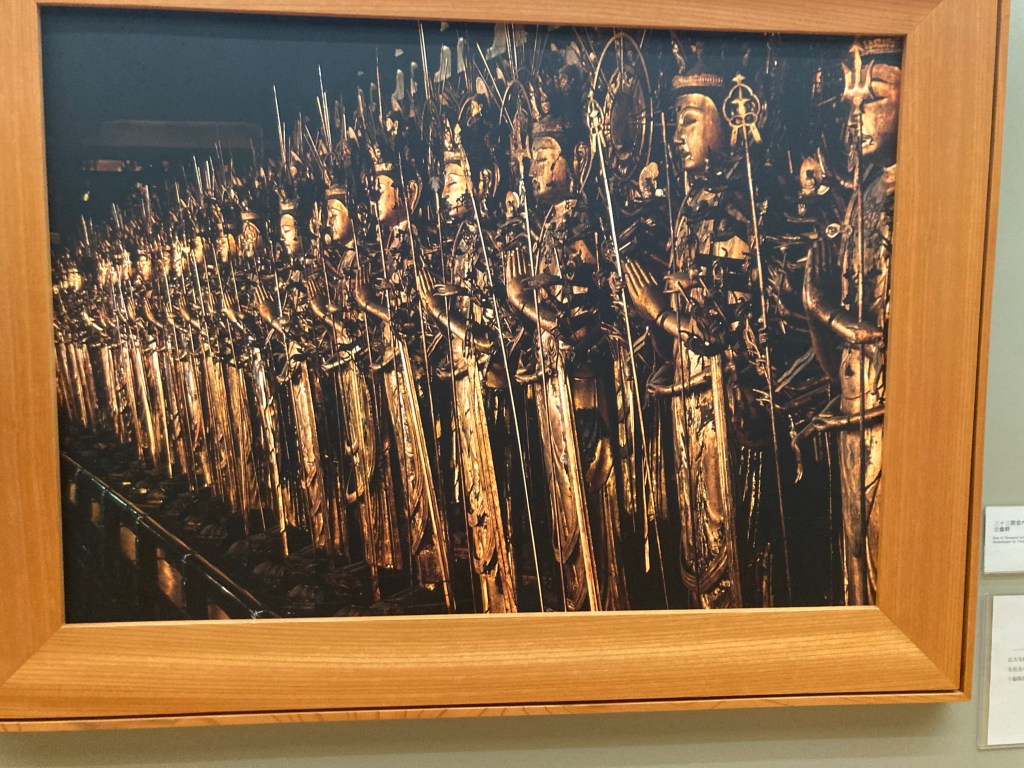
The Photos are a reference to a beautiful museum built by the city of Sakata as the first Japanese museum dedicated solely to photographs and an individual. Ken Domon was a photographer of postwar Japan through news photos grounded in realism, portraits and snapshots of people, temples, Buddhist statues and Hiroshima. His gift to the city was 70,000 photos
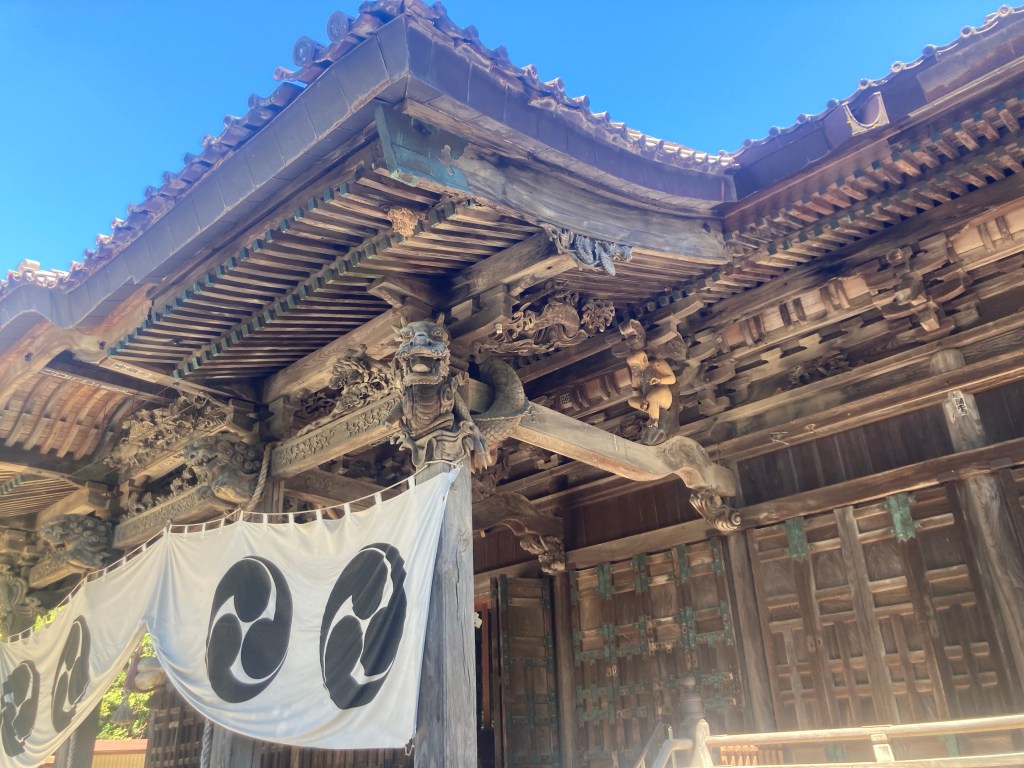
The Temple intrigued us being dedicated to “two living gods” which are actually the mummified bodies of two high priests, who to achieve this state starved themselves to atone for their own personal sins and for the sins and salvation of the town members. For the first 1000 days they went through extreme fasting and exercising. The next 1000 days they lived on a diet of pine bark, leaves and arsenic water. The water when drunk over a period of months along with the strict diet reduces body and water weight to nothing. Even organs, muscles and brain matter deteriorates. The last 1000 days they were entombed with just a pipe for an airway and a string attached to a bell above ground to let others know they were still alive. Once the bell stopped ringing the airways were sealed. Several years later the priests were dug up and their bodies preserved as living mummies, “ living gods.” The priests live on to this day recorded in the city’s registry. As living priests they still receive a stipend from the Buddhist sect which is used to help maintain the Temple. Unfortunately the Temple was closed when we visited so we only have photos of the Temple externally.
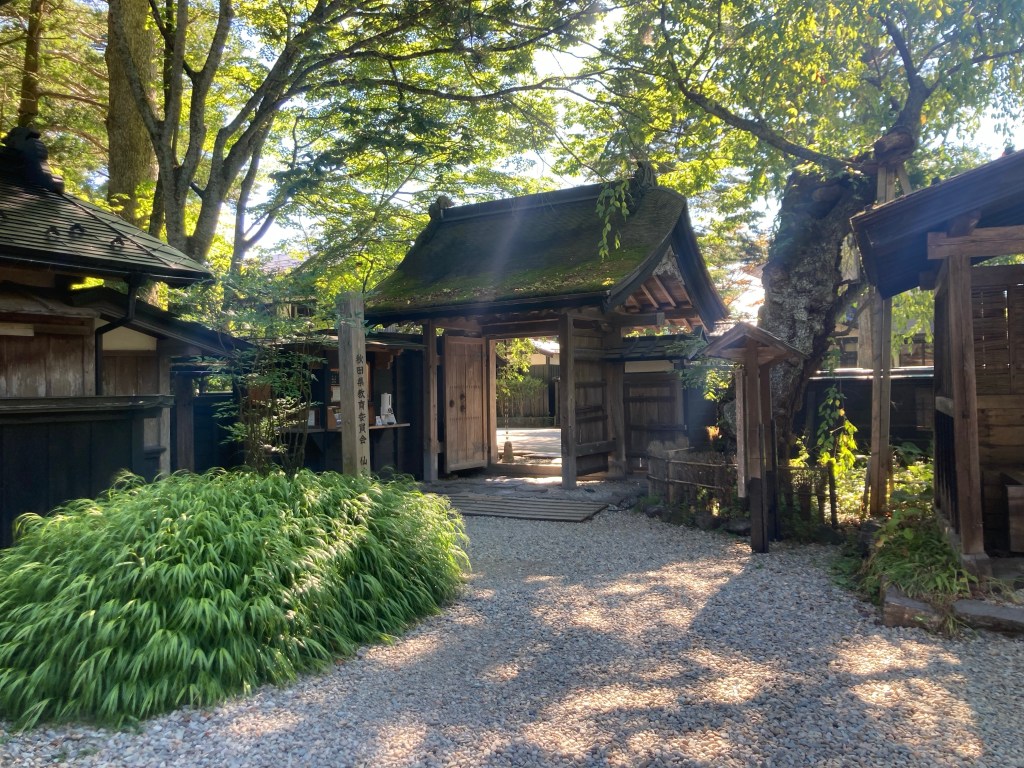
The Samurai village is to be found in a well preserved area of Kakunodate. The town was established in 1620 and designed by the feudal Lord Ashina. The samurai district has narrow streets and has remained unchanged for over 400 years with simple architecture and an air of history.
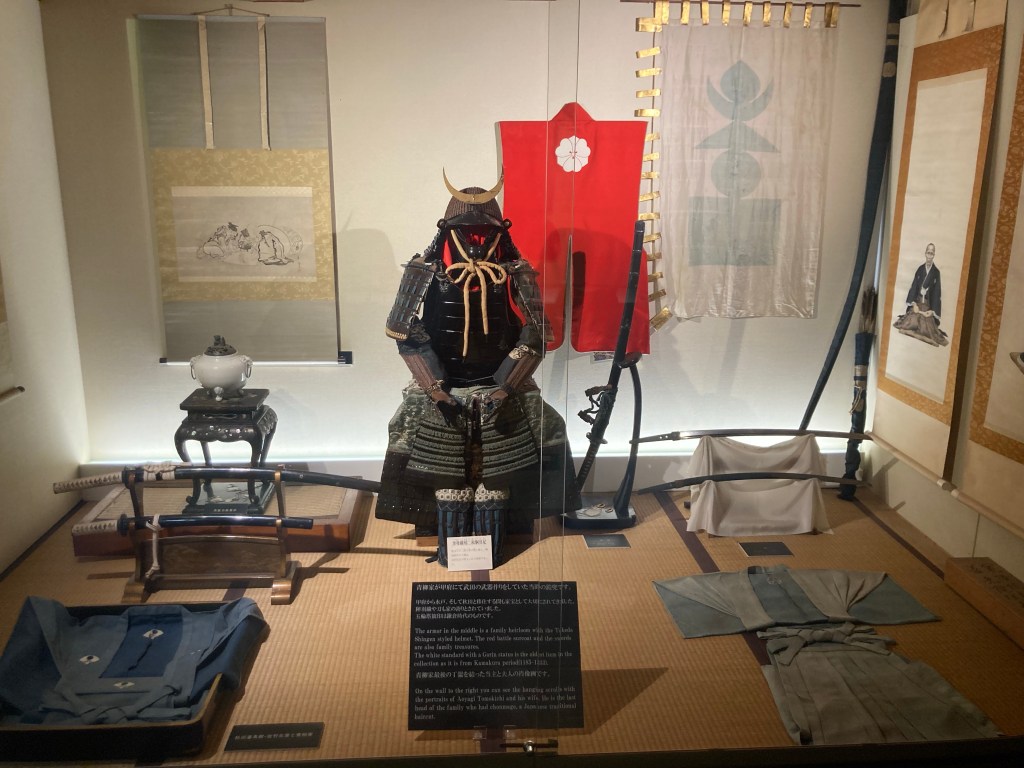
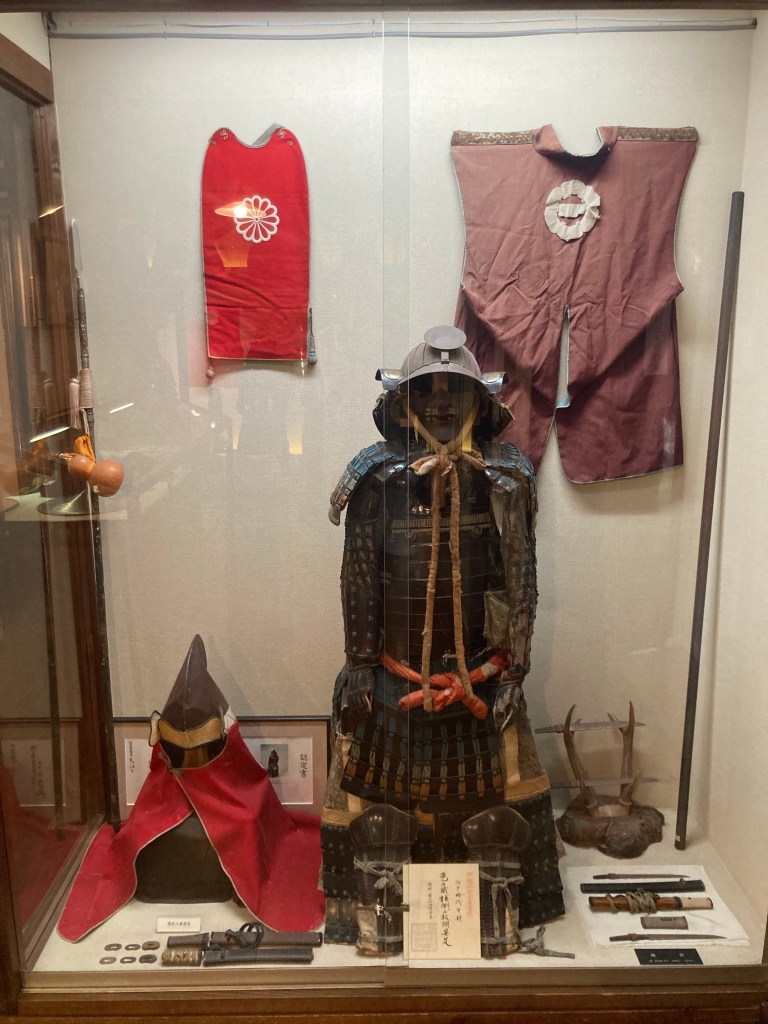
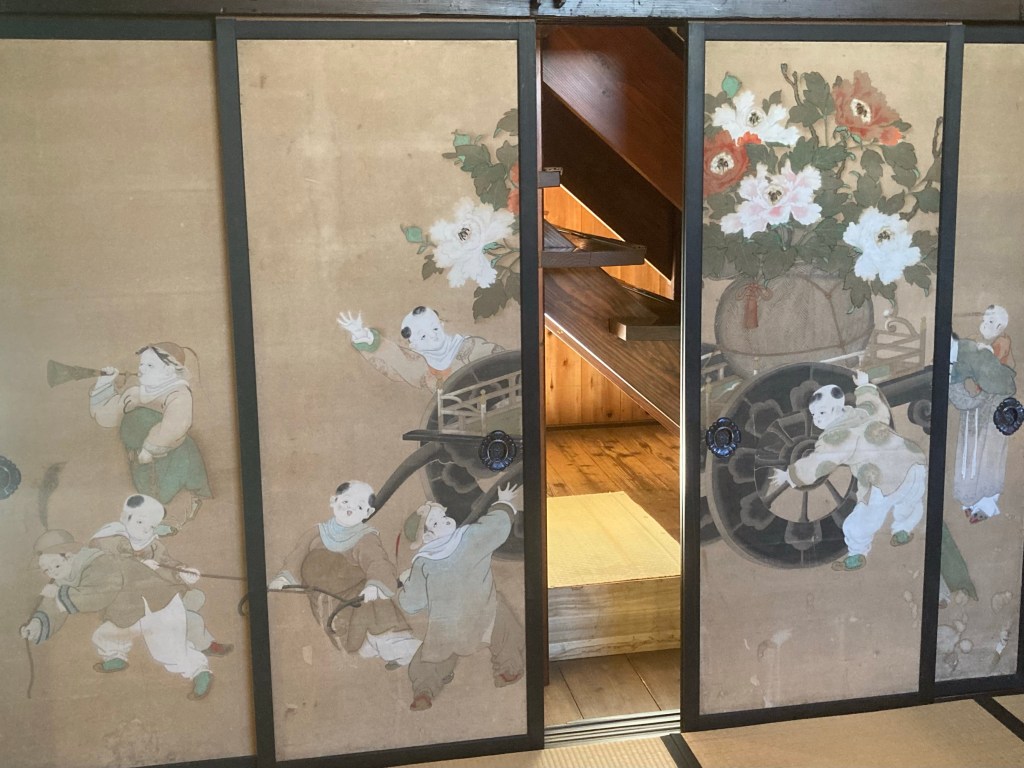
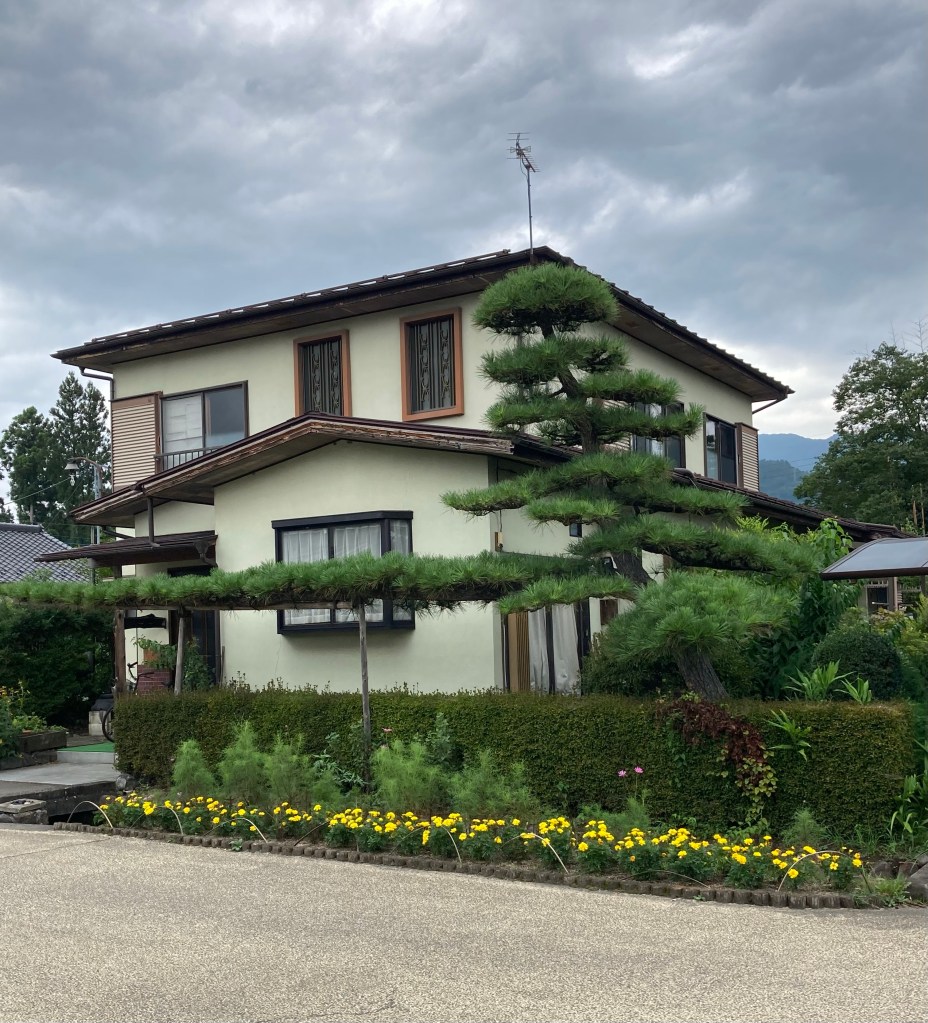
A number of houses are open to the public. We visited the Aoyagi Samurai family home and was surprised by its history and the quality of the artefacts. The main house which boasts the best preserved Samurai thatched roof in the nation stands within a compact botanical garden containing hundreds of rare plants including an eight petalled red weeping cherry a species found only in this garden.
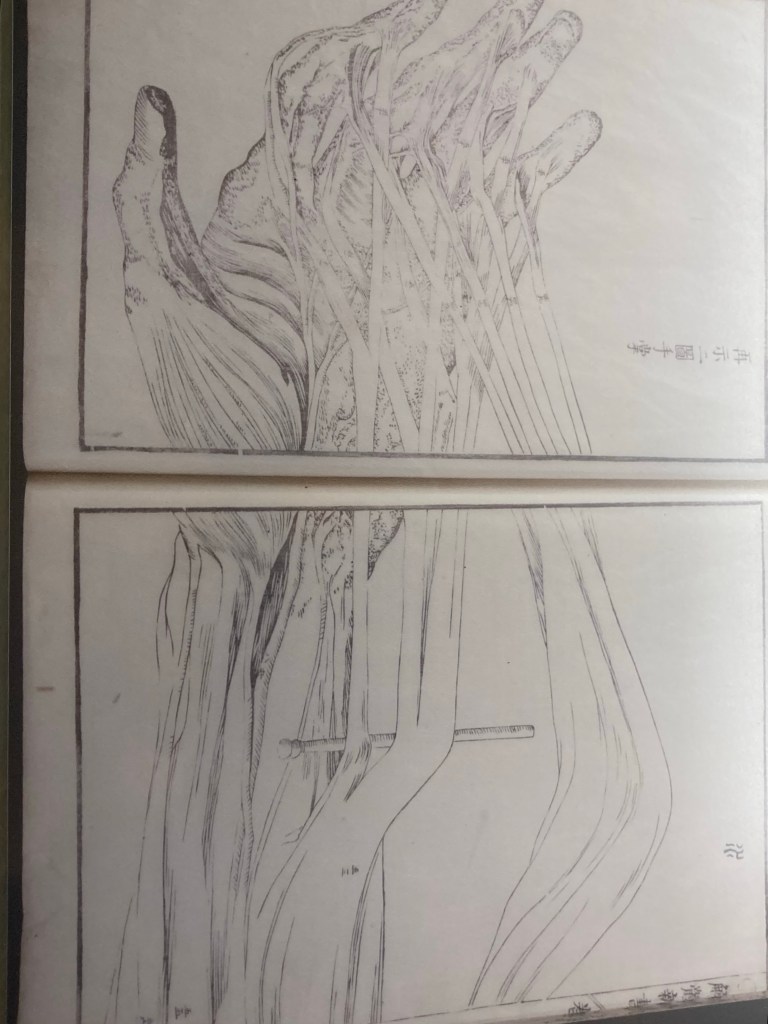
Of all the artefacts what really blew us away was the hand drawn illustrations of the human body in “Kaitai Shinsho” the first translation of a Dutch book of anatomy published in 1774 by Odano Naotake a samurai and distant relative of the Aorangi clan.
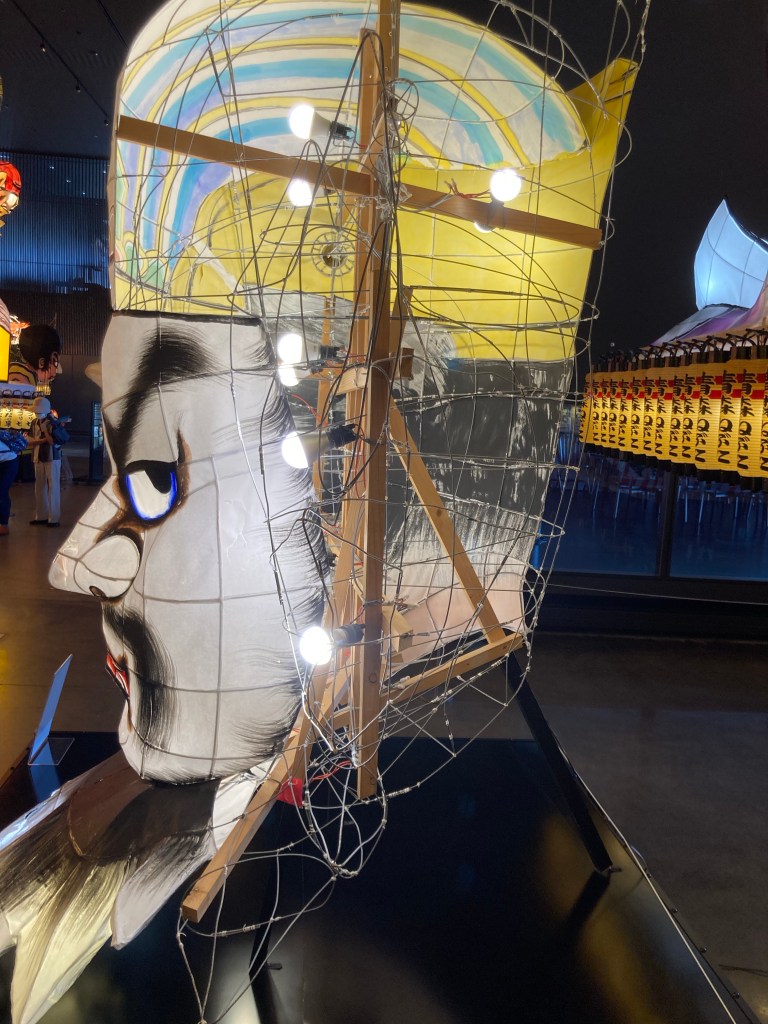
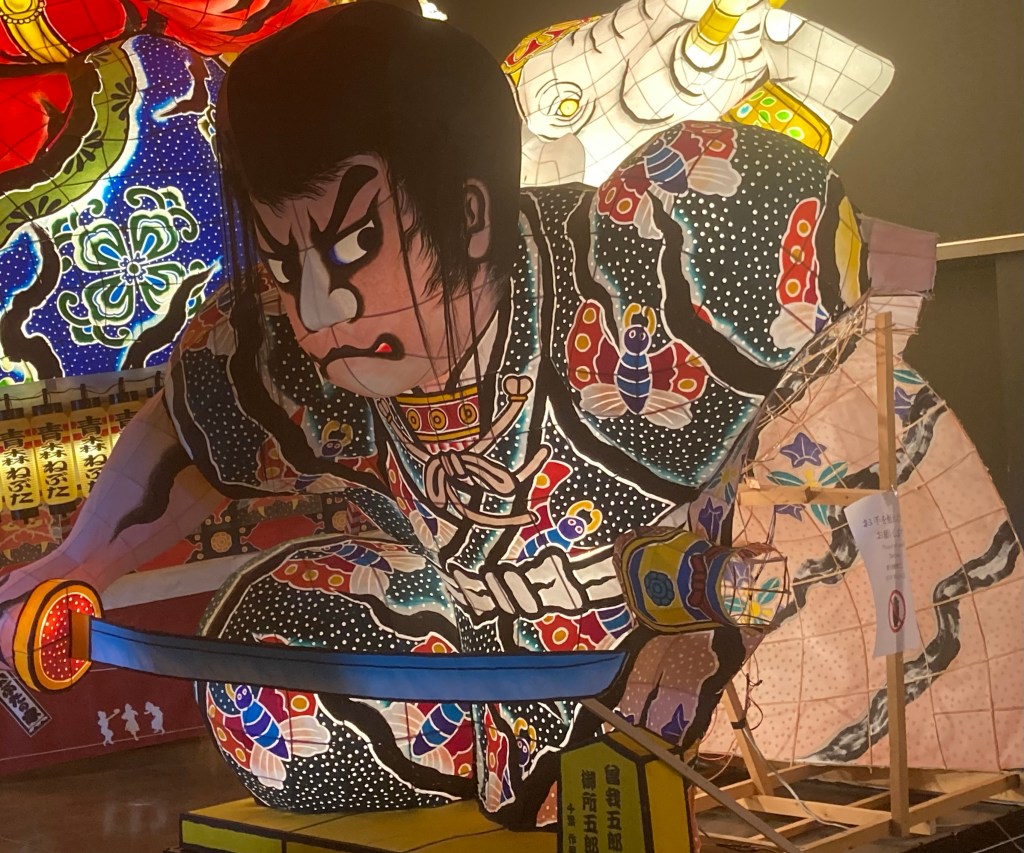
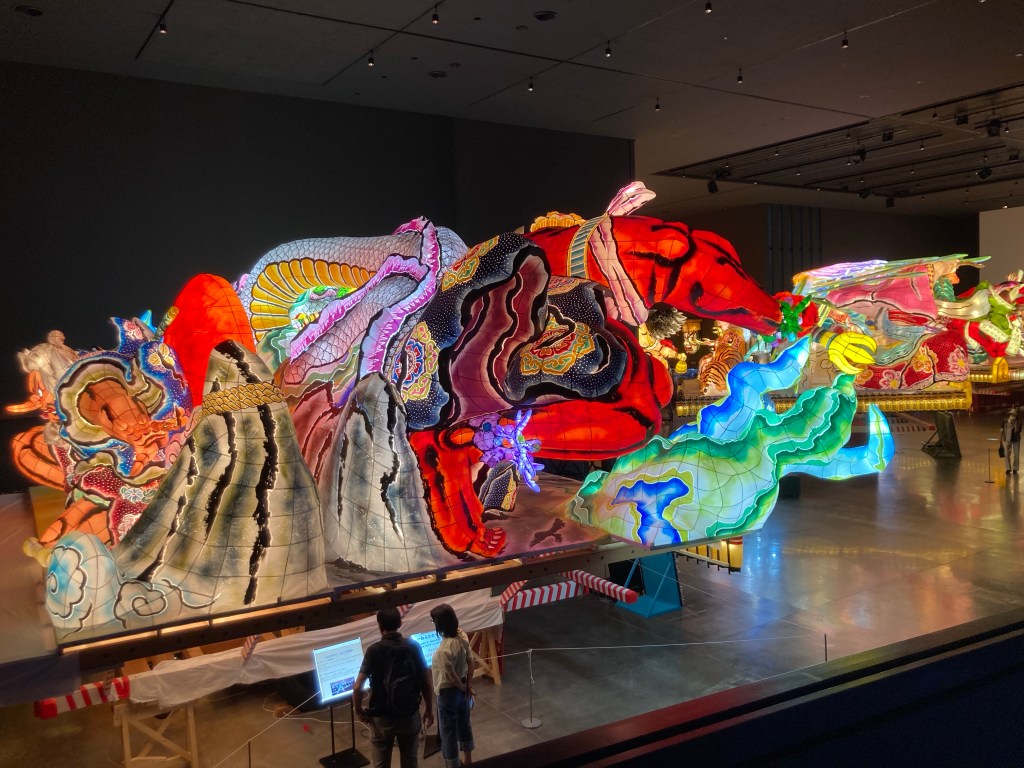
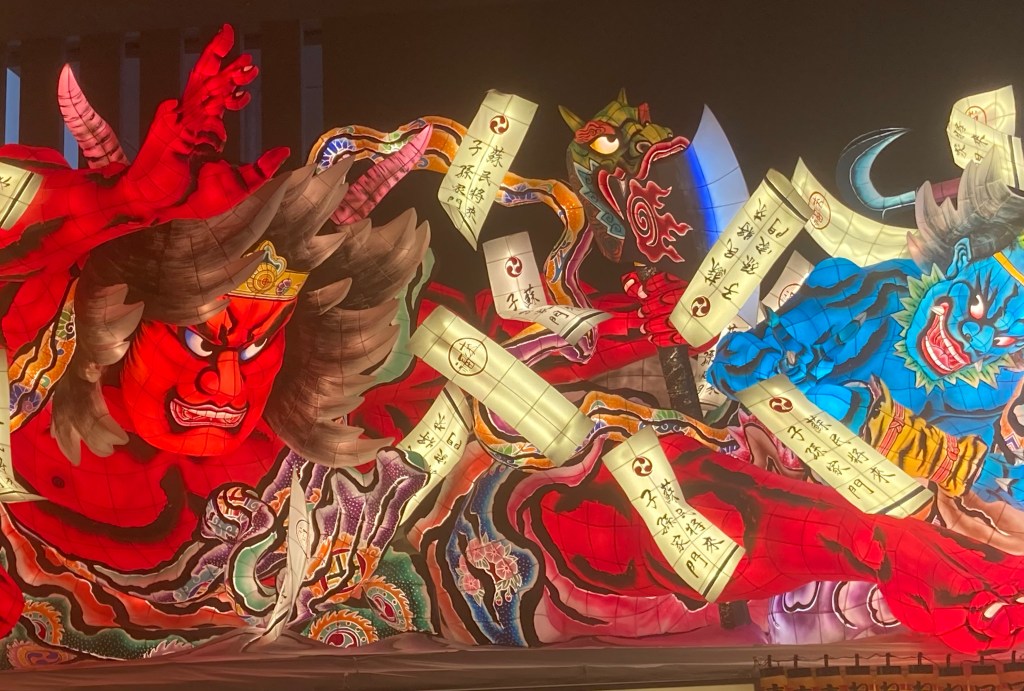
Nebuta Matsuri is the biggest festival in the Tohoku region. The 18th century festival is held in Aomori city every year in August. The highlight of the festival is the daily parade of gigantic colourful lantern floats accompanied by large taiko drums, musicians and dancers. We were too late for the festival but were able to view some of the floats at the Nebuta museum. They are amazing structures constructed from painted washi paper over a wireframe usually depicting gods or mythical creatures from Japanese culture, kabuki actors and characters from popular tv shows. They are illuminated from the inside resulting in vibrant colours.
We are jumping ahead of ourselves with this blog as we have visited other places we want to write about but saw this today and we’re totally blown away and wanted to share.
What is rice paddy art? It is art using a rice paddy as a canvas making a rough sketch is the most important step. Surveying techniques and perspective drawing help achieve the high quality of the art but every step from planting to harvesting is done by hand involving more than 1000 villagers and supporters.
You may think what paint is used? The answer is None! The art is made by planting 10 varieties and 7 colours of rice including green, purple, yellow, dark green, white, red and orange. A typical picture is 150m x 50m
The Process2022 design world award winner 2023 Art design Previous designs
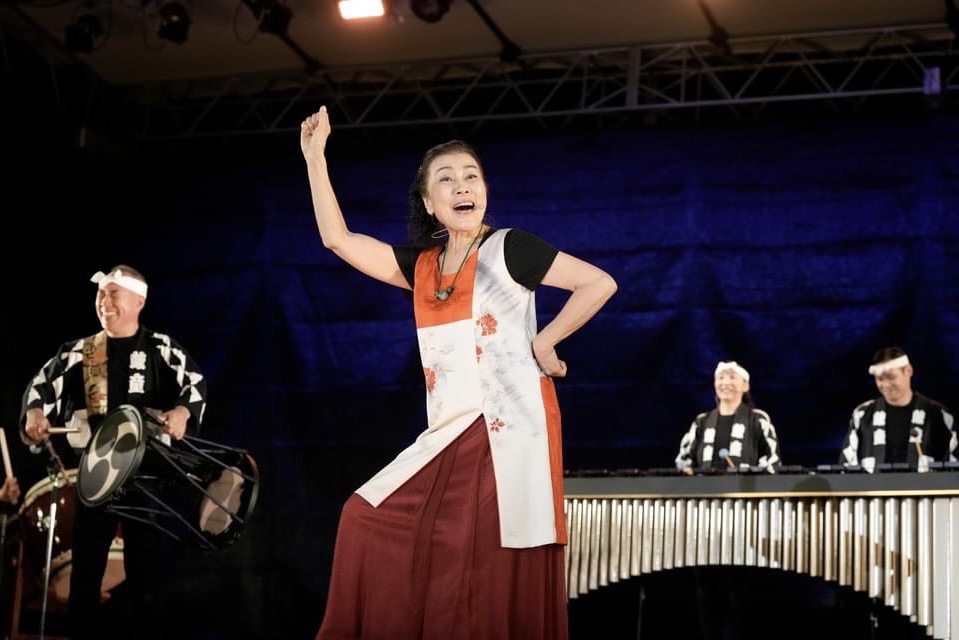
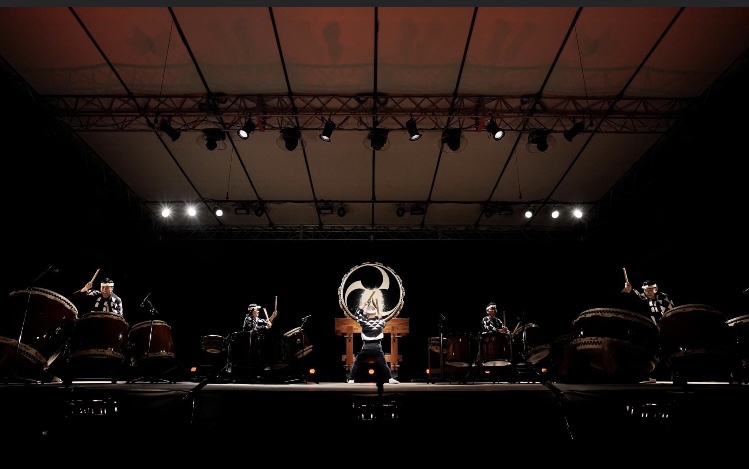
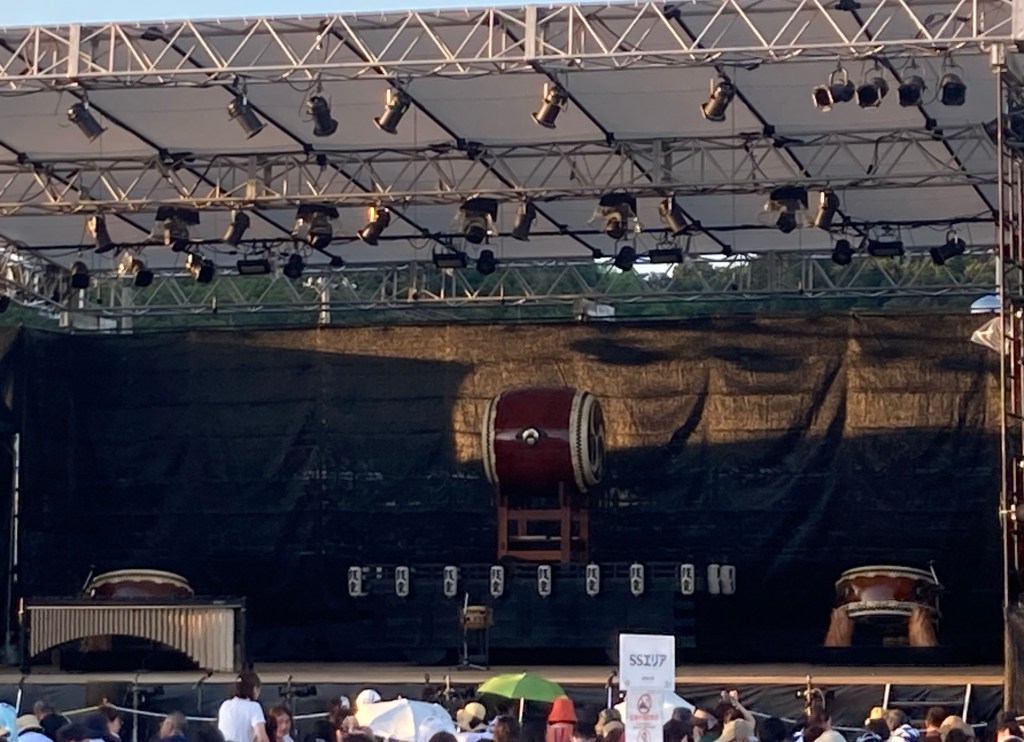
Kodo is a taiko drumming group based on Sado island which began in 1981 and a major founding member was Toshio Kawauchi who wrote in a 1983 newsletter that he would like to see an event that becomes an experiment in strengthening the community ties of all the worlds inhabitants, and through a mutual understanding of the music establish a new Earth culture that brings people one step closer to a world where people can truly live as human beings. Thus was born the Earth Celebration festival and its aim is simply to deliver his vision that “Under a star filled summer night sky, with the beats of the drum carried far away on the oceans roar the sound of Gamelon and sacred Shinto music fills the air.
Having followed the Kodo drummers since we saw them way back in 1987 when they visited Sadler’s Wells we have long held a dream to see them perform at their annual celebration on their home territory on Sado Island and this trip around Japan was partly about making that dream come true
Having, months earlier, stayed up until the early hours Charles managed to secure tickets for the 2 main shows we wanted to see so the first thing we did on disembarking the ferry was to collect our tickets from the site box office. We then headed to our pre booked campsite next to the beach on the outskirts of the town.
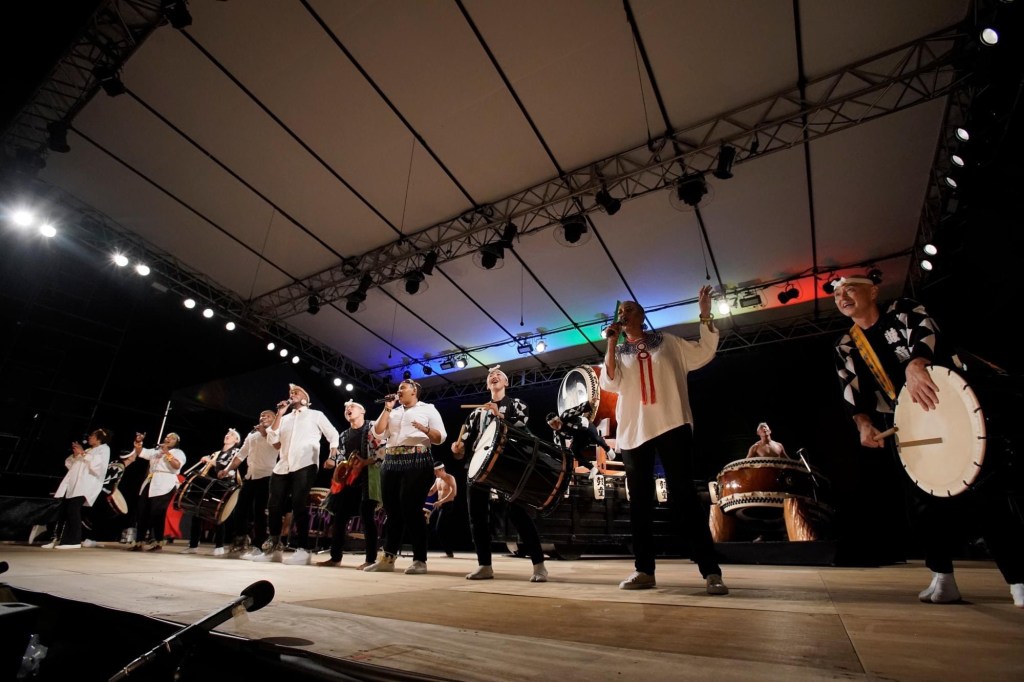
Our first show was the evening of our arrival using the shuttle bus service laid on from the campsite we arrived in Ogi Port about an hour before the show admissions began which gave us an opportunity to browse the various craft and food stalls. The show featured the Kodo drummers accompanied by singers and dancers whom I am sure were telling a story but not speaking Japanese I can’t be sure.
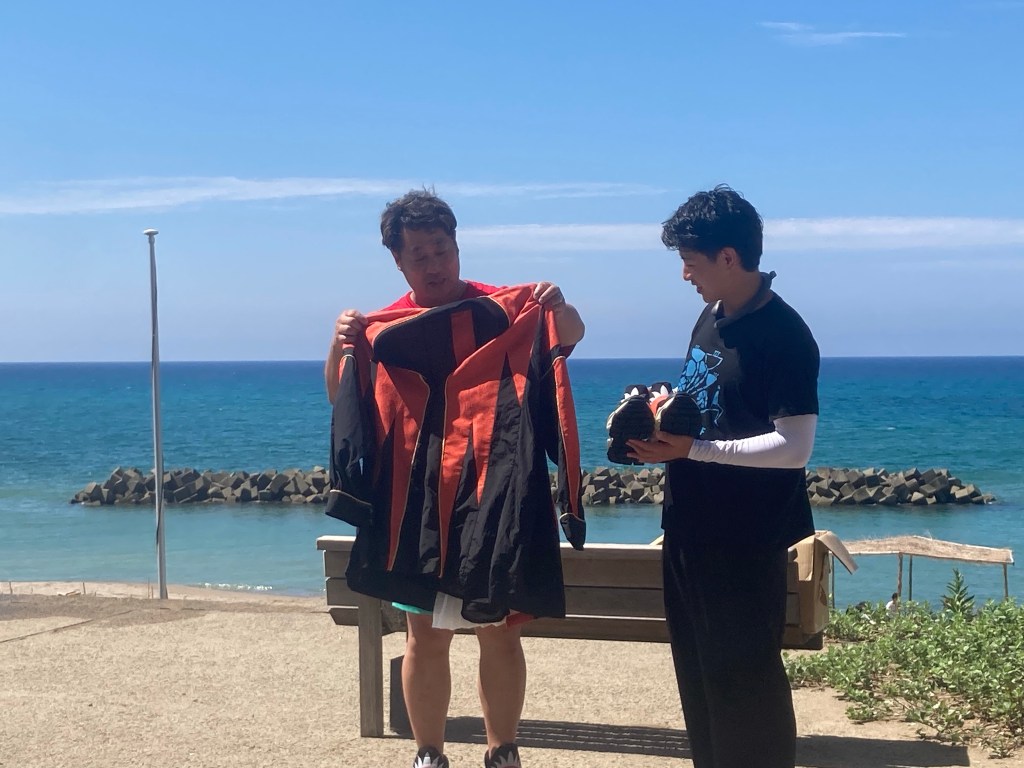
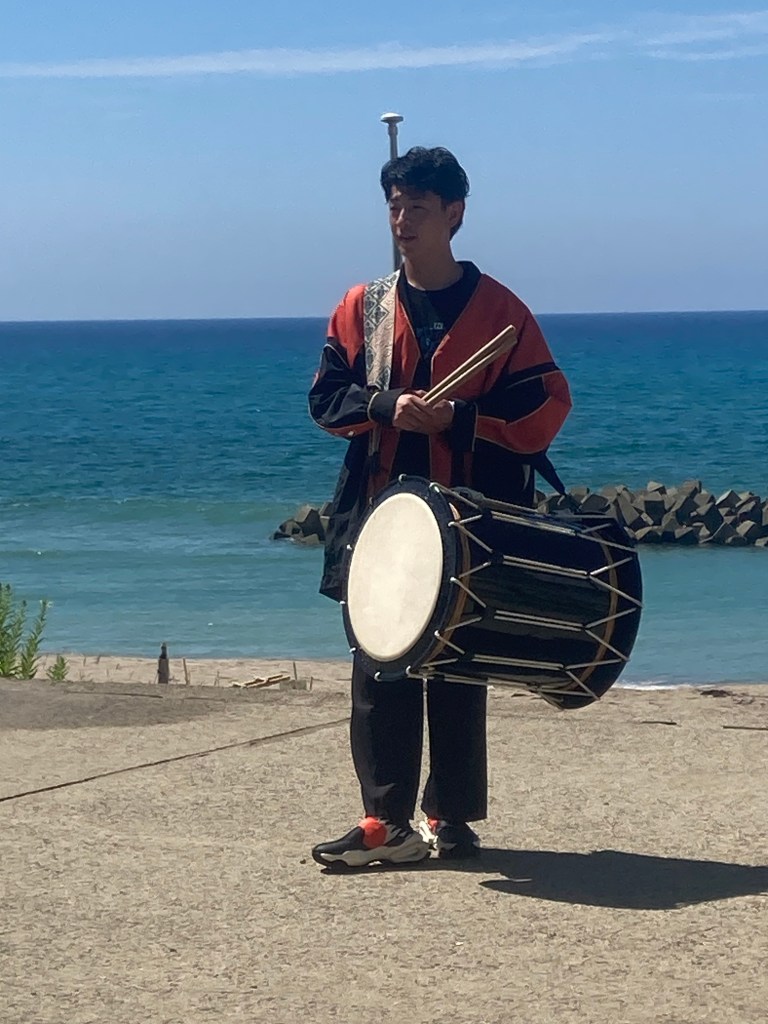
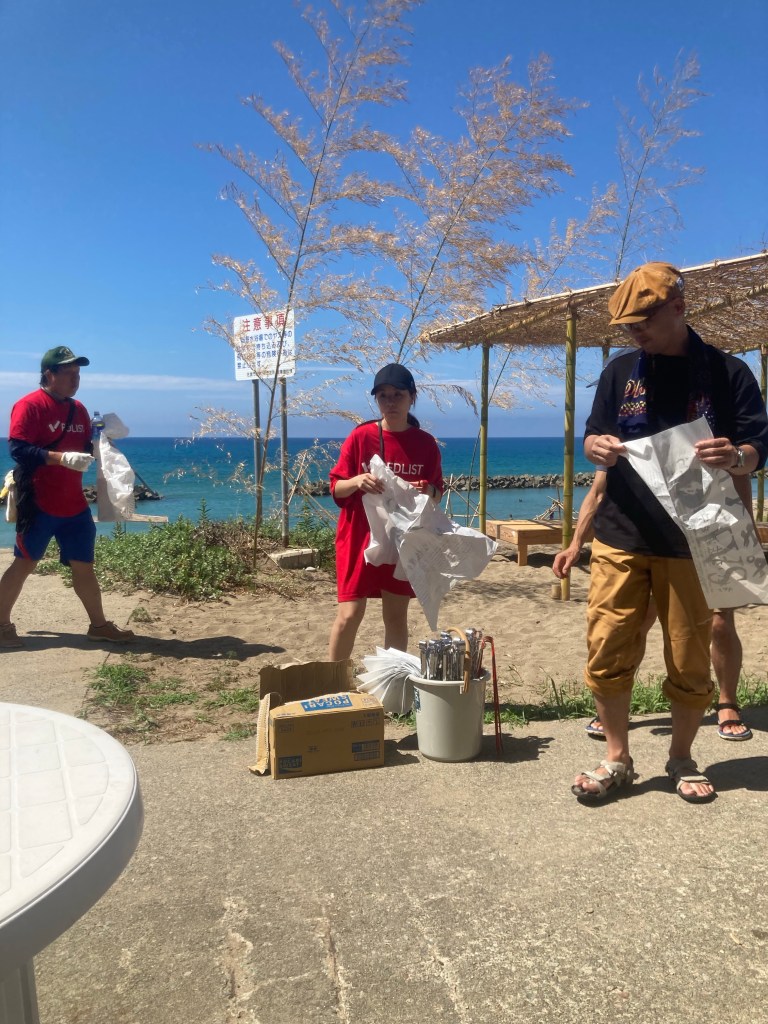
We were lucky enough the following day to be treated to a personal appearance from one of the shows drummers at the campsite, it appeared that he was being awarded the official outfit of “Redlist” a community group who are part of the wider Kodo collective, who after the demonstration led a beach clean up. We were so pleased we had decided to have a lazy day on site.
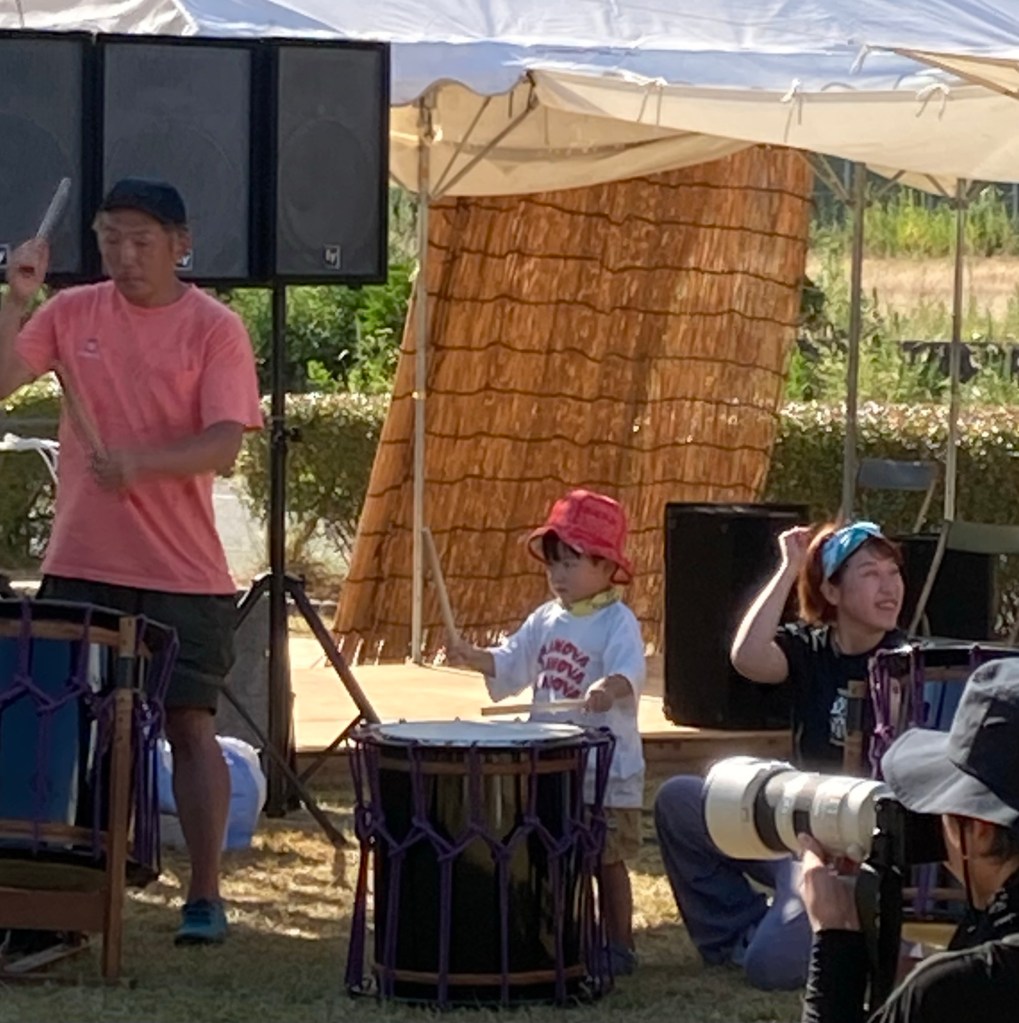
Part of the 3 day festival involved lots of day time cultural events around the town including drum workshops for those eager to try taiko drumming. This was open to all ages even really young children who brilliantly gave it a go as the photos show.
The grand finale on the Sunday evening also included an accapello group from South Africa, What a show this was Kodo at their best the energy was palpable and to see two totally different cultures come together and perform as one I think Toshio Kamuchi’s would feel his dream had come true.
NB as an aside I wanted to share a bit of Japanese history unbeknown to me. As part of our stroll through the various stalls we were approached by one of a group campaigning to repatriate Japanese citizens abducted by North Korea. The abduction of Japanese citizens took place over a six year period from 1977 to 1983 North Korea wanted them to train their spies in Japanese language and culture or to steal their identities so that their agents could masquerade as Japanese for espionage aimed mainly at South Korea. Although many have been abducted Japan has only identified seventeen.Since North Korea admitted abducting Japanese citizens in 2002 only five have been repatriated while discussions as to the whereabouts of the others are still ongoing. We were both shocked to hear yet it is still happening in various parts of the world and close to home we have the current situation between Russia and the Ukraine?
The Earth Celebration festival runs from 18th -20th August so after the Onsen near Watarase we had 3 nights to enjoy before our ferry booking from Niigata would take us onto Sado for the morning of the 18th
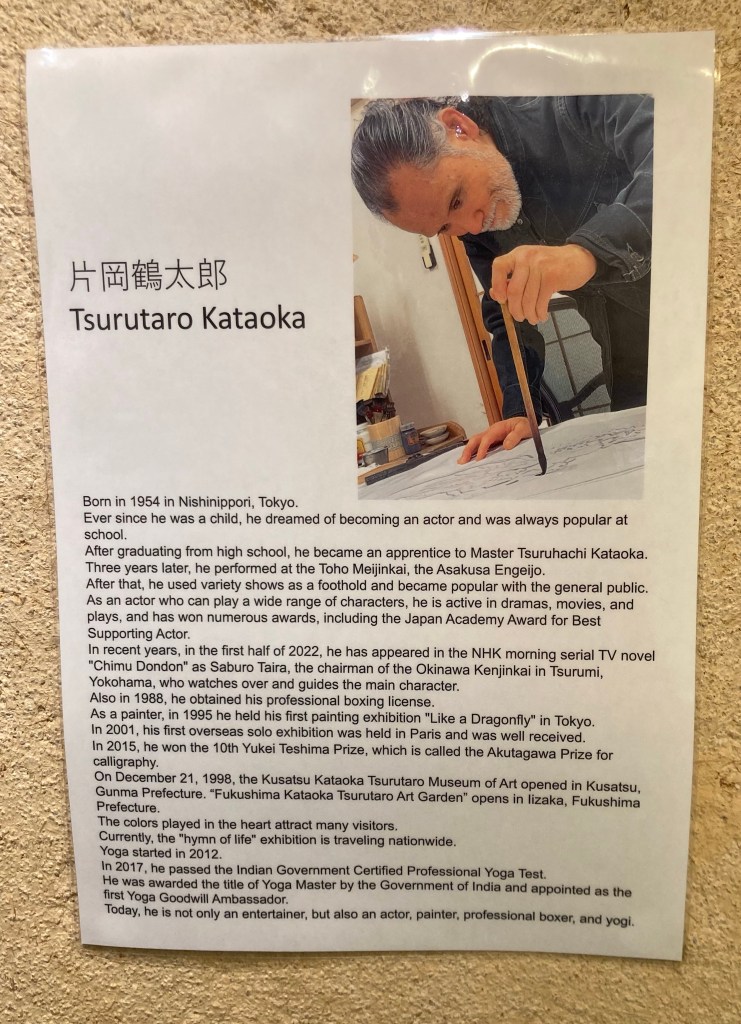
We were lucky to hit upon a spa town called Kusatsu where we visited an art gallery exhibiting the paintings of Kataoko Tsurutaro who was an actor, comedian, boxer and also a talented painter. The hot springs of mineral water cascading down the mountainside created a water pathway for visitors to enjoy the healing waters whilst walking the mountainside.
Leaving Kusatsu we had a fascinating drive through the mountains to the craft village of Takumi No Sato driving through alpine like ski villages, the highlight was sighting a monkey munching its lunch at the side of the road ( the first wildlife sighting of our journey) Historically the village was a collection of four closely located villages that had merged into one in 1906. The concept of a craft village came from showcasing traditional crafts and skills that continue to this day.
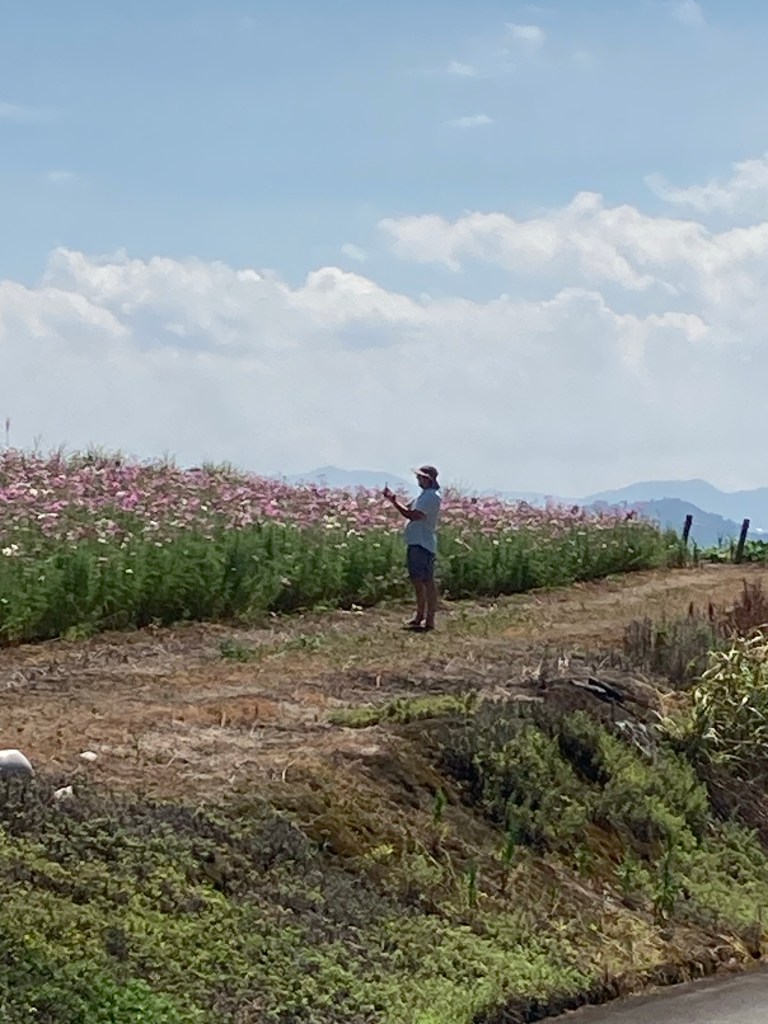
We decided to visit a renowned cosmos park which disappointingly was not as spectacular as we had hoped as they were not in full flower but the views were worth the drive.
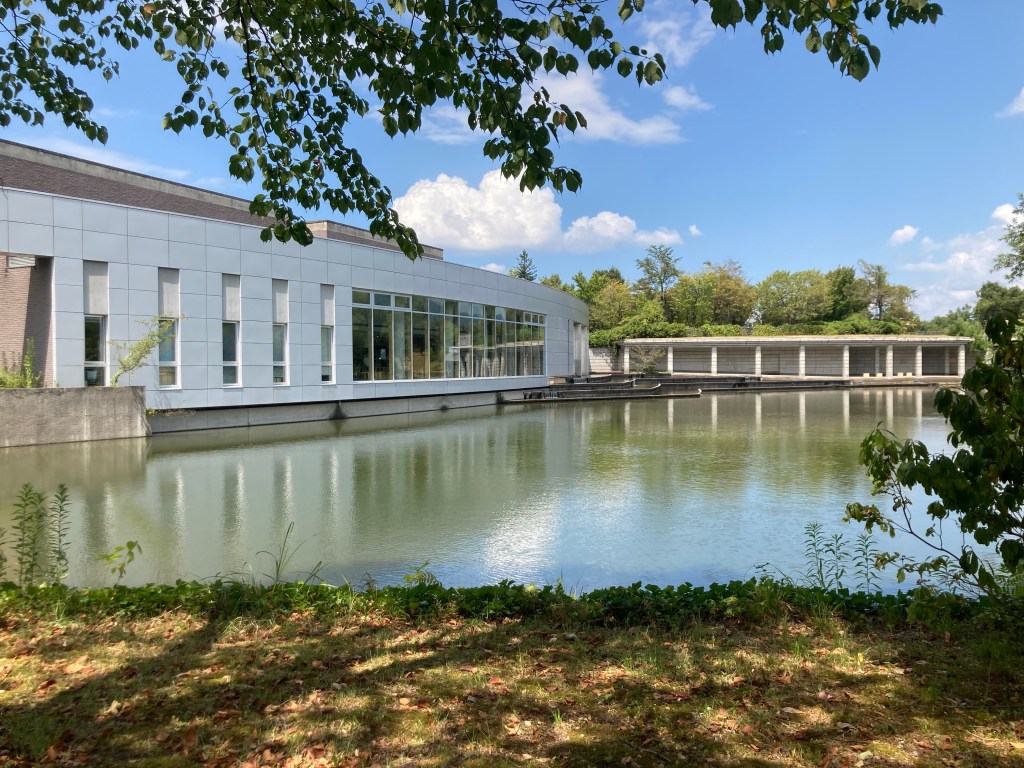
With time to spare we visited a nearby museum of sports memorabilia and art work at the Ikeba art museum in nearby Minamiuonuma.
After a pleasant flight with Cathay Pacific we were met by Gairhe and his colleague from Vantech and taken to pick up the hired motorhome which will be our accommodation for the next six weeks. It has taken some getting used to after our own motorhome which is 2.2 metres longer and 400 mm wider. Here we are three days later and hopefully we have it sorted !!
Not having any set plans for the first week we set off north to avoid the incoming Typhoon which satellite pictures showed hitting mainland Japan south of Tokyo. Our set destination from 18th to 21st August was Sado island to enjoy the Earth Festival hosted by the Kodo drummers whom we had seen a couple of times in the U.K. and had always wanted to visit their home island.
Our route to Sado was dictated by places of interest and Michi stopovers (these offered free parking , access to toilets, eating houses and small supermarkets) our first experience was just outside of Tokyo on what would be a U.K. equivalent of a service station yet there was no comparison. In the morning we woke up to frenetic buzz of local people who had come to buy from local food producers, eat at the cafe and visit the fermentation market. In contrast the following evening found us surrounded by a local park and tennis court at the top of a lake, a very relaxing and calming experience after the few hectic days of travel.
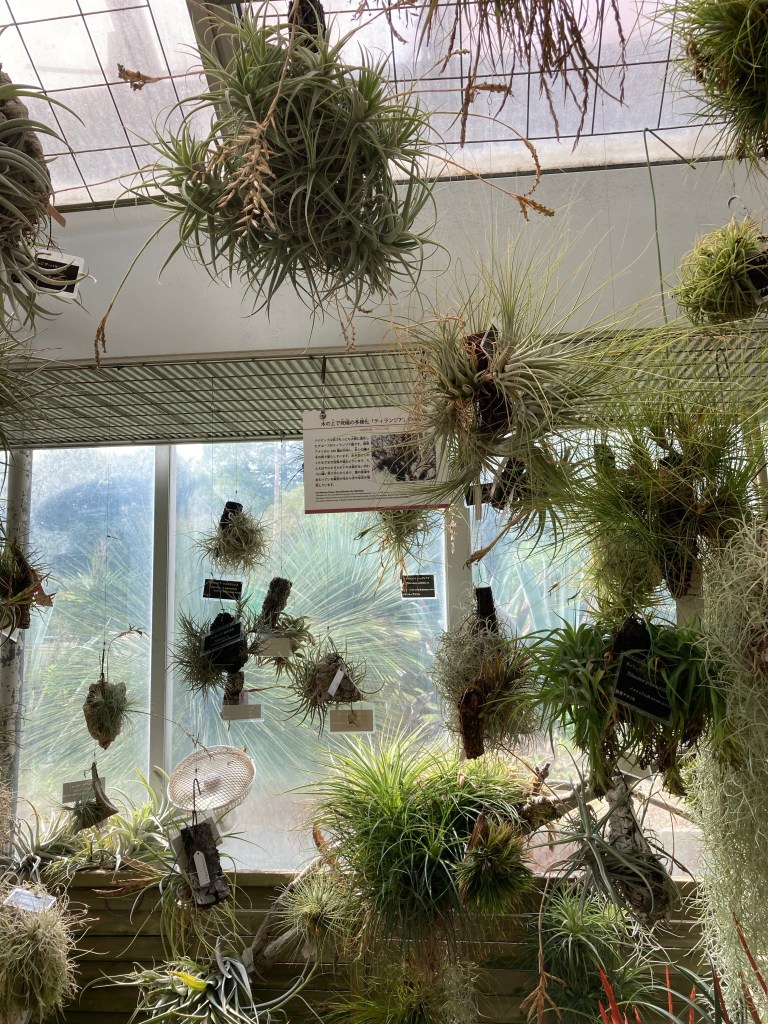
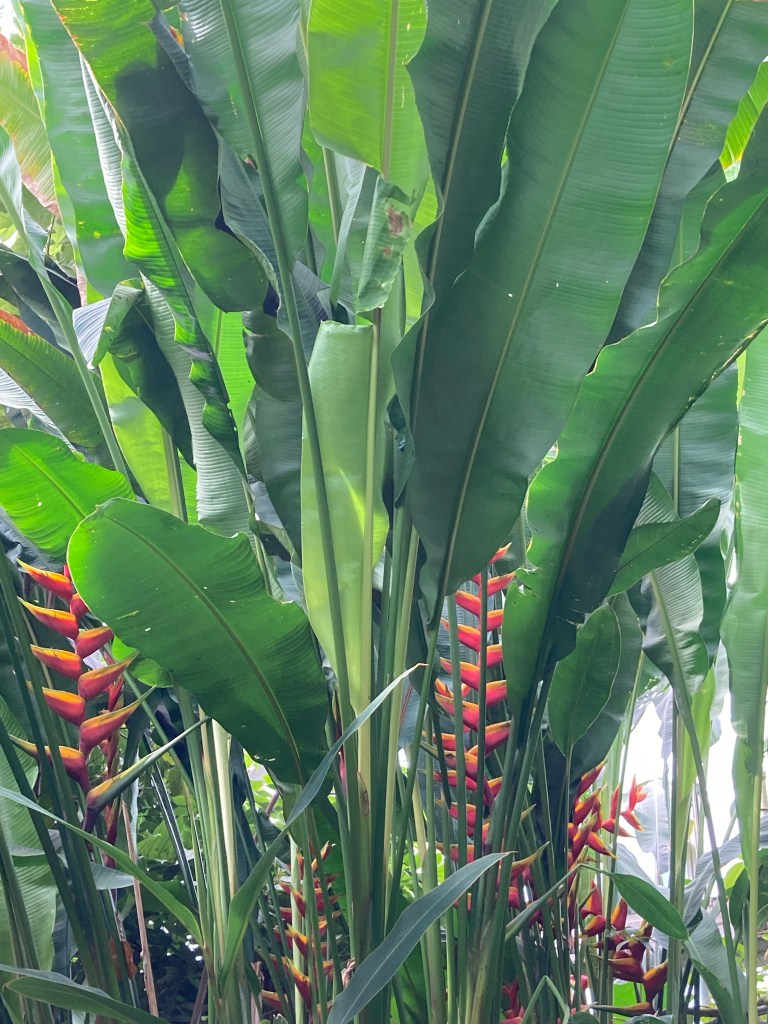
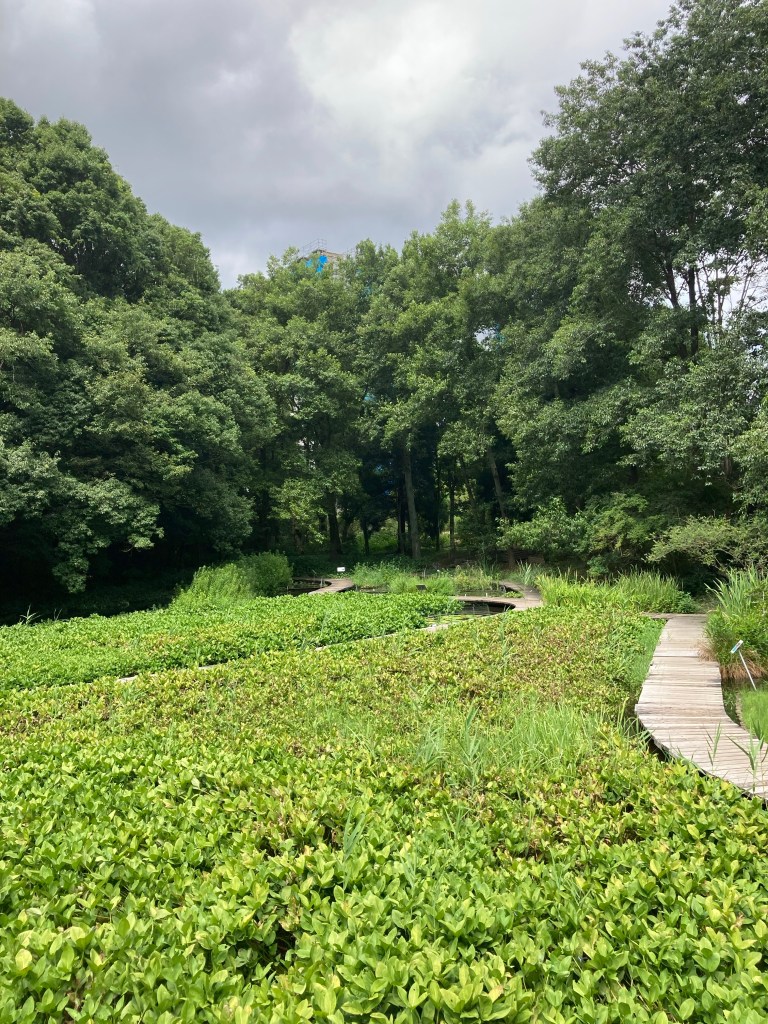
Leaving the local park area we headed to the nearby town of Tsukuba being intrigued by their botanical garden which was in the grounds of their university plant biology campus. The layout was amazing as they had tried to show plants in a natural setting either outside or within specific hothouses. After spending the morning around the site we tried to visit their Art Museum but parking was non existent so we continued our journey westward.
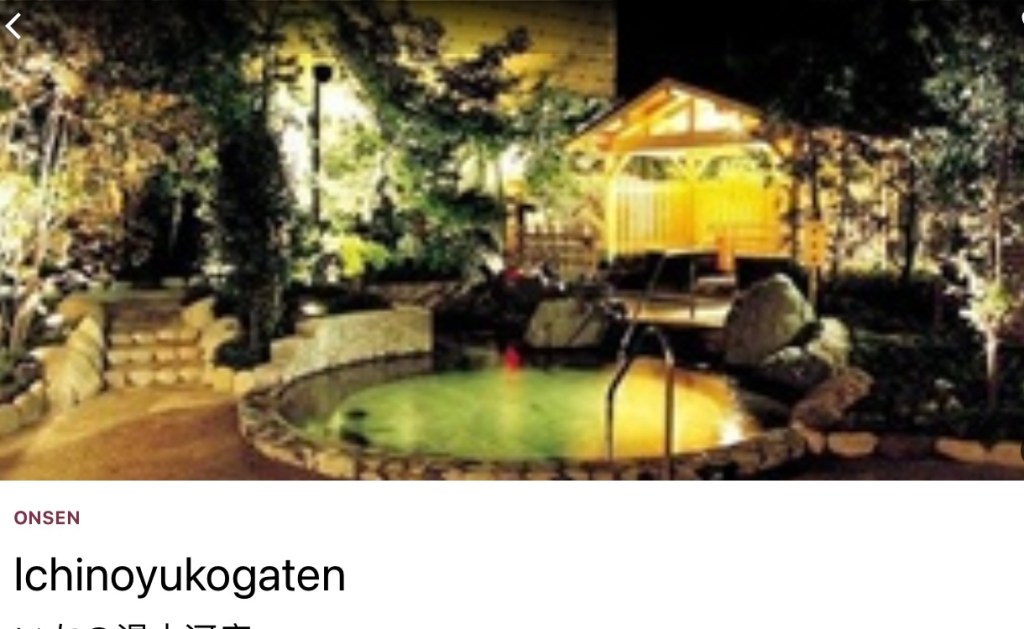
Today has been the best so far having visited the local Onsen ( a communal bathhouse) nearest our overnight stop at a Michi overlooking the Watarase lake. It was not our first experience but for both of us it was our best. Following Japanese custom we left our outdoor shoes at reception and armed with our towels headed off to our gender specific areas. Custom requires that you go fully naked and wash from head to toe before entering the Onsen itself. Having locked away my belongings I was immediately taken in hand by this lovely older lady who at first I thought was just going to show me how to use the wash area but no she insisted after sitting me on a stool to wash me head to toe and then shepherd me into the first mineral pool. After which she acted as my escort through the various areas ( which consisted of a variety of Jacuzzis inside and outdoors, steam room, sauna and the area I loved most a mineral lavender pool which smelt divine) I don’t believe Charlie was blessed with the same personal service.
















































































 Truman travels