Choices to be made, do we meander our way back to Santiago through the vineyards of Southern Chile or head south into Northern Patagonia? The latter won out and we headed south to the town of Coyhaique, although we quickly learnt not the best place for 60+ year olds whose bodies don’t bounce and bend as well as they used to.
Not being in to white water rafting, kayaking and mountain trekking we struggled to find a tour that would get us out and about although our enquiries did discover a half day tour of 7 lakes and small villages (more fitting to our capabilities) but alas no one was running that tour for the days we were there, the only tour on offer was a fourteen hour trip to see a hanging glacier but as It only gave us two hours in the National Park where the glacier was we decided against it.
So we had to entertain ourselves which meant exploring the town and its perimeter taking in the views from a purpose built path.
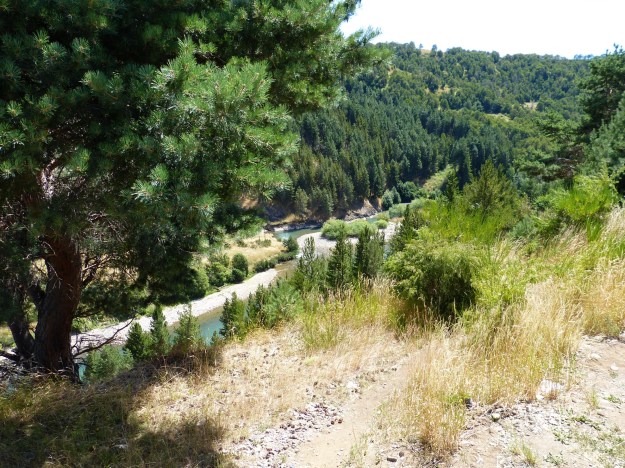


We had flown into the region arriving at the nearby airport on the Argentinian border at Balmaceda. If we had been able to get a boat reservation we would have sailed down the coastline from Chiloé and enjoyed an 18 hour sailing down past rugged coast and fjords and wide river estuaries aplenty. The boat sailed into a port 50 miles from Coyhaique and we decided to travel on the local bus down to one of the ports to get a taste of the coastal area.
Taking a bus to Port Aysen we bumped our way over a part made road passing through a lush green valley that appeared to have carved its way through the mountain.The bus deposited us in town and we wandered down to the estuary edge and followed it as far as we could before cutting our way back through the town to the square where we spent a pleasant half hour watching a group of teenagers playing tag football before making our way back to the bus.


With hindsight we should have done our homework better and perhaps given more time to explore this area of Chile using the buses to travel down to Coyhaique stopping to explore on the way, a lesson learned.
 Truman travels