The two islands share the same land mass which until recently was separated by an imposing mountain range. The island of Harris is probably best known for Harris tweed and is the first we set out to explore.
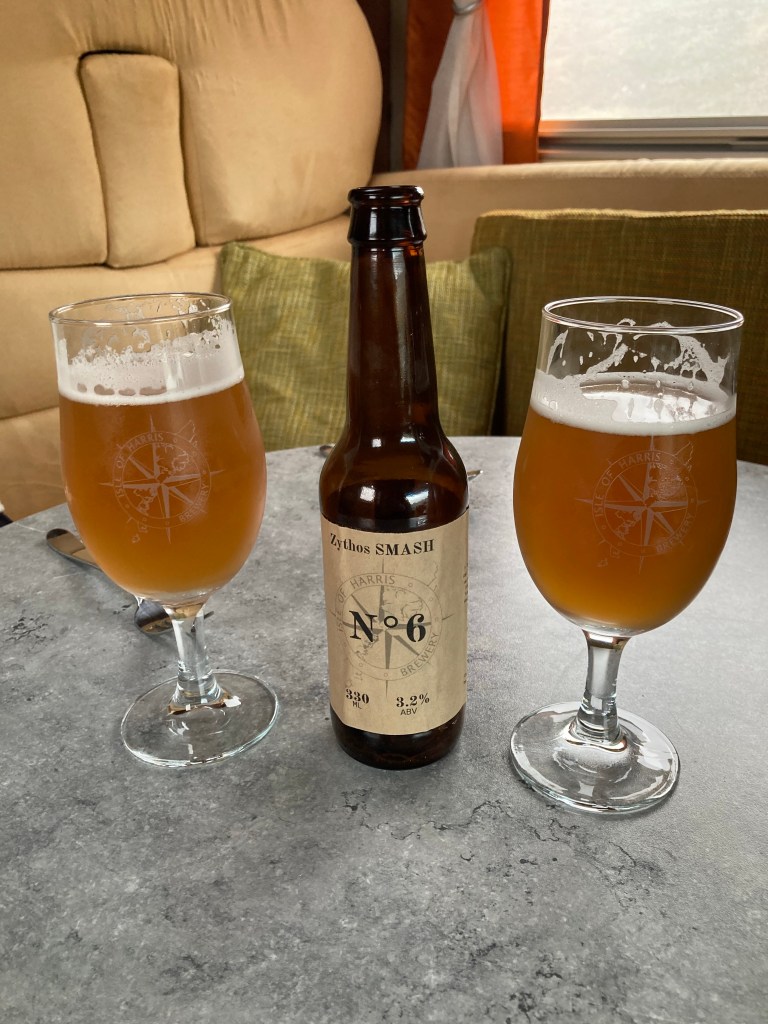
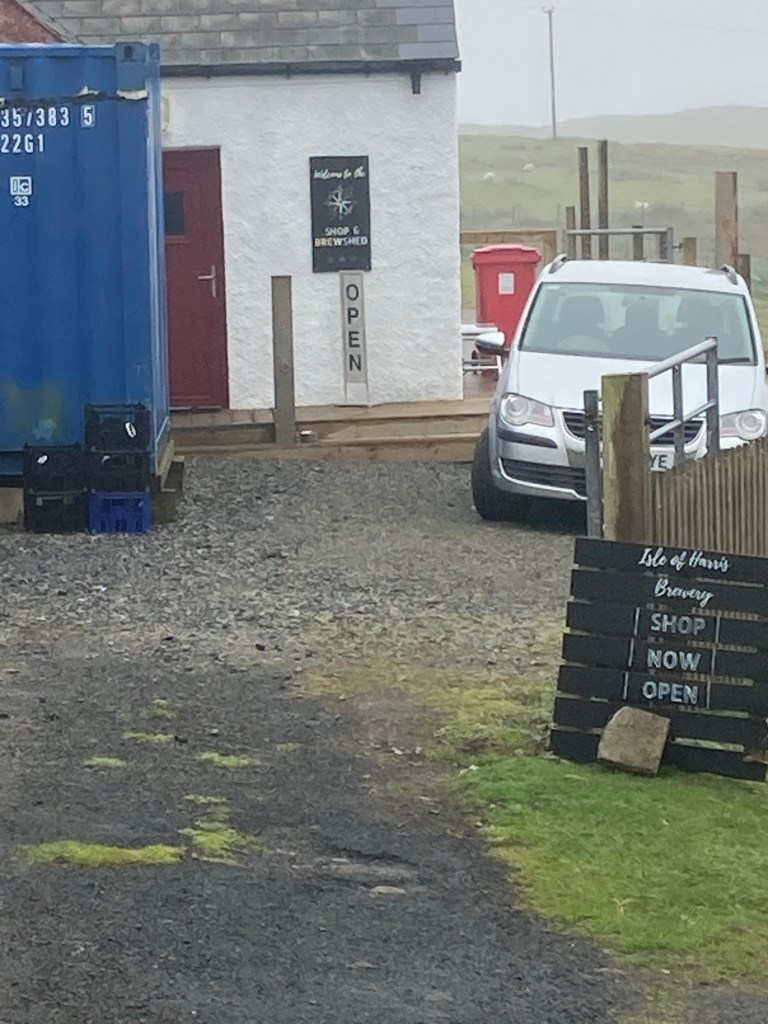
Our first destination was a small Croft brewery, (called the Isle of Harris brewery) run by Nick, Anna and Spud the Brewery Dog they specialise in sourcing unusual hops for brewing. Originating from Oxford they started the brewery only four years ago one assumes it is successful as unfortunately for us they did not have their full range in stock due to recent sales but still we managed to come away with a mixed box of a dozen bottles. Anna shared their future plans with us of distilling rum and using the empty rum barrels to store beer then alternating between rum and beer Mmm sounds an interesting combination have taken their website details so we can order on line.
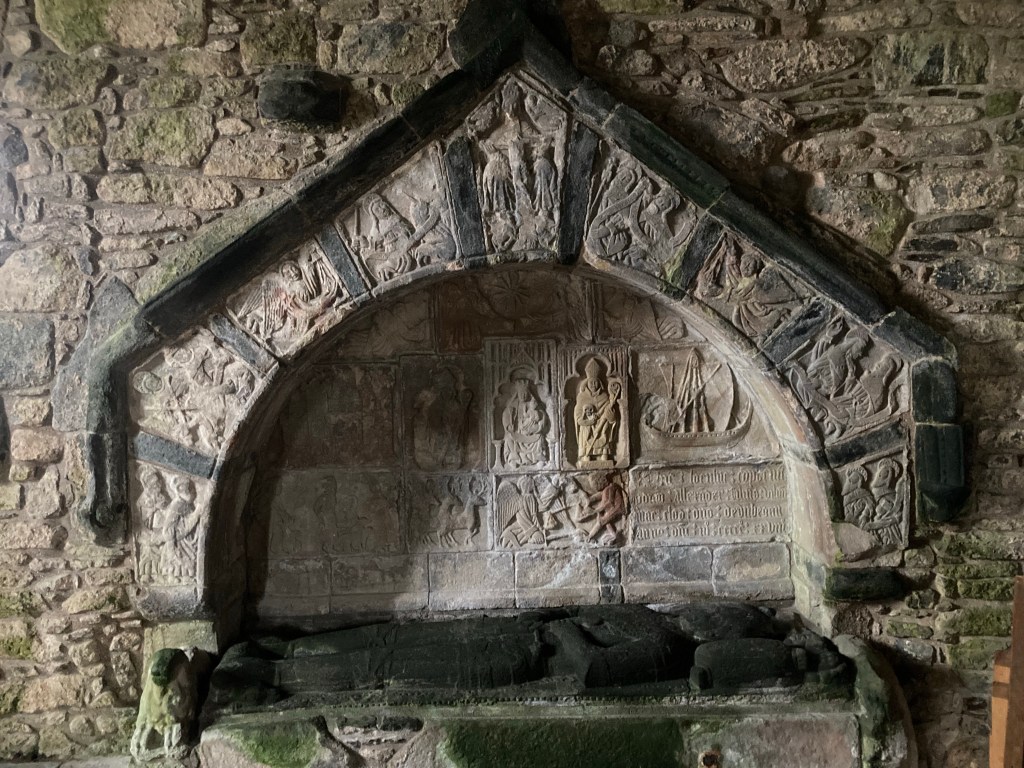
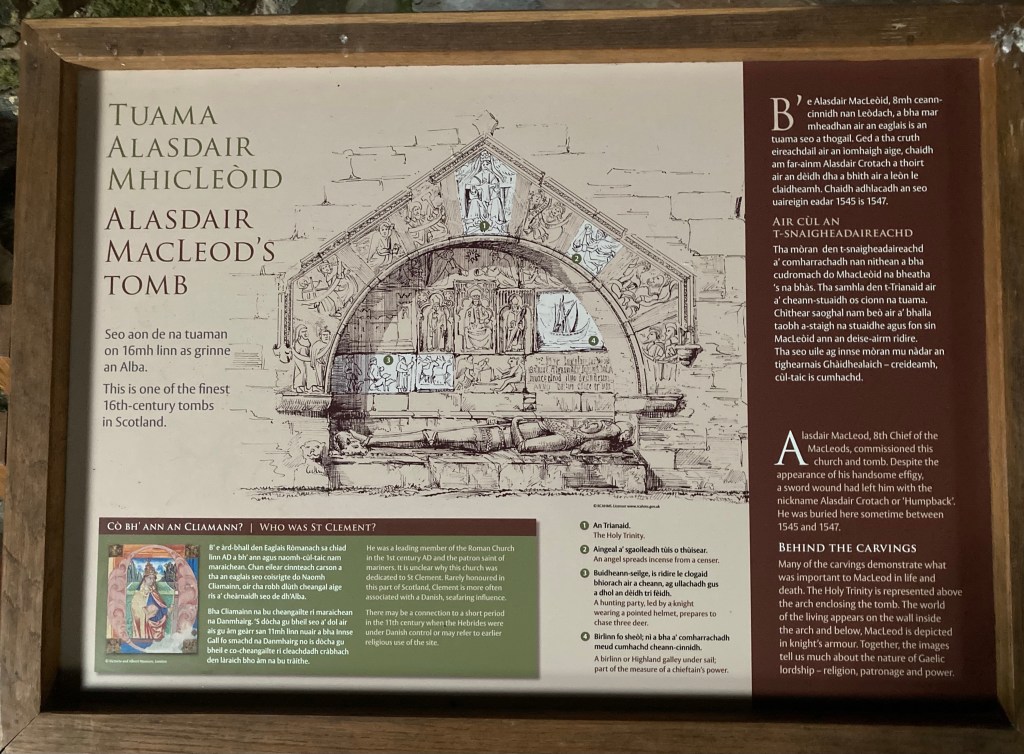
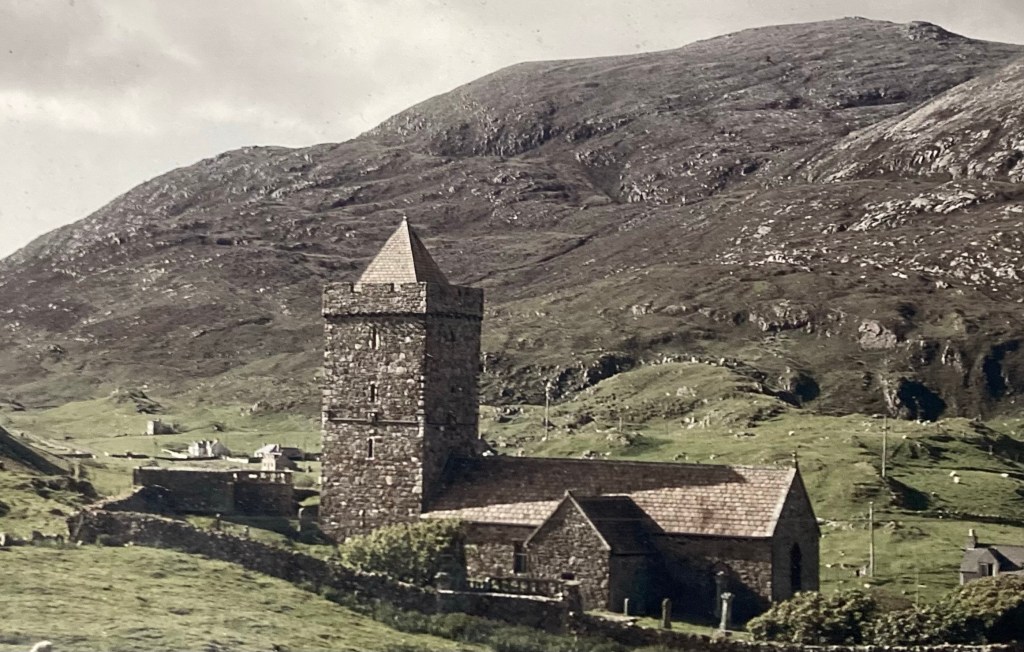
Leaving the brewery we rattled our way to the local landmark, St Clements church built in the 1520/1530s for the clan MacLeod with four of their chiefs interned within the church. It is renowned as being one of the oldest surviving complete churches and apparently it is unusual for a Scottish church to be dedicated to a female saint associated to seafarers and believed to have originated from Scandinavia. Interestingly in the 1990’s a consortium of aggregate companies wanted to create a super quarry on the island. The mountain you see in the church photo is the end of the mountain range that is approximately 4 miles long. If permission had been given the whole mountain range would have disappeared.
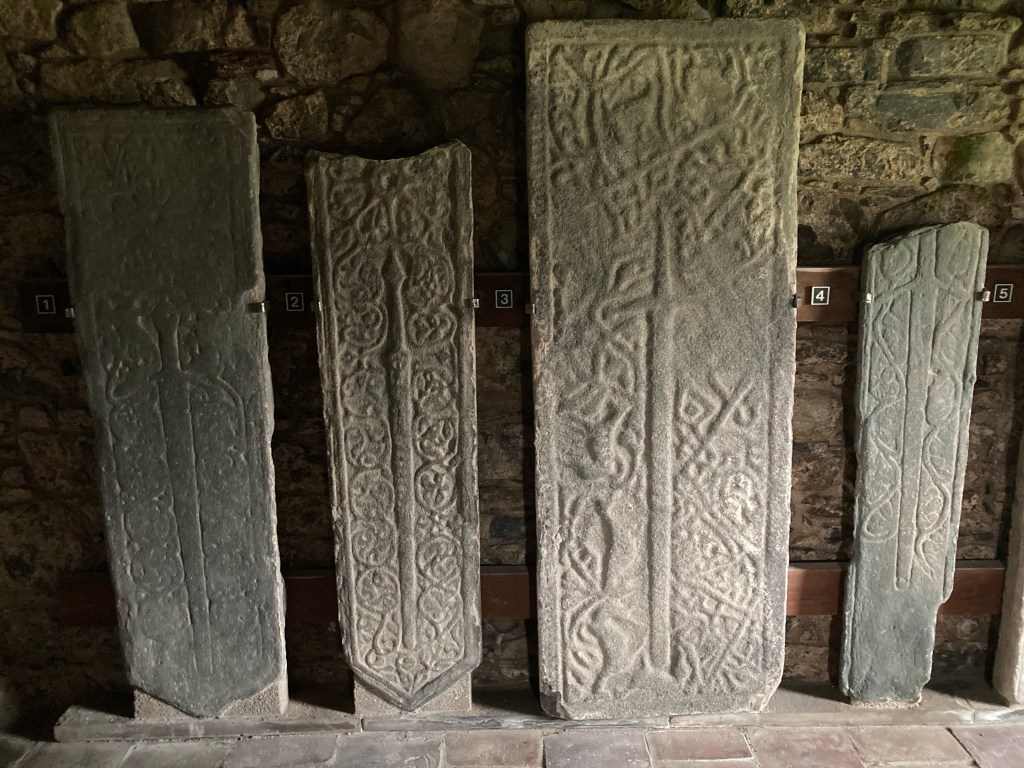
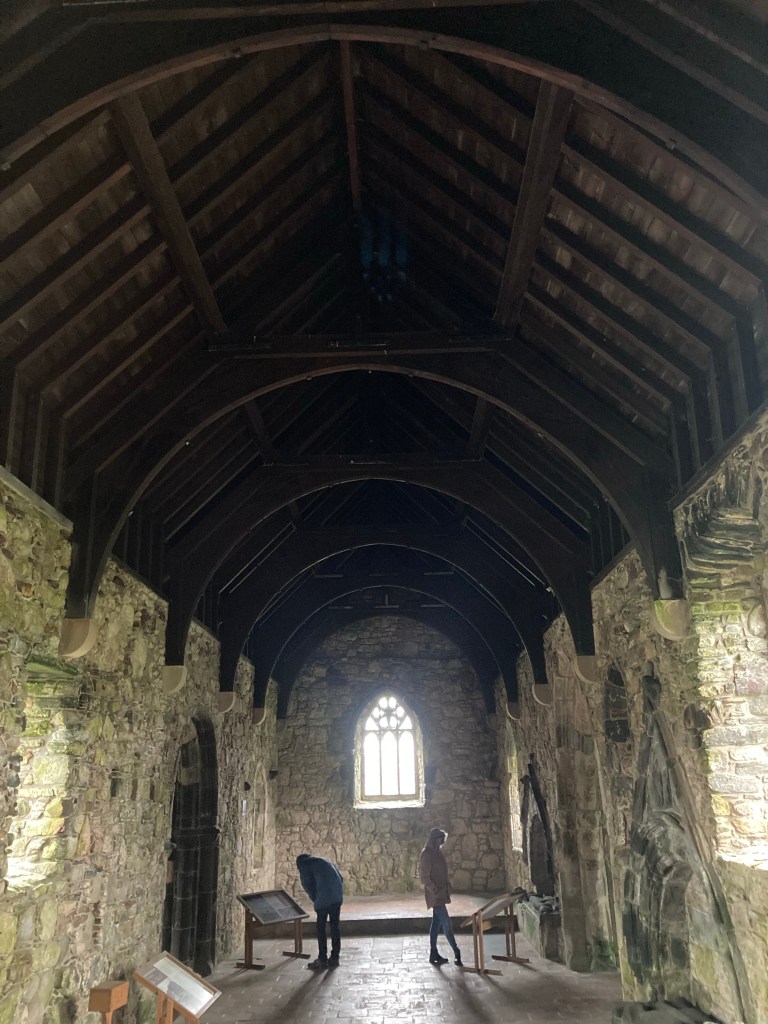
Heading north along the West coast we stopped off at the Seallam centre Northton which was a genealogical centre and small museum if you have Scottish heritage they will offer to trace your family tree. The museum concentrated on the history of the people and their way of life and had taken individual islanders and traced their family trees and where individuals had dispersed around the world following a potato famine and reclaiming of crofts by wealthy landowners. Interestingly the founder of the Del Monte brand was one of these individuals, many had relocated to Nova Scotia where conditions were hard but they had successfully carved out a better life for themselves.
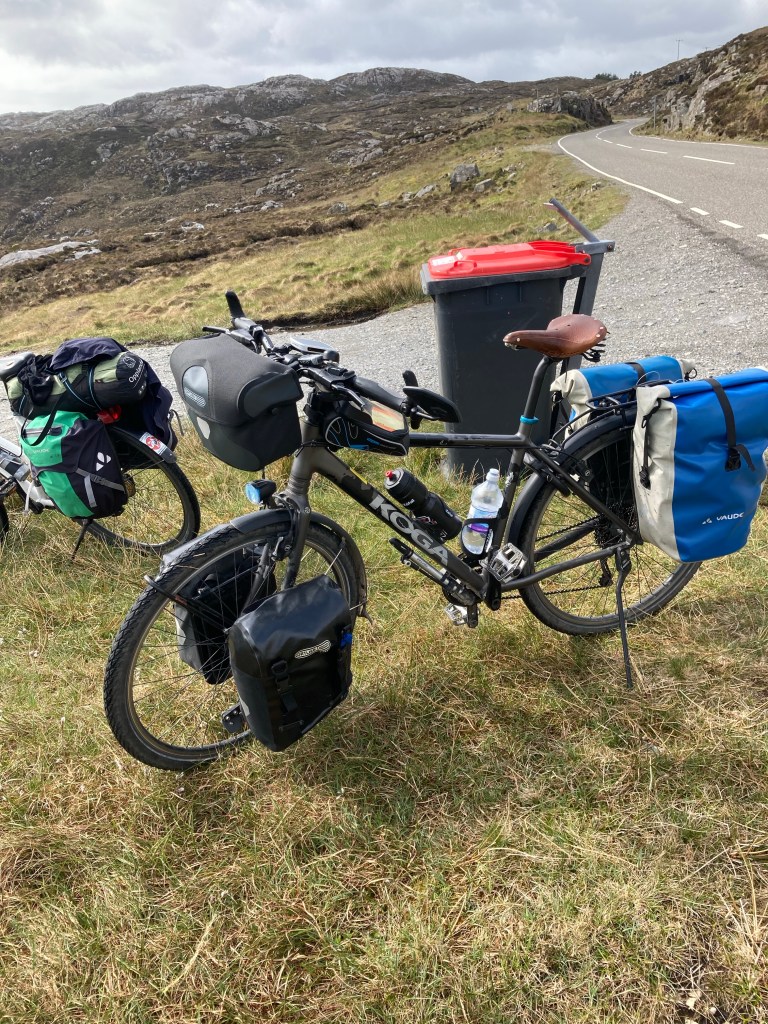
Our next stop was at Tarbet to visit the famous gin distillery. En route we stopped at a viewing point where we met Manfred and Annelise from Munich who had cycled from Newcastle to Oban, ferry to Barra and were now heading to the North tip of the Outer Hebrides before getting the ferry to Ullapool and cycling to Blair Atholl castle where they had tickets for the Highland games starting on the 25th May six days hence. We were greatly impressed by them as they had a few years on us and were basically carrying their home in their bike panniers no luxury of a sizeable camper van for them! Disappointed by the gin tasting at the distillery we took solace in the cafe consoled by the largest and tastiest of chocolate brownies and a coffee. As we returned to Vinnie we bumped into Manfred again looking a little bewildered as he had lost Annalise ( I think she had sneaked in on the distillery tour 🤪 ) we didn’t stay long enough to see if he found her.
East of Tarbet was the small island of Scalpay famous for having the first lighthouse on the Hebrides. Parking Vinnie we got talking to three men who were sailing from Northern Ireland up through the Hebrides, they had been waiting for a taxi for quarter of an hour and were getting a little anxious as they needed to get back on board before the tide turned and were a little sceptical on the reliability of the taxi after the driver had asked them which house they needed picking up from? They started walking.

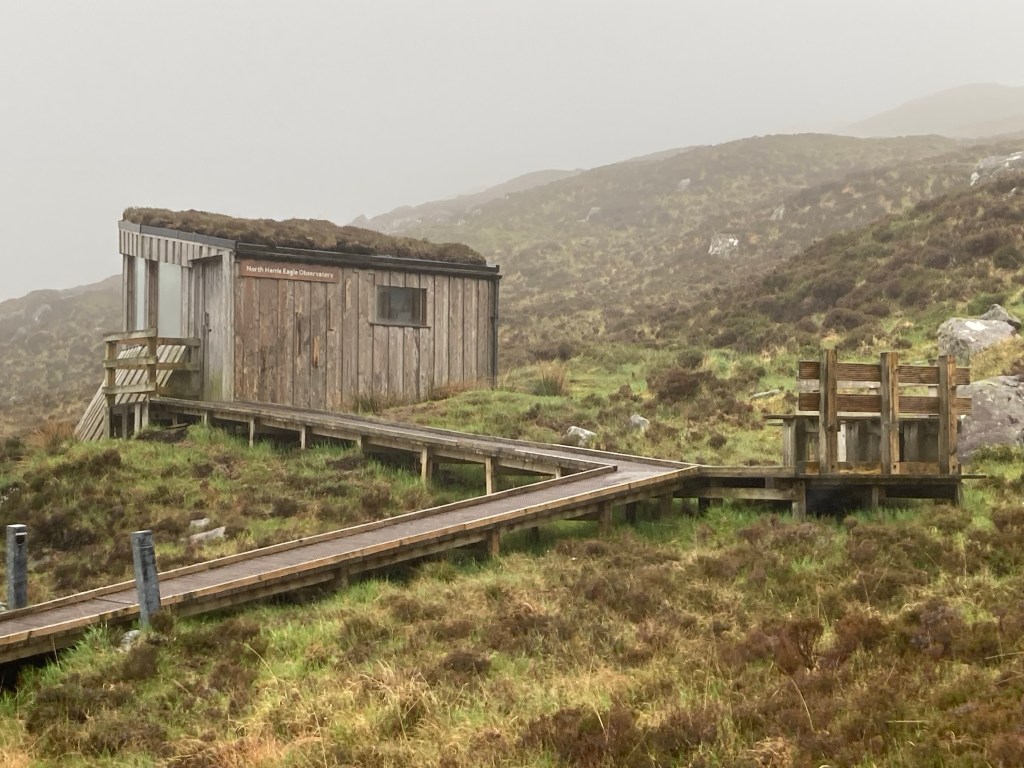
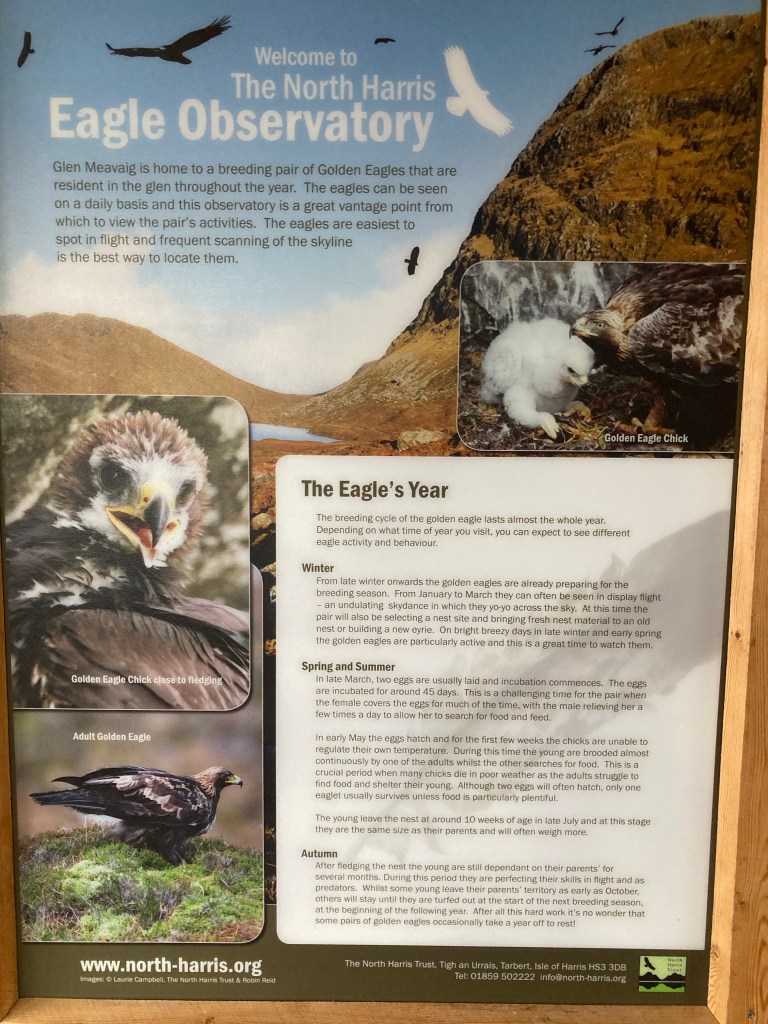
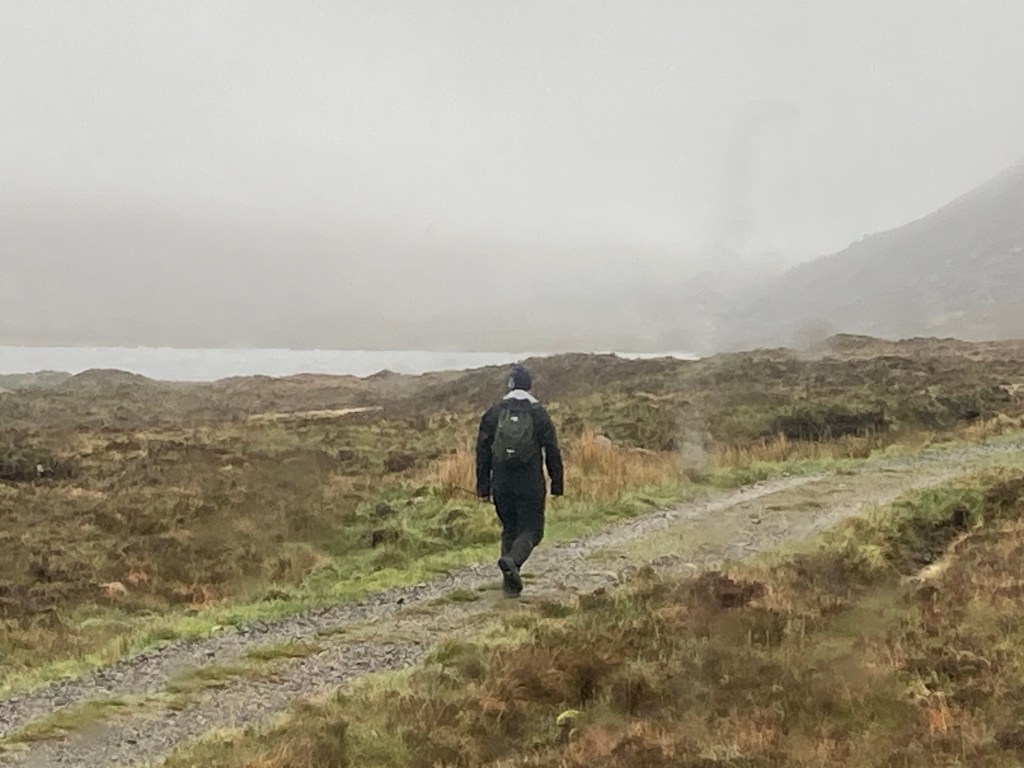
From Scalpay we continued along the West coast parking up overnight at the start of a footpath leading up to The Eagles nest where there was a hide from which you could hopefully spot the resident pair of Golden Eagles.The following morning despite having low cloud we set off hoping the early birds would catch the worm having got up at 6am!! No such luck as fast as the clouds started to clear they would drop again and obscure any view. After an hour and a half we gave up but not before having spent an interesting twenty minutes or more chatting to a local volunteer who was doing a breeding bird survey for the south Harris area. Battling our way back through head on wind and rain we were thankful not to be Manfred and Annalise as we had the comfort of a warm van and dry clothes to change into.

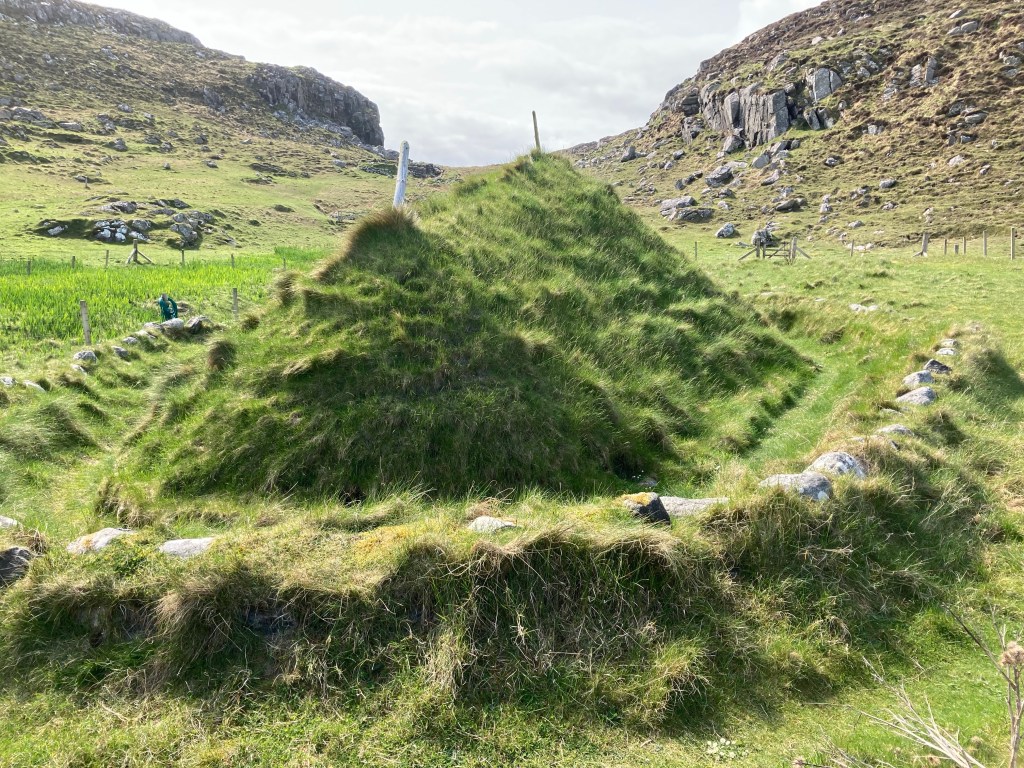
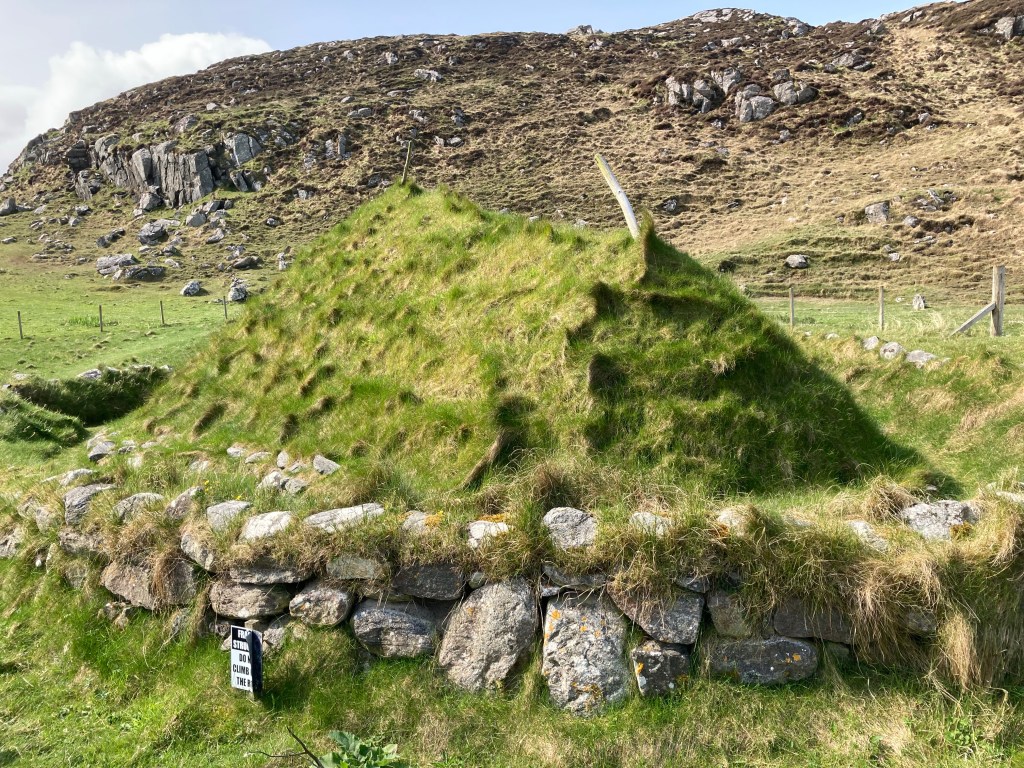
There are a number of smaller islands making up the outer Hebrides,often linked to larger neighbours by causeways or bridges, and our next stop at Bortha Bay was on one of these called Great Bernera (which was linked to Harris by a new bridge) to see an Iron Age house which was part of the most completely preserved Iron Age village ever found in Scotland. The site had remains of 9 stone buildings in varying condition but all connected by tunnels! The village was only revealed in 1993 after a massive storm and high tide had stripped an area of sand dunes just off the beach.
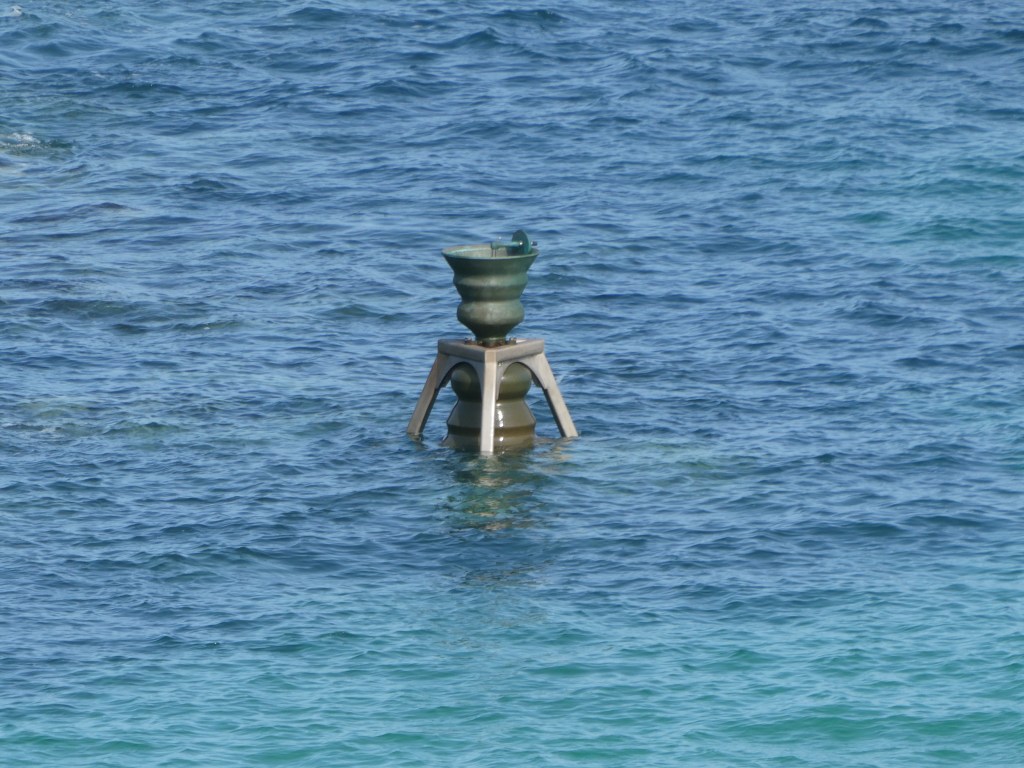
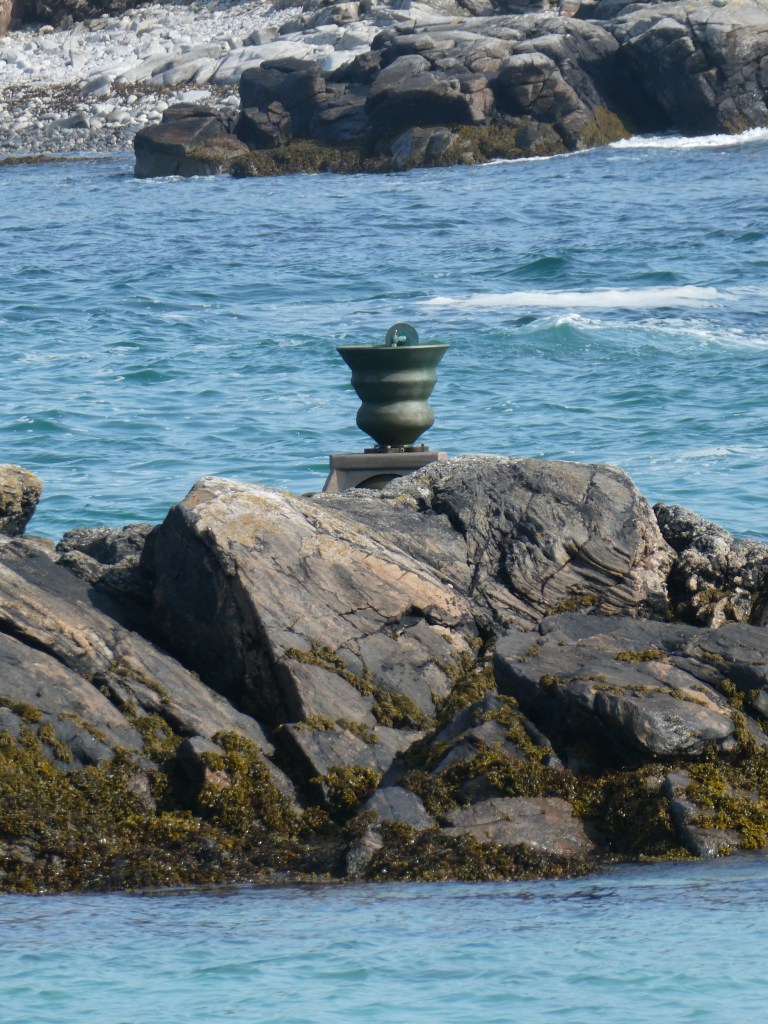
At the other end of the small bay was the Time and Tide Bell which is part of an art project made up of bells, designed by UK sculptor Marcus Vergette and Australian bell designer Neil McLachlan, there will be a total of 16 bells installed at coastal locations in the UK. The first one was placed at Appledore, Devon, in 2009 with this one at Bortha bay being installed in 2010. Each bell rings around high tide; the bells provide a reminder that rising sea levels will make the pattern of their ringing change. There is every chance that some of the bells will have to be relocated in the twenty-first century.




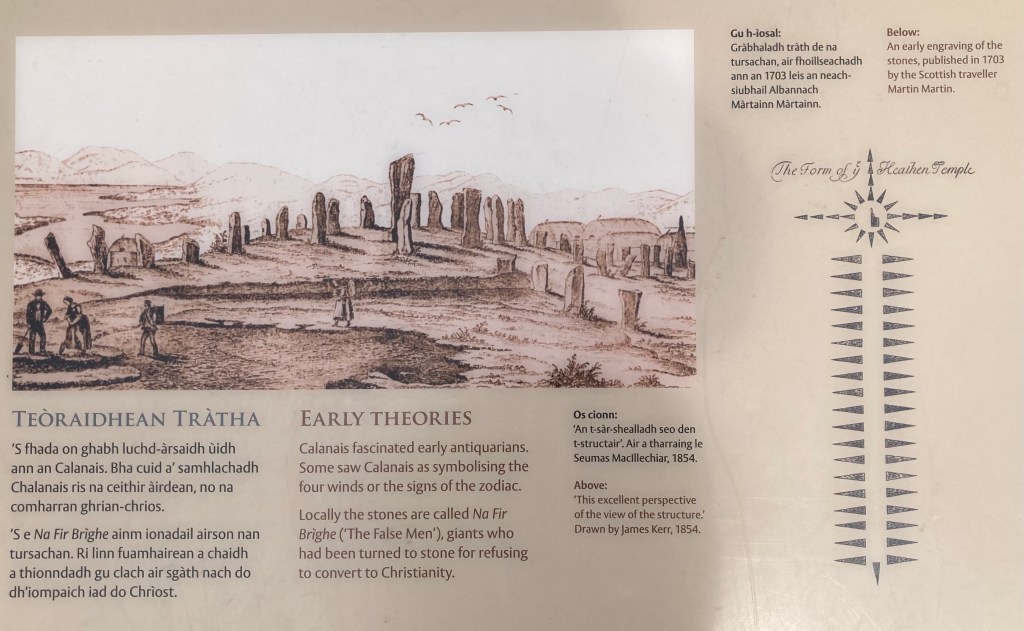
After leaving Great Bernera we went further up the Lewis coast stopping off to see the Callanish standing stones of which there are around fifty on the main site at the visitors centre dating back 5000 years. There are also two other sites which we passed on the way thinking the visitors centre would have all the information forgetting that everything closes on a Sunday.
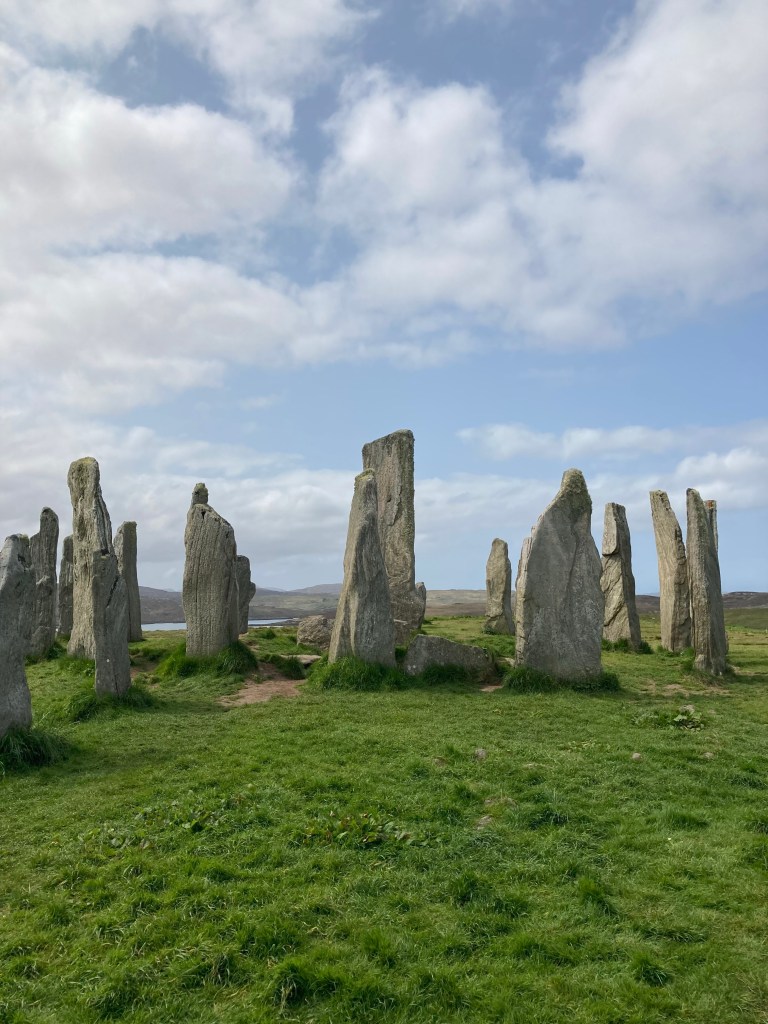
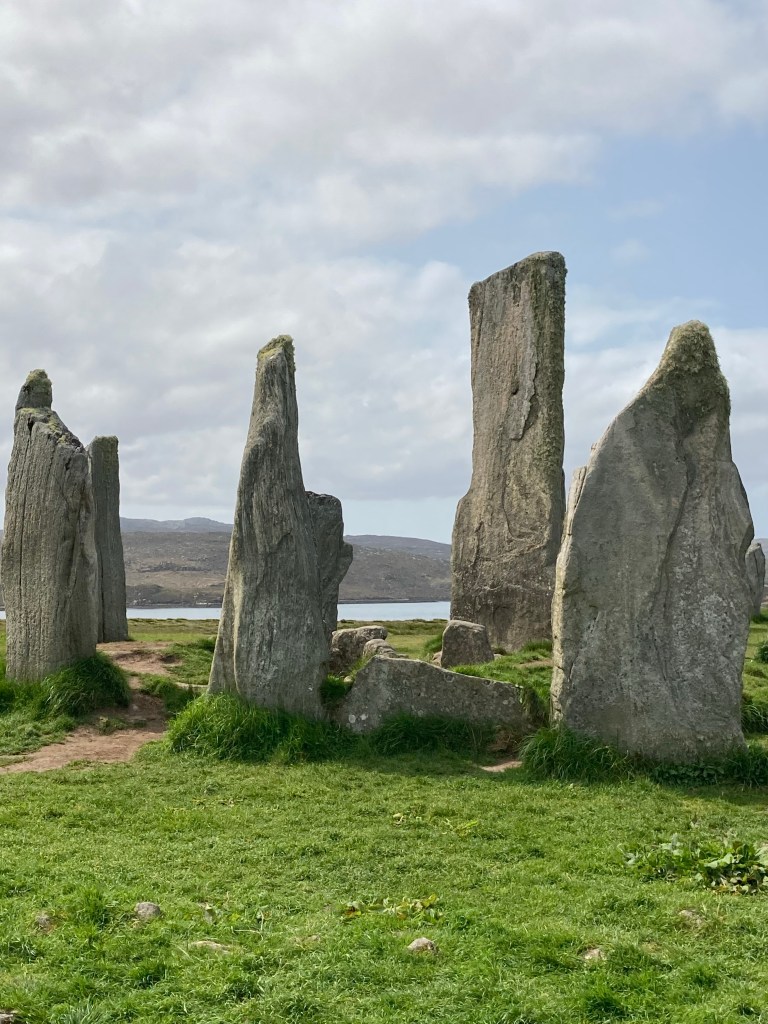

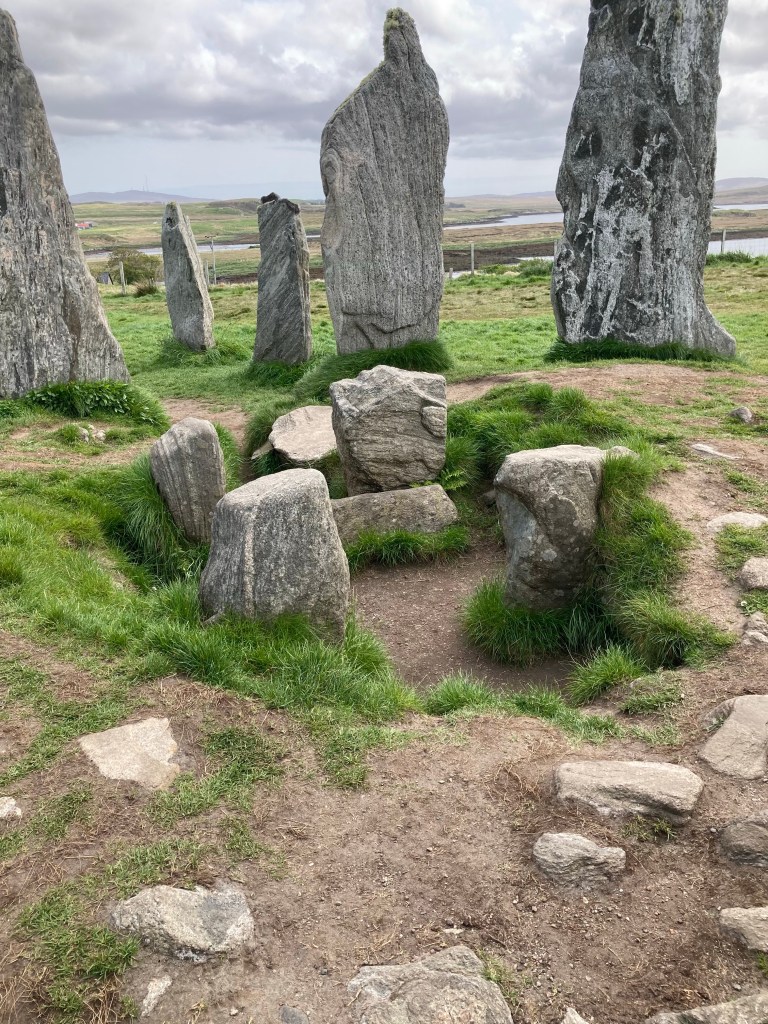

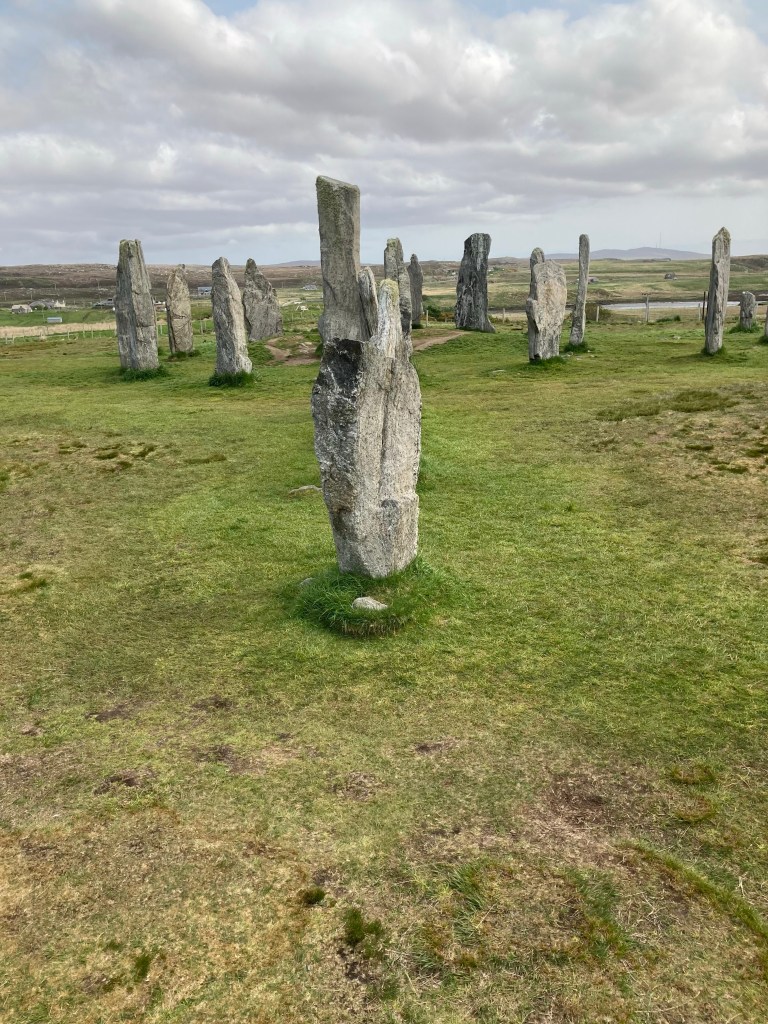
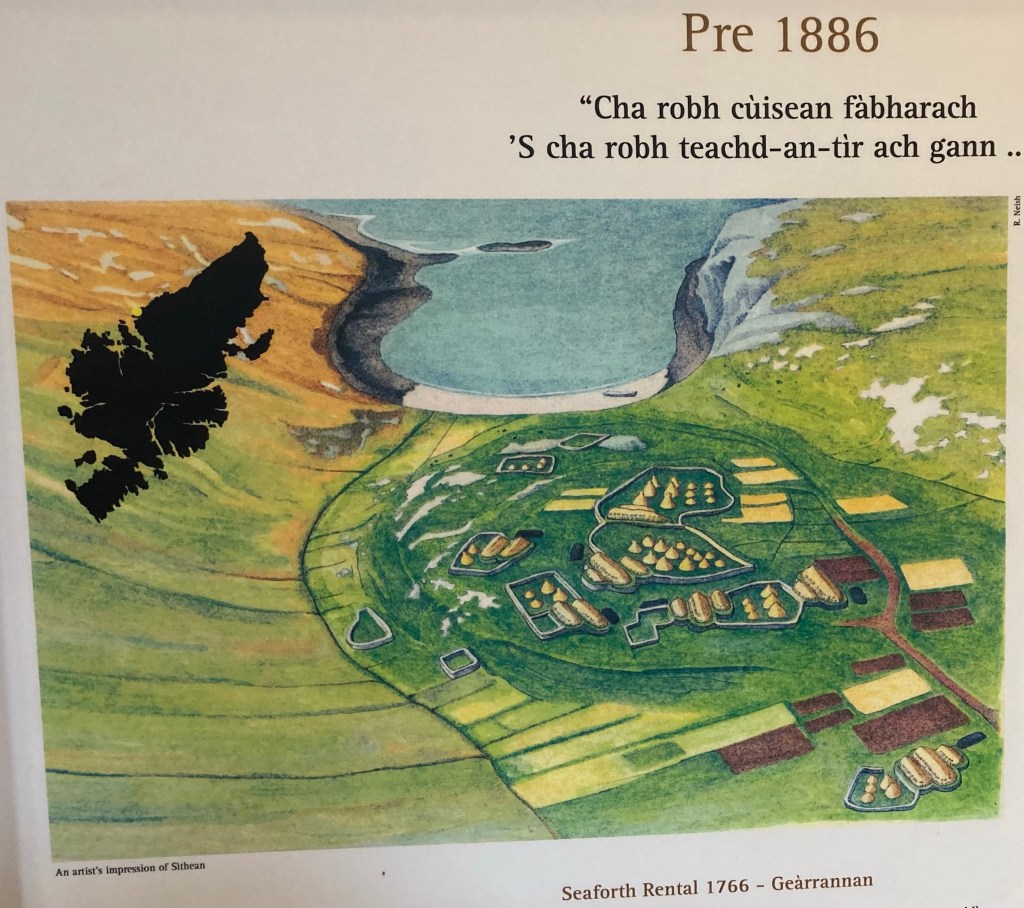
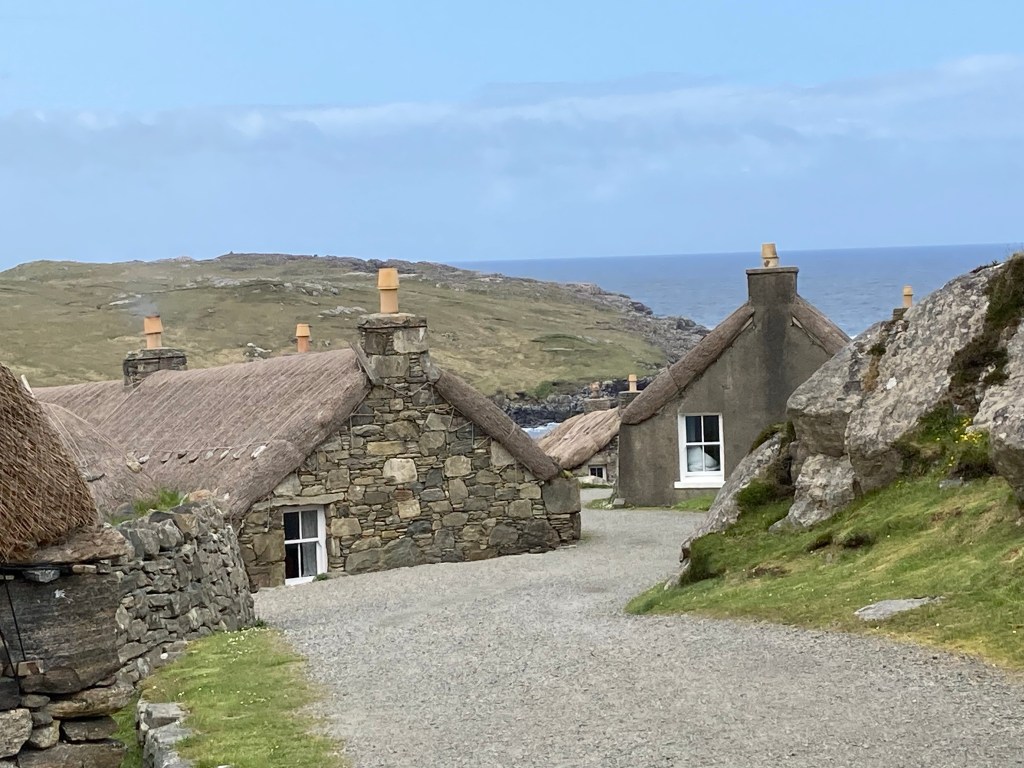
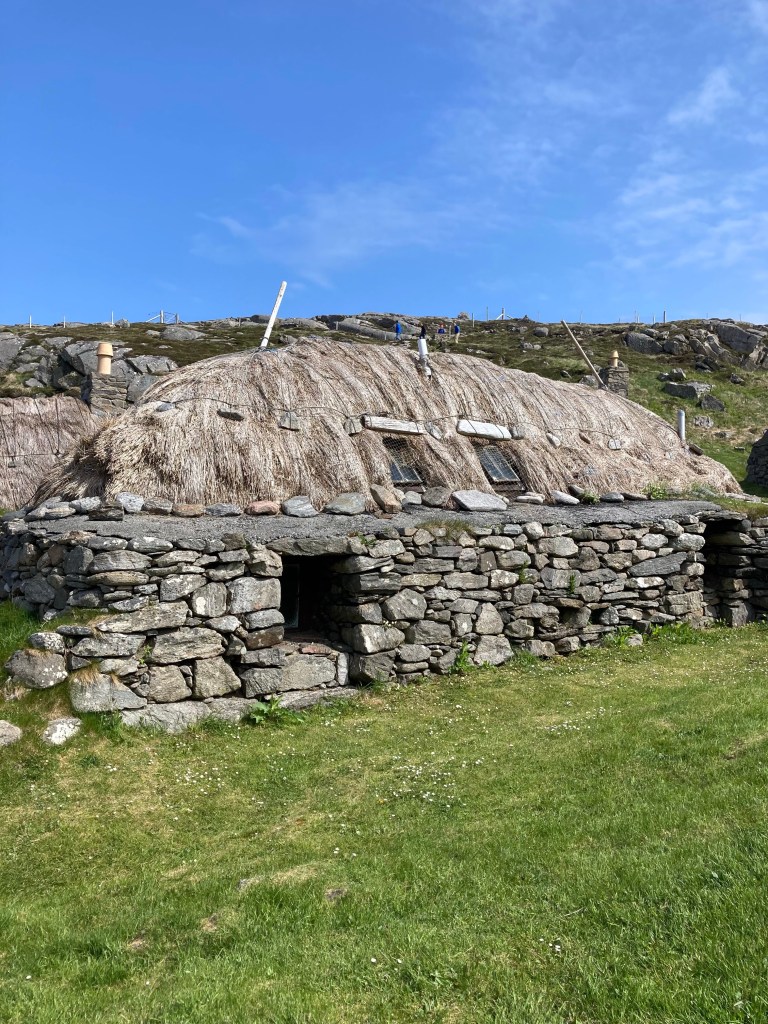
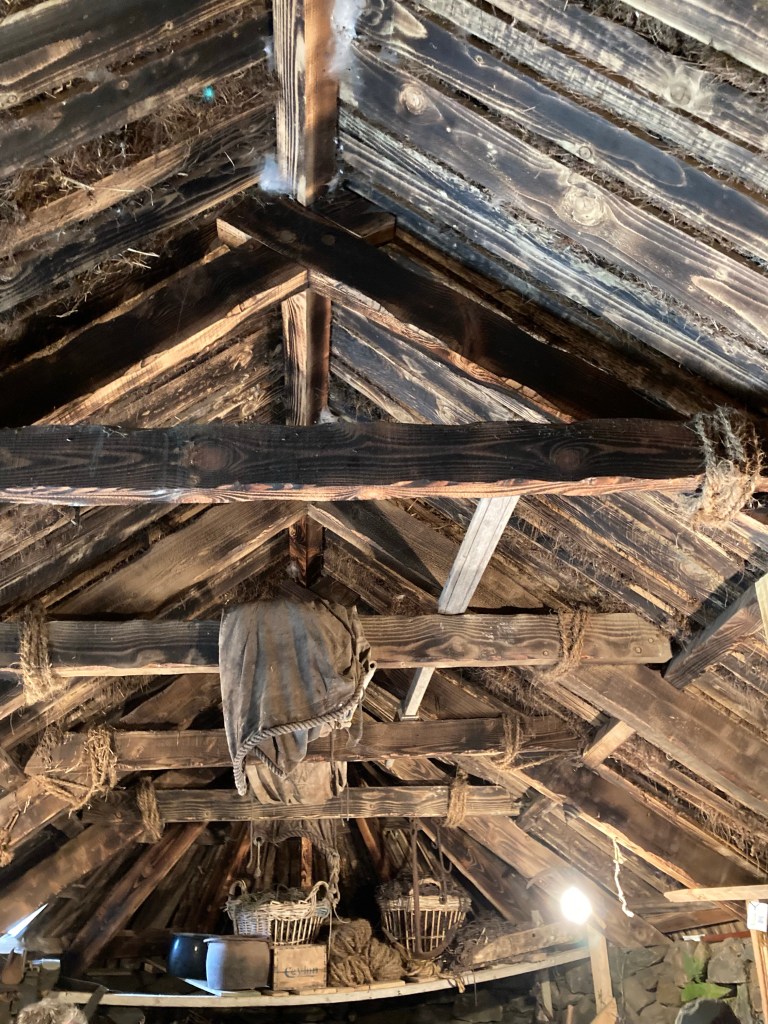
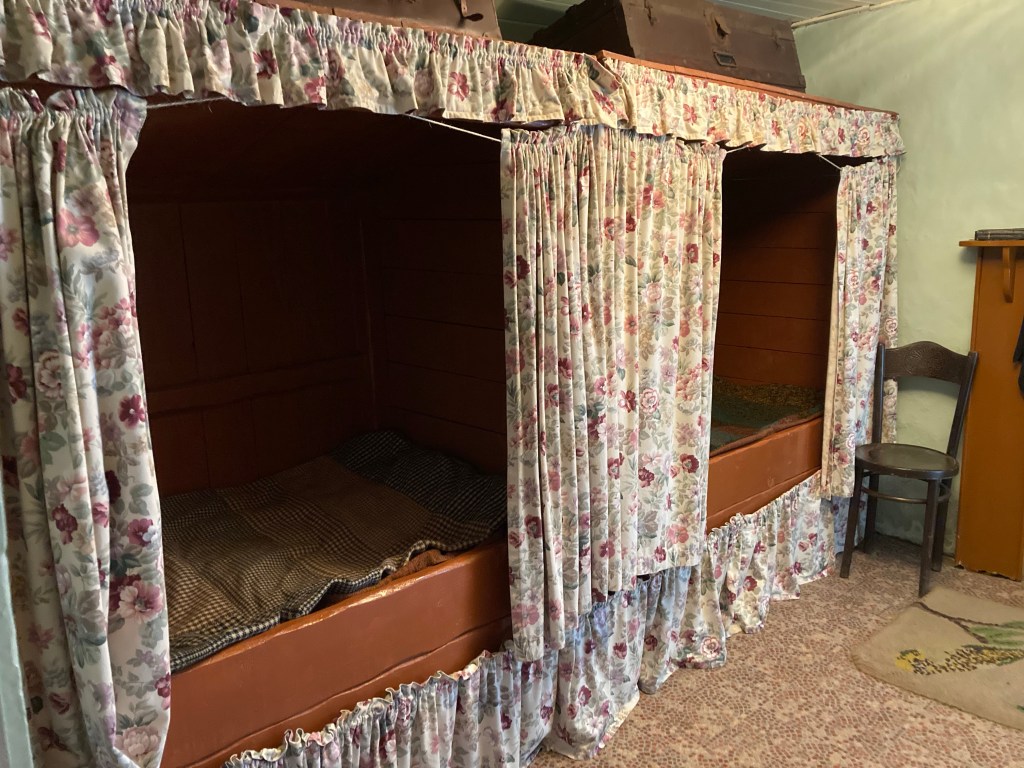
The following day before heading to Tiumpan Head which is east of Stornaway we visited The Black house at Arnol. A well preserved link to the past showing how a community lived a very basic lifestyle, the last inhabitant having left the village in 1975. There was evidence on this location of human settlement going back about 2000 years with the current layout being several hundred years old. The villagers had made a living for many generations from seafaring activities (fishing, whaling and naval) as well as weaving of Harris tweed. In one of the houses there remained a working example of a mechanised hand loom. This had been developed to make the islanders work more efficient and competitive for overseas markets yet still required the weaving to be hand operated so comply with the patent on Harris tweed of being hand made.




We had hoped to see whales and dolphins at Tiumpan Head but a windy cloudy morning had revealed nothing according to a guide we spoke to. We decided to brave it out for about an hour and yes saw the back of a dolphin swimming just below us but sadly no whales. The location was well known for having Minke and killer whales and around five species of Dolphins which were commonly seen in the area. Having decided to give up we headed for the Ferry to Ullapool, we were booked for the following day but thought we would chance getting on as a standby and .Lady Luck was with us and we were allowed to board.
 Truman travels